

Down Syndrome Awareness Month: End the ‘R-Word’
The 'R-Word' slur has made a troubling comeback in recent years, especially on social media.
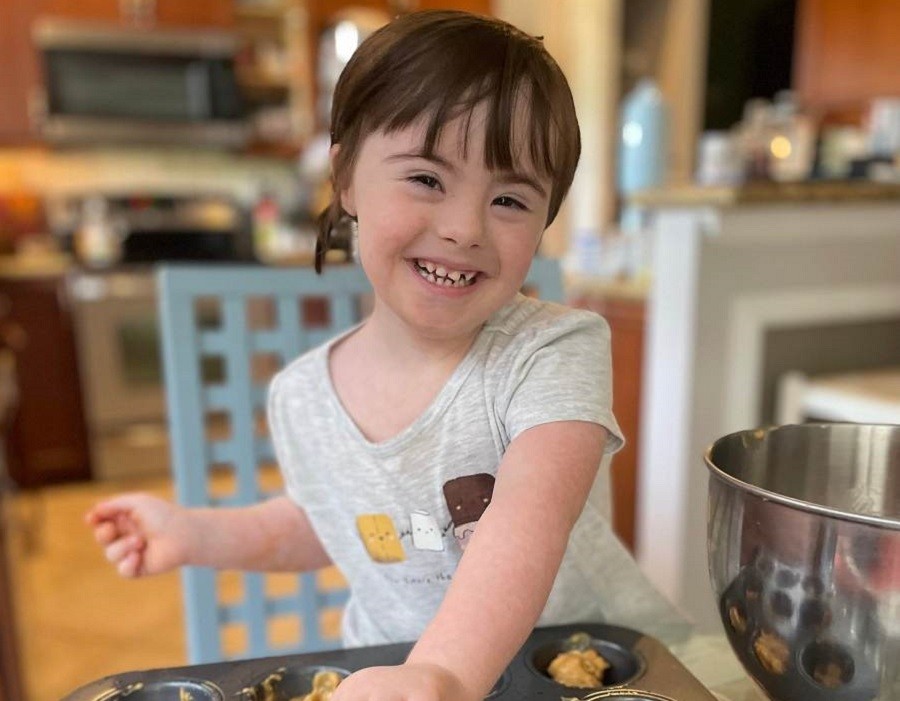
Natalie Sileo, 4, helps her mom bake Halloween treats.
My youngest daughter, Natalie, has Down syndrome. She is a happy, healthy four-year-old girl who will soon start preschool. Our whole family is so proud of her.
Over the summer, I was talking with a friend about politics. When the conversation turned to a particular candidate he doesn’t like, I was surprised when he used the “R-word” to describe the politician. I interrupted to remind him about Natalie and explain that the “R-word” is used as a slur against people like my daughter.
He was apologetic, but added that he had been using the word since childhood without ever thinking much of it. Having grown up in the same era, I fully understood his point. From the playground to the hallways of my high school, the “R-word” was commonly used by kids in my generation. I’m sure I even said it myself on multiple occasions. It was wrong of me to do so.
I first wrote about this topic on The Stream back in 2021, when Natalie was just 16 months old.
“I am humbly requesting that you ask your pastors and priests to educate their congregations about the ‘R-Word’s’ hurtful nature,” I wrote at the time. “The least we can do as Christians is to show these exceptional individuals and their families how much value they bring to the world.”
Three years later, I want to renew that humble request before the end of October, which is National Down Syndrome Awareness Month. The overriding reason is because I’ve been seeing a huge increase in use of the “R-word” lately, particularly on social media platforms.
“Honestly, as each day passes, I’m becoming more and more convinced Kamala Harris is actually a drunk r*tard,” an X user posted while I was writing this column.
“Donald Trump is a r*tard and I will call him what he is,” another user posted about three hours earlier.
Some might call this a harmless exercise in free speech. But as a parent of a little girl with Down syndrome, I call it hateful, destructive, and completely unnecessary. You can make your point about Trump or Harris without disparaging millions of wonderful people with special needs.
The Special Olympics confirms that use of the “R-word” is becoming increasingly frequent on social media. According to a recent press release:
The Kantar social listening study reviewed nearly 50 million social posts in the U.S. over 2 years about people with intellectual disabilities. The sad facts: over two-thirds of posts were negative and nearly 29 million contain slurs (i.e., using the R-word or other words combined with “-tard”).
Again, some might say this is innocuous online banter. The problem is that when kids read this stuff on the internet or hear it in a TV show or movie, people like my daughter ultimately pay the price. While I’m not naive enough to think it won’t happen someday, the thought of a classmate calling Natalie the “R-word” or bullying her because she was born with Trisomy 21, or Down syndrome, makes me incredibly sad.
For the past four-plus years, I’ve seen up close during countless therapy sessions how hard Natalie has worked on speech and motor skills. My wife has dedicated herself to making sure Natalie can take advantage of every resource available to make sure she’s ready to tackle preschool and the rest of her childhood. Natalie’s big sister has also stepped up in many different ways to help her little sister. It’s been deeply inspiring to watch.
To think that Natalie and other children with special needs can be dismissed by a one-word slur makes my blood boil. It shouldn’t happen, and we as Christians must lead the way in spreading awareness about the value of each human being with Down syndrome and other special needs. They are gifts from God who make our world better, not worse.
https://twitter.com/NDSS/status/1847405390037995621
Two years ago, my family flew to New York City to see photos of Natalie and thousands of other people with Down syndrome appear on a billboard in Times Square. It was an uplifting, memorable experience. After this year’s National Down Syndrome Society event in New York, a Canadian actress named Madison Tevlin shared an inspiring message.
“I always say that everyone is special in their own unique ways, and I feel like that’s the most important piece of being yourself,” Madison said during a Buddy Walk event in Central Park. “So the big message I’m saying is be yourself, because the more you are, the better things will come to you.”
Indeed, our daughter is special, and I thank extraordinary people like Madison for spreading such a positive message. Hopefully, Natalie can grow up in a society that rises up against anyone who tries to diminish her life’s value. Ending the use of the “R-word” once and for all right now would be a good start.
Tom Sileo is a contributing editor of The Stream. He is the author of I Have Your Back, Be Bold and co-author of Three Wise Men, Brothers Forever, 8 Seconds of Courage and Fire in My Eyes. Follow Tom on X @TSileo and The Stream at @Streamdotorg.