


We Need a Boring Pope
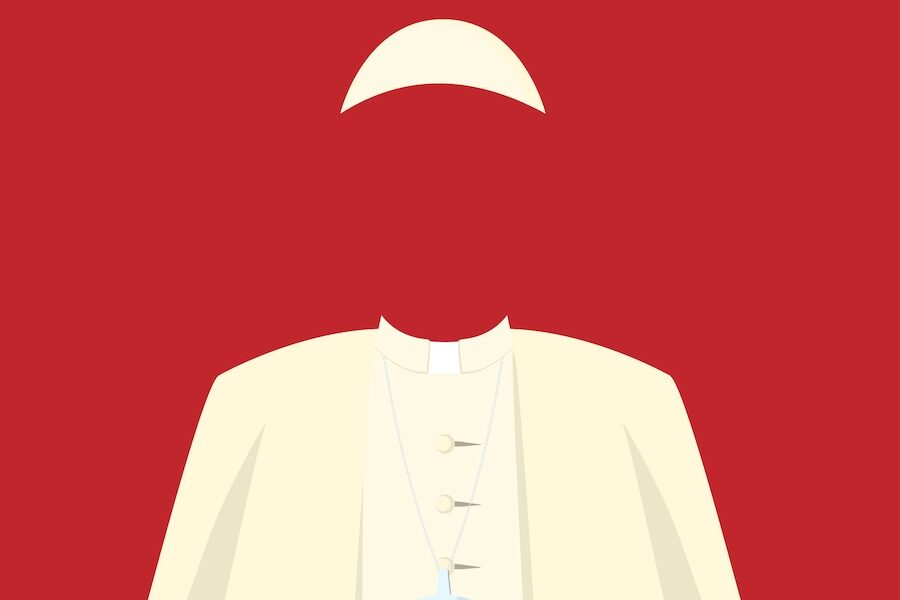
Even as many Catholics have shown their condolences for Pope Francis, it is quite evident that most of them look forward to new leadership in the Church. As I argued in my last essay about Francis, his profile and style mirrored that of other world leaders. Not only did he prioritize diversity, equity, and inclusion (DEI) along with the environment, mass migration, and sexual liberation, but he did it with the help of a vast technocratic bureaucracy and near-omnipotent media apparatus.
As these tools have eroded in the past decade, so too has the popularity and power of the leaders who depended on them. This in turn has led to a populist upheaval in much of the West who rightly see an opportunity to reverse the distorted agenda that has hollowed out the middle class, restricted personal freedoms, and produced a culture of mediocrity. A malaise has set in with younger generations, sapping their initiative, optimism, and even their fertility as they fritter away their youth and young adulthood by passively consuming slop on their smartphones.
Surely, even the most out-of-touch elite can see that humanity in the twenty-first century desperately craves something authentic, real, and meaningful in their institutions today. The status quo has become untenable.
It is with this understanding that Catholics should approach the question of Pope Francis’s successor. While many commentators have weighed in, for conservative and traditional Catholics, the most compelling choice would be one of the African bishops, specifically the “anti-woke” Cardinal Robert Sarah.
Choices
In a recent essay for Crisis Magazine, Fr. Dwight Longenecker articulates the reasoning behind such a choice: (1) the African Catholic Church has grown by leaps and bounds; (2) African Catholics have resisted the decadent woke influences of the modern West; and (3) most African parishes and clergy have retained the vigor, simplicity, and evangelical zeal of the Church. After a leftist papacy that has left Catholics more disillusioned about living out the Christian life, a stalwart, energetic defender of the faith seems like the ideal option.
However, I would respectfully disagree with this argument—not because Longenecker is wrong, but because he is right. Africa really does represent the future of the Church, and the African clergymen really have resisted the ideological and political corruption that seems endemic in European and American church leadership. Like Longenecker and many others, I’ve had the privilege of knowing a few priests from Nigeria and other West African countries who all exhibit the virtues he extolls and are models of holiness. I’ve also read Cardinal Sarah’s riveting memoir God or Nothing, in which he recounts his heroic struggle with persecution and oppression under the Marxist dictator Sekou Toure and yet miraculously managed to reform and even grow his diocese as a bishop in Guinea.
And yet, for all their many virtues, would any of these men make a good pope? Not necessarily.
As Lawrence Peter and Raymond Hull explained in their famous 1969 book on corporate culture The Peter Principal: Why Things Always Go Wrong, competency at a low level doesn’t necessarily translate to competency at a higher one, yet this is how promotions within organizations are conducted. Thus, they come up with the following principle: “In a Hierarchy Every Employee Tends to Rise to His Level of Incompetence.”
A Rock, Not a Rock Star
This can be seen in any organization. Talented engineers, salesmen, administrators, and artists will distinguish themselves and are thus elevated to higher levels of management and responsibility where their original set of skills become irrelevant or even a hindrance to effective leadership. Either they will struggle to motivate and train their employees, delegate tasks to the right people, budget time and resources, communicate objectives clearly, and/or meet the needs of various stakeholders. Once they were model employees, but now they are mediocre bosses continually struggling in their new role.
Most religious communities experience this same phenomenon with charismatic preachers setting their congregations on fire with the faith, only to falter when they assume a higher position of authority or their communities expand to such a number that they can no longer watch over them properly.
One could argue that all the popes since the Second Vatican Council were exemplary clergy, but struggled as popes precisely because they rose to their own level of incompetence.
Although John Paul II and Francis had abundant charisma and proved to be highly influential public figures who made waves in the secular world, many serious scandals festered on their watch and overall church attendance declined–and both were oddly hostile to traditionalist Catholics. Similarly, Paul VI and Benedict XVI were both holy men and brilliant scholars whose ideas have had an enormous impact on the Church, but they failed to rein in activist bishops and institute important reforms that they knew were necessary.
That said, in addition to the Peter Principal, it’s important for the Church to consider what factored into Jesus Christ’s selection of the first pope, Peter. Call it the “St. Peter Principal.” Although it would’ve made more sense to choose John, James, Philip, or Paul, all of whom were brilliant, practical, and holy men, Jesus chose Peter, the man who denied Him three times, hacked off a soldier’s ear, and whom He even once called Satan.
Why? Perhaps because these very faults allowed Peter to be humble enough to rely on the more talented disciples and be a proper leader. He deferred to men like Paul and James, and felt fine with letting young men like John beat him in the race to Christ’s tomb. True, he performed miracles and baptized thousands at the beginning of his ministry, but mostly he led from behind and always made Jesus central to his message.
Hopefully, the current conclave applies this ancient and modern wisdom when selecting a new pope, since it seems what the Church needs more than ever is a rock, not a rock star.
Contrary to what today’s Catholics think they want, they would do better with a pope who is unknown, unassuming, quiet, and utterly boring. Regardless of his age, race, or cultural background, he needs to project an image of strength, predictability, and humility. Only such a leader can focus on what is essential and successfully block out all the frivolous and vain concerns currently devouring Catholicism.
Auguste Meyrat is the founding editor of The Everyman, a senior contributor to The Federalist, and has written essays for Newsweek, The American Mind, The American Conservative, Religion and Liberty, Crisis Magazine, and elsewhere. Follow him on X and Substack.