


Today in History: ‘Victory Goes to the Brave’
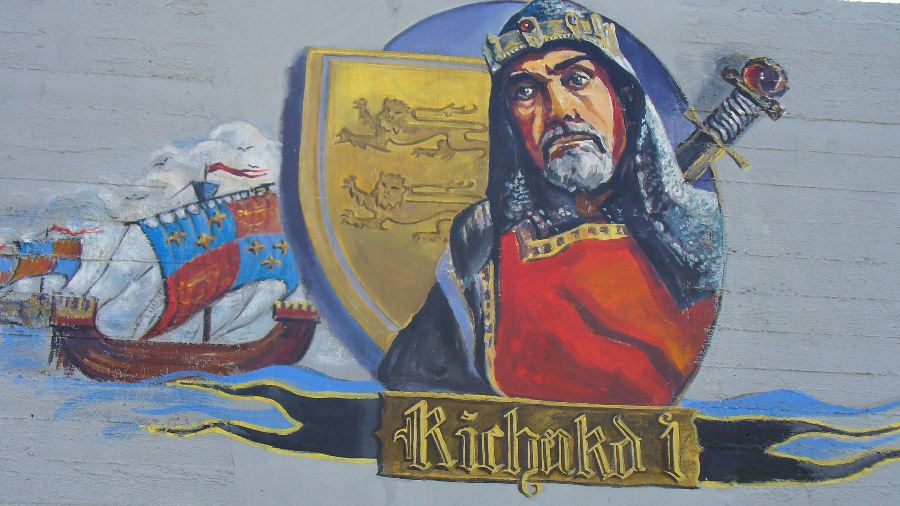
On this day in history, in an extraordinary display of bravery that even the most dramatic Hollywood stories struggle to match, Christian knights led by Richard the Lionheart routed a vast force of Muslim fighters who had just been mercilessly torturing and killing Christians.
Background: On July 27, 1192, Saladin, the celebrated Islamic sultan and hero, laid siege to the small Christian-held town of Jaffa. Contemporary accounts describe the Muslim forces as numbering up to 20,000, spreading across the land like a “swarm of locusts.”
Urgent messengers were sent to King Richard I, who was in Acre preparing to return to England. Before the full report was even delivered, Richard declared, “With God as my guide, I will do what I can,” and immediately set sail with some 2,000 men.
A Battle for Survival
Inside Jaffa, defenders fought desperately. Saladin’s chronicler, Baha’ al-Din, who witnessed the siege firsthand, described how after one wall was breached, Muslim forces poured into the city, striking fear in all hearts. Yet, the Christians responded with fierce determination, fully committed to fight to the death. As Baha’ al-Din recorded, “There was not an enemy heart that did not tremble and shake, but the Christians were more fierce and determined in the fight and more eager for and devoted to death.”
Just before the Muslims overwhelmed the main gate and the adjacent wall collapsed, a cloud of dust and smoke rose to obscure the sky. When it cleared, the attackers found that the Crusaders had replaced the walls with their own spear-points and blocked the breach with lances. Their defense was unyielding — only death could end their stand.
As Muslim numbers overwhelmed the small city, Christians eventually retreated to its citadel. Meanwhile, the invading soldiers turned to the civilian population, horrifically torturing the sick and weak, as recorded by chroniclers mourning the brutal slaughter.
The King’s Fierce Return
Richard’s fleet arrived on the evening of July 31 but the warriors initially hesitated to disembark. According to Baha’ al-Din, the Crusaders saw the city swarming with Muslim banners and troops and assumed the citadel had already be lost. From the shore, the cries of “There is no god but Allah” and “Allahu Akbar” rang out over the tranquil sea.
Meanwhile the Muslims onshore launched a relentless barrage of spears, javelins, and arrows to prevent the Crusaders from landing. The shoreline was so densely crowded with enemy forces that there seemed no safe place to step ashore.
Then, at dawn on August 1, a courageous priest trapped inside the citadel took a daring leap from its wall into the sea and swam to the fleet to deliver news: Although the castle was captured and many Christians taken prisoner, some defenders still held out. Upon hearing this, Richard proclaimed, “If it be God’s will, we will die here with our brothers.”
Without wasting time to put on his full armor, the king donned his chainmail, hung his shield around his neck, and grabbed a Danish axe. Carrying a crossbow in one hand and shouting, “Death only to those who do not advance!” he plunged into the water and fought his way onshore, firing bolts and blocking arrows with his axe.
“Victory Goes to the Brave”
Inspired by their king’s boldness, the Crusaders followed him into the water and launched a fierce attack against the stubborn Muslim forces lining the shore. Yet none dared face Richard directly; the memory of previous encounters made the Muslims wary, and they began to retreat in panic.
One chronicle recounts how, brandishing his sword, the king chased down the fleeing enemy, striking them down relentlessly. His comrades pressed the attack, cutting down and scattering the Muslim forces until the shore was cleared of the enemy. Richard’s pursuit was brutal and unrelenting, slaying and beheading his foes as they fled in dense crowds. As one chronicler wrote, “The king fell on them with unsheathed sword, pursued them, beheaded and slew them. They fled before him, falling back in dense crowds.”
When Richard appeared drenched in blood before Saladin’s camp, a fearful cry arose among the Muslim ranks as arrows rained down on the Christians. Still, the king pressed on, cutting through all who stood before him in a furious hunt for Saladin. According to reports, “He put spur to horse and fled before King Richard, not wishing to be seen by him.”
For over two miles, the king and his knights pursued the retreating sultan, defeating many and unhorsing some in a disorderly, humiliating retreat — the worst defeat Saladin suffered before his death months later.
Richard had proven his own words: “Victory goes to the brave, and God will not forsake his servants.”
Because of his exploits at Jaffa and other battles, Richard the Lionheart remains, even today, the symbol of the quintessential Crusader enemy in the Muslim popular imagination — a testament to the devastation he wrought.
As a personal note, my parents – whose names both start with R — nearly named me “Richard.” But they changed their minds at the last moment, fearing that if our family ever returned to their native Egypt, such a name might expose me to harsh discrimination (or worse) from fanatics still embittered by the Crusades. Instead, I was named “Raymond” — who, as it turned out, was another Crusader.
But that is a story for another day.
This article was excerpted from the author’s book, Defenders of the West: The Christian Heroes Who Stood Against Islam, which has a complete chapter on King Richard I.