


Two Patriot Saints: Charlie Kirk and Joan of Arc
In the past week, we’ve seen an explosion of patriotism and faith in the wake of Charlie Kirk’s murder. Now millions of Americans are rewatching old clips of Charlie speaking sweet reason and sharing the Gospel with misguided, clueless college students — and through our tears, we’re streaming Erika Kirk’s defiant remarks after just 48 hours as a widow.
This upsurge of grace is a comfort, a ray of Easter sunlight peeking through Good Friday’s gloom and murk. As Eric Metaxas once said, Christian witness Dietrich Bonhoeffer knew that:
No Christian really dies. Death has been defeated. In a very real sense, we’re bulletproof, since the part of us that matters is beyond the enemy’s grasp. It’s with Jesus, on whichever side of the grave we happen to be.
Charlie Kirk knew it, too. His enemies didn’t, and don’t. And that’s why they made the mistake of murdering him and sneering at his demise. It was worse than a crime. It was a blunder, like the English decision to burn another saintly patriot: the peasant girl Joan of Arc.
A Nation Plagued by Treason and Terror
France was once as divided, betrayed, and beseiged by foreign invaders as the U.S. is today. In fact, France’s crisis was worse. In the Hundred Years War, the Kingdom of England took advantage of a civil war in France to repeatedly invade and pillage the country — slashing its population by 50% from fighting and disease, then installing its own king on France’s throne. William Shakespeare, an English patriot, would put a positive spin on these war crimes in masterpieces like Henry V, but few in France at the time were in love with their foreign occupiers.
The legitimate heir to the throne, the Dauphin, lived in internal exile with a small band of loyalists as the English and their collaborators slowly crushed all opposition and shipped France’s looted wealth across the English Channel. For the English this wasn’t just a war. It was a racket.
A Prophetess or a Witch?
Then Joan of Arc, an unlettered peasant girl, heard the voices of angels and saints instructing her (of all people) to lead the armies of France, expel the foreign invaders, and restore the kingdom to peace. She listened. She went to the Dauphin in his refuge and told him her mission. Amazingly, he listened, too. So did thousands of volunteers, who rallied behind this most unlikely warlord and began winning battles — first one, then another, then yet another. At last, they liberated the city of Rheims, the only place where a true French king could ever be crowned. That was the Dauphin, who became King Charles VII.
Through all the battles that accomplished that, and those that would come after, Joan never wielded a sword. Instead she carried a banner bearing the cross and the name of Jesus, and tended to the wounded on both sides after combat. Soldiers on both sides respected and even feared her a little. There was something unearthly about this peaceful warrior mystic.
Then in the course of a risky attempt to liberate Paris, Joan was captured by England’s quislings, the troops of the Duchy of Burgundy. They sold her to the English, who decided to discredit her. They gathered a band of bishops and professors of the elite University of Paris and tried Joan for heresy. Unschooled and totally isolated, Joan evaded every logical trap those intellectuals set her, and by all accounts proved her innocence — just as Charlie Kirk vindicated natural law and common decency in hundreds of public debates.
But Joan’s trial was rigged from the beginning. The intellectuals and the medieval equivalent of the Deep State had already written the verdict.
Amazingly, we have the complete transcript of that trial, which Mark Twain found so enthralling that he turned it into a novel of Joan’s life and death. He said of her:
Taking into account … all the circumstances — her origin, youth, sex, illiteracy, early environment, and the obstructing conditions under which she exploited her high gifts and made her conquests in the field and before the courts that tried her for her life — she is easily and by far the most extraordinary person the human race has ever produced.
That makes me think of Charlie, though both he and Joan would of course insist on pointing instead to Jesus. Isn’t that what saints do — point us to Jesus by their witness and their example? And that’s what Charlie is doing for America right now.
They Made Her a Legend
The English made Joan a legend by railroading her to a fraudulent guilty verdict, then a hideous death at the stake. While Shakespeare would dutifully portray her as a witch, the Church knew her for a saint. The pope vacated her conviction, and soon she was venerated all across France. (She’d be officially canonized after World War I.) To this day, Joan is an icon for Christian patriots in France — which now endures another, even more alien occupation in its sharia-ridden cities. Her face adorns the posters of parties that want to redeem their country, just as Charlie’s face looms large today.
Joan faced her accusers with a courage that has no explanation on this earth. They raged and accused and distorted and lied, and when she died they celebrated. They thought they’d won. She knew better, and so does Charlie.
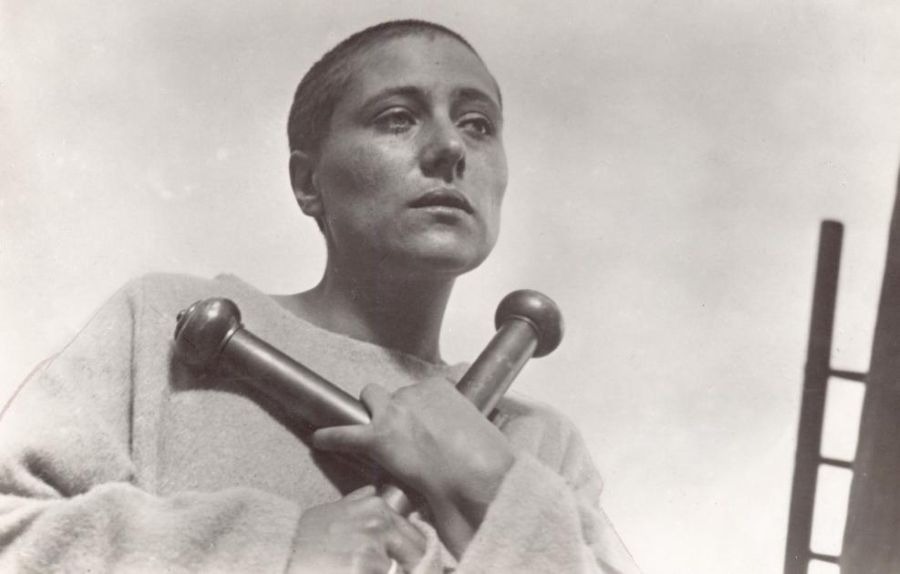
This week I will honor Charlie Kirk by watching the closest thing I can find to a movie about his life: The 1928 masterpiece The Passion of Joan of Arc. I invite you to do the same.
Joan of Arc, Charlie Kirk, ora pro nobis.
John Zmirak is a senior editor at The Stream and author or coauthor of 14 books, including The Politically Incorrect Guide to Immigration and The Politically Incorrect Guide to Catholicism. His newest book is No Second Amendment, No First.