


The Struggle to Forgive
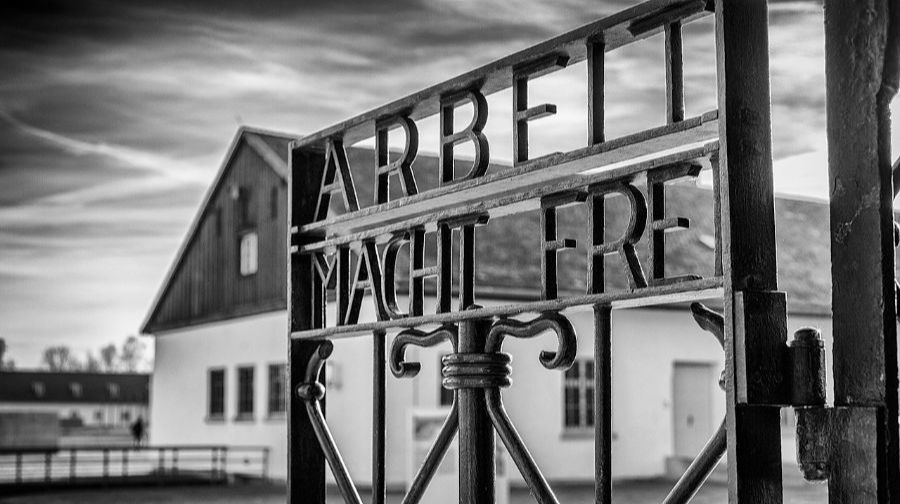
Watching the news stories Monday about the 80th anniversary of the liberation of Auschwitz, seeing and hearing the elderly victims who had survived the worst of the Nazi death camps during the Second World War, my heart twisted in sorrow and sympathy.
The news clip brought to mind someone I had once written about who also suffered greatly at the hands of the Nazis: Corrie ten Boom, the Dutch resistance fighter who hid Jews in her home, then was betrayed and sent to the Ravensbruck concentration camp in Germany. Corrie lost her sister, father, brother, and nephew to Hitler’s fanatical followers.
After the war, Corrie dedicated her long life to forgiveness: She struggled with it, but achieved it, and focused on helping others achieve it. She offers many examples of forgiveness in her remarkable autobiography, The Hiding Place.
Many Opportunities
She writes that on May 10, 1940, just five hours after the Dutch prime minister had announced on the radio that there would be no war with Nazi Germany, an explosion woke Corrie and her sister, Betsie. The Germans were bombing the city of Haarlem.
The glowing sky lit the room with a strange brilliance. Betsie and I knelt down by the piano bench. For what seemed hours we prayed for our country, for the dead and injured tonight, for the Queen. And then, incredibly, Betsie began to pray for the Germans, up there in the planes, caught in the fist of the giant evil loose in Germany.
I looked at my sister kneeling beside me in the light of burning Holland. “Oh Lord,” I whispered, “listen to Betsie, not me, because I cannot pray for those men at all.”
Betsie could forgive these flyers who were destroying their city — but Corrie could not.
Over the next few years, Corrie and her family — all deeply committed Christians — hid Jews in a specially built hiding place behind Corrie’s bedroom, helped smuggle them to safety, and gave them stolen ration cards so they could eat. It’s believed that the ten Booms saved some 800 Jews.
Their work ended on February 28, 1944, when the ten Booms were betrayed to the Gestapo. Both Corrie and Betsie were sent to the Ravensbruck concentration camp. There, Corrie learned the name of the man who had betrayed her family to the Gestapo: Jan Vogel, a fellow Dutchman who later was found to have revealed several resistance movements to the Nazis.
With Betsie’s encouragement, Corrie managed to rid herself of her intense anger and forgive him. She and Betsie prayed, not only for fellow prisoners, but for the vicious camp guards. They prayed for the healing of Germany, and the rest of Europe.
Betsie died in December 1944. Corrie was released a few days later, and returned to Haarlem. There, she began living out her commitment to forgiveness.
A New Challenge
Corrie opened a rehabilitation center that housed some of the most hated people in Holland: people who, like Jan Vogel, had collaborated with the Nazis. They needed to heal, to seek forgiveness, both from God and from those they had harmed, and to forgive themselves. She also opened a home for those who had been brutalized by the Nazis.
In 1947, Corrie’s commitment to forgiveness was severely tested when she spoke at a church service in Munich about God’s forgiveness.
“It was the truth they needed most to hear in that bitter, bombed-out land,” Corrie writes. “When we confess our sins,” she told her audience, “God casts them into the deepest ocean, gone forever.”
After the service ended, the audience members began to leave — all but one. A balding, overweight man began to make his way toward Corrie.
Suddenly, she recognized him, and recalled the leather crop he once carried. The man was a former S.S. guard at Ravensbruck — one who, Corrie recalled, had been especially cruel to her beloved sister.
The man put out his hand. “How grateful I am for your message, Fraulein,” he said. “To think that, as you say, He has washed my sins away!”
Corrie found herself unable to take his hand, instead fumbling with her purse as hate flooded through her. The man continued talking, mentioning that he’d been a guard at Ravensbruck.
“But since that time,” he went on, “I have become a Christian. I know that God has forgiven me for the cruel things I did there, but I would like to hear it from your lips as well. Fräulein, will you forgive me?” Again, he put out his hand.
Thinking of her sister’s suffering, Corrie could not forgive this man. But she knew she had to; God commanded it. As Jesus says in Matthew 6:14-15, “For if you forgive others their trespasses, your heavenly Father will also forgive you, but if you do not forgive others their trespasses, neither will your Father forgive your trespasses.”
The Simple and Horrible Truth
Corrie thought of the home she had started for those who had been harmed by the Nazis. An important truth came into her mind, and she later wrote:
Those who were able to forgive their former enemies were able also to return to the outside world and rebuild their lives, no matter what the physical scars. Those who nursed their bitterness remained invalids. It was as simple and as horrible as that.
And yet, and yet — when it came to this former prison guard, she simply could not do it. Corrie reminded herself that forgiveness is an act of the will, not an emotion.
Silently she prayed, “Jesus, I cannot forgive him. Give me Your forgiveness.”
As she awkwardly reached out and took the man’s hand,
The most incredible thing happened. From my shoulder along my arm and through my hand a current seemed to pass from me to him, while in my heart sprang a love for this stranger that almost overwhelmed me. …
“I forgive you, brother!” I cried. “With all my heart!”
Never, Corrie wrote, had she known God’s love so intensely as she did then.
Christianity is unique in its aspiration for forgiveness, in the degree to which forgiveness lies at its heart. Forgiveness is hard, even when we have only small offenses to forgive. Corrie ten Boom’s life helps us understand how radical this command is. We often don’t like having to do it, and we don’t get to pick and choose who to forgive. Even C.S. Lewis struggled with this, writing in one of his books that it took decades to truly forgive an employee at his boarding school who treated the boys viciously.
The story of Corrie ten Boom ought to be taught in every Sunday School class to kids who think they can’t forgive a friend who stole a boyfriend, or a brother who borrowed a cell phone and damaged it. Corrie’s story will help them remember that forgiveness — even of the greatest evil — is not an option.
Anne Morse is a freelance writer living in Maryland amidst towering piles of books.