


The Most Dangerous Person in China
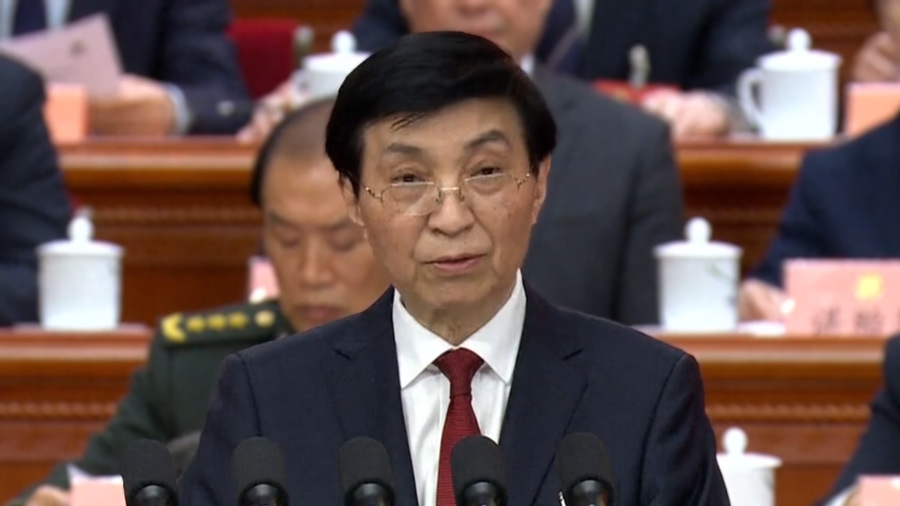
For the past three decades, Wang Huning has been considered the most influential person in the Chinese Communist Party. He has been the key policy adviser for the CCP, holding the highest decision-making position. He was dubbed the Brain of China and the chief architect of the Party. In reality, however, he is reserved, having inveterate aversion to being in the limelight.
Who is this Gray Eminence? And how has he not only survived the vicious power struggle within the Party, but continually exerted his compelling sway? This article attempts to answer these questions, looking into the environment in which he was raised, his unique qualifications and his impact.
Brilliant Mind
Born in 1955, he grew up in a family of CCP officials, which qualified him to be one of the “second-generation Reds” — a term used for the children of first-generation political elites of the CCP.
When the Cultural Revolution (1966 – 1976) broke out, his father suffered political persecution. During this turbulent period, trying to prevent his young sons from courting trouble, his father locked Wang and his two brothers in their home, forcing them to copy Mao’s Selected Works or read books. As a result, Mao’s thoughts left a deep imprint on Wang’s young mind. He later said it also contributed to his fondness for reading and his preference for quiet, peaceful surroundings.
Compared with ordinary Chinese, he lived a privileged life. Even during the Cultural Revolution, he was able to obtain books unavailable to most Chinese. And he devoured every book he could find, eventually becoming well-versed on various subjects, including history, philosophy, and classic literature. When the government reinstated college entrance exams after the Cultural Revolution ended, he bypassed the bachelor’s program and was admitted directly into the master’s program in International Politics at the prominent Fudan University.
Three years later, he was appointed as a teaching assistant at his alma mater. Soon after, he and another political scholar developed the conspicuous principle of One Country Two Systems which was later applied — theoretically and superficially — to Hong Kong when it was returned to China by Britain in 1997. He published widely and became China’s youngest associate professor at the time. His fame created opportunities and pressure for him to share his experience publicly. This annoyed him. During an interview, he said, “What I want most now is a peaceful and quiet environment, otherwise I will be very depressed.”
Drafted into the Party
It seemed unlikely that a person with such a temperament could aspire for political heights. Nonetheless, the CCP coveted Wang’s unique qualities, which left him with little choice.
Traditionally, Chinese culture venerates education, holding intellectuals in high esteem. Government officials usually were chosen through an elaborate examination system. But the CCP had never trusted intellectuals, considering them dangerous, rebellious, and a potential threat to its rule. For a long time, intellectuals under the CCP’s rule remained at the bottom of the society.
However, after the Cultural Revolution, when Deng Xiaoping began economic reform, intellectuals in all fields were emancipated and given important positions throughout the country. Nonetheless, the CCP only employed them to help save a crumbling China, not to rule the nation; the Party could never trust anyone without Red DNA. There was a saying: “Only the son whose father has fought with blood and sweat for the domination of the CCP would be willing to protect and defend its sovereign power with the same vigor and resolution.”
However, the majority of second-generation Reds were goofs and squanderers, lacking both mental acumen and ambition. Their Red DNA didn’t afford them the ability to govern a vast dominion – only living off their parents’ influence and using it to obtain special favors.
The Paradox
Wang is one of the exceptions, which makes him an ideal candidate for a high-ranking position to carry on the cause of the Party. Thrust onto the political stage, he had no choice but to leave his academic career, living in an environment that is neither peaceful nor quiet.
His ascension did not raise any questions; he was overqualified for it to start with. But today, many outside China wonder how he has maintained his position for so long. Throughout the CCP’s history, power struggles have been an ever-present phenomenon. Personnel changes take place when a different sect within the Party prevails. Yet, Wang was able to successively serve three different factions, from Jiang Zeming to Hu Jingtao to Xi Jingping. What’s his secret?
Perhaps Wang’s father’s experience during the Cultural Revolution had paradoxical effects on him. On one hand, it made him timid and cautious. On the other, this fear didn’t make him want to change things within the Party. Instead, he overcame his fear by advocating and reinforcing the very Marxist ideology that had brought hardships on his family.
One of the hallmarks of life under communist rule is unpredictability. Words unwittingly uttered can change a person’s fate for the worse. Speech uttered with good intentions can be misunderstood and lead to an unexpected tragedy. In a free society, these kinds of things can be easily corrected. Yet, under communist rule, any verbal misstep is lethal and final.
In 1957, Wang Huning’s father vouched for a high-ranking general of the CCP, whom Mao opposed. Later in the Cultural Revolution, his words — though few — were disclosed, and he paid a price for what he had said a decade earlier. In a totalitarian regime, the fewer one’s words, the safer one’s life. But in reality, only a handful of people are able to control their tongues. Wang’s father, though a cautious person himself, was not perfect.
That may have had a profound effect on Wang. He seldom talks publicly. He observes, showing no emotions. After leaving academia and becoming the Party’s top adviser, he began to cut off most contact with people from his previous life.
At one point, he became paranoid about the book he had written on his daily life and thoughts, afraid something in it could not stand the scrutiny of his new situation. He attempted to expropriate every copy sold. Not only was it impossible, it actually boosted the online sale of the used copies, jacking up the price a hundredfold.
Mentally Unstable?
This suggests that Wang Huning suffers from psychological instability. This abnormality, however, is a rare asset in a Marxist regime where tyrants are always looking out for ambitiously aggressive individuals. For them, people like Wang pose no threat. All three leaders he advised in the past 30 years trusted him and thought highly of him.
Further, his unwavering devotion to the communist cause also makes him trustworthy and indispensable. Unlike some high-ranking CCP officials who advocated political reform in addition to economic reform, Wang Huning has been a fervent protecter and defender of the political and economic system of Marxism. This has puzzled many, because he had firsthand experience of the atrocities the CCP committed, as well as thorough knowledge of Western thought. It would be reasonable and natural for him to consider trying any other position.
Some believe his visit to the U.S. in 1991 is significant, considering it a decisive moment for him to reassure his Marxist belief after observing the problems in the free world. But I think his political thoughts had already taken shape by then. During the Tiananmen Square democracy movement in 1989, he supported using force to crack down on students. He had no interest in Western democracy and sneered at students, whom he considered lacking knowledge of the complexity of life. Perhaps more likely he came to the US in search of evidence to disprove the validity of a constitutional republic, as reflected in his book, America Against America.
I think his devotion to Marxist ideology is the way he copes with the fear he experienced growing up. This is one of the phenomena that is difficult to explain to Westerners because it is not the way free people think. In 1988, I interned at a high school in western China. My advisor was a middle-aged gentleman who kept telling us how he appreciated the Party and how much he owed the Party. His servility reminded me of some adults I saw during the Cultural Revolution. That period had ended more than a decade earlier, but my advisor acted otherwise. I learned later that he was implicated badly during that terrible time.
A Broken Spirit
It’s almost impossible to effectively explain how a mind can be so twisted that it loses its autonomy, and how the twisted mind indefatigably fixes on an idea, incapable of being persuaded by reason and logic. Wang once claimed, “The Communist Party can only accept one doctrine, Marxism-Leninism.” For him, the centralized government of a one-party state is necessary to maintain economic growth and social stability.
He is a product of particular period in Chinese history. Being the key political theorist, he holds considerable power to influence the direction the Party takes. He helped create all Xi’s political concepts, including The Belt and Road Initiative, “Wolf Warrior” diplomacy, the “442 formula” (Four Consciousnesses, Four Confidences, and Two Upholds), and Chinese-style modernization, just to name a few.
A few days ago, as I listened to a Chinese student, Yurong Jiang, deliver a speech at Harvard’s commencement ceremony. I kept catching Wang’s concept of “a community with a shared future” in this emotional address. Wang’s ghostly image seemed visible behind the speaker. The impressive feat Wang has achieved is unparalleled in the history of the CCP, and the scope of its influence is not limited to China.
When we talk about the threat China poses to the U.S., Xi Jingping naturally comes to mind. In reality, however, the one who concocted Xi’s ideas poses the biggest threat. Wang Huning is responsible for all the horrible things that happened in the past few decades. Xi and others simply implemented what he laid out.
Wang Huning is the most influential person in China. And for that reason, he is also, without doubt, the most dangerous one.
Chenyuan Snider was raised in Communist China and majored in Chinese language and literature in college. After immigrating to the U.S. and studying at Assemblies of God Theological Seminary and Duke Divinity School, she became a professor at Christian colleges and seminary. She and her husband live in northern California and have two grown children.