


The Miracle and Menace of AI Part 6
AI-Proofing Your Spirit
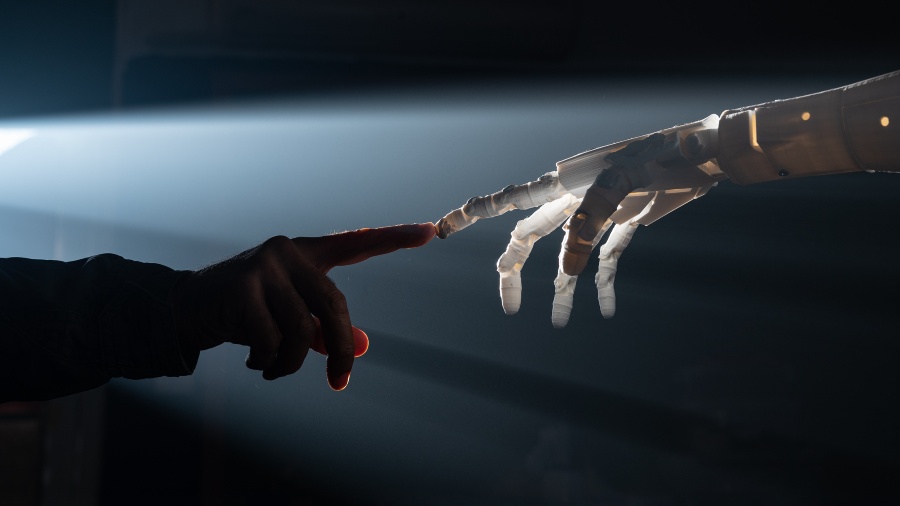
The Christian spiritual disciplines of prayer, reading the Bible, attending church, serving, giving, etc. are essential and timeless. No matter the challenges of a particular epoch, regular engagement with the things of God is necessary to grow spiritually. There are two Christian practices, though, that I believe will be crucial to a world flooded with AI.
First, fight to foster community. Preserving relationships is already difficult, but combatting AI-driven disconnection will require intentional effort. It may be demoralizing to have invitation after invitation turned down, but organizing dinners, neighborhood parties, or church gatherings is deeply beneficial. The author of Hebrews had something like this in mind when he wrote:
Do not give up meeting together, as some are in the habit of doing, but encourage one another as you see the Day approaching. (Hebrews 10:25)
Community is a critical safeguard to our spiritual health. People who become “internet hermits” fall prey to strange religious ideas and conspiracy theories. In community, we find encouragement to bolster our emotions, correction for our faults, and teaching to guide us toward truth.
AI Won’t Read It for You
Second, read Scripture so that you – you personally – know what it says and are familiar with its themes taken in context. Do not rely on an AI chatbot to sum up the book of Romans for you, and certainly don’t accept something AI says as the “gospel truth.” Reject temptations to become spiritually lazy. Pick up and read an actual, physical Bible rather than using an app on your phone. Write notes in the margins as you read, or in a journal.
When you encounter stories of AI contradicting or debunking a part of the Christian faith, be extremely skeptical. Remember that AI is not a truth detector and, like all programs, obeys the law of garbage in, garbage out. It has no mind to weigh and evaluate evidence, and certainly no soul to engage in a relationship with God.
Watch out for claims that AI has revealed something new or shocking about the Christian faith. Discoveries of something “new” that Christians have gotten wrong all this time are almost always distortions or outright falsehoods. Christianity has been around for 2,000 years, and some of the best thinkers of history have applied themselves to its theological, philosophical, and historical details. When challenges arise, do your own homework or talk to someone who has. Do not rely on AI.
Bravery in the New World
I have deep misgivings about this new era of AI-dominated technology, especially what it will mean for the next generation. But the worst-case scenarios forecast by internet doom prophets are not to be feared. Researching this article helped me formulate some sound technological and philosophical reasons why AI won’t take over the world – at least not like in the movies.
In the brave new world of AI, we mustn’t make the mistake of committing “chronological snobbery” by thinking that modern society is any more intelligent than our forebears. The ancient engineers who designed the pyramids were no less intelligent than the engineers designing AI algorithms today – they just had a different knowledge set to work with.
Wisdom tells us that no matter what world we find ourselves in, human nature doesn’t change. The same capacity for evil or good exists in mankind now that existed thousands of years ago — or as Pascal put it, “greatness, wretchedness.” Our motivations also remain the same.
Consequently, a fallen world with AI presents much the same challenges that the Church has faced from age to age. The exact shape those challenges take may change, and the fronts in the war may shift with cultural currents. Narcissism, laziness, addiction, and loneliness are likely to be the main symptoms of the AI era. The Church, armed with the Gospel of Jesus Christ, stands uniquely qualified to address these human problems. His Spirit will empower us to meet those challenges:
For God did not give us a Spirit of fear, but of power, love, and self-control. (1 Timothy 1:7)
The Christian’s ultimate hope is in Jesus’s return. Even if we know nothing about technology or philosophy, we can discount apocalyptic claims about AI because we know the end of the story.
Humanity will persist until the end (see 1 Thessalonians 4:15) and will not be exterminated by machines. In the Olivet Discourse (Matthew 24), Jesus Himself told His disciples that people will be going about their normal, everyday life right until He comes again. And in the meantime, Jesus promised that the gates of Hell shall not prevail against the church (Matthew 16:18). That certainly applies to killer robots as well.
Hopefully, this series has shed some light on both the promise and menace of AI. Because we know Jesus, Christians can stand firm amid the technological gusts that rock our civilization. Be wary of dependence on AI, but also be glad. God has graciously given us the answers to what all humans, deep down, need the most.
No AI, no matter how smart, will ever replace that need.
Brandon Aldinger is a chemist with a doctoral degree who works in an industrial research laboratory. He’s had lifelong interest in issues of science and faith, and he is passionate about training fellow Christians to think clearly about and stand firm on their beliefs within a hostile culture.