


The Brew: Timeout from Tariffs, a Hostage Homecoming, and Cheaper Drugs (Yes, Really)
Well, that escalated efficiently.
It’s only May, but President Donald Trump has already racked up a list of victories that reads like a campaign manager’s dream. Just over the last few days, he helped pause the United States-China tariff war, oversaw the release of the last living American hostage held by Hamas, and signed an executive order promising major cuts to prescription drug prices. Each of these events is a headline on its own. Together, they signal a sharp pivot in global diplomacy and domestic policy, all wrapped in a distinctly Trump style.
The United States-China Tariff Truce: A Global Trade Game Changer
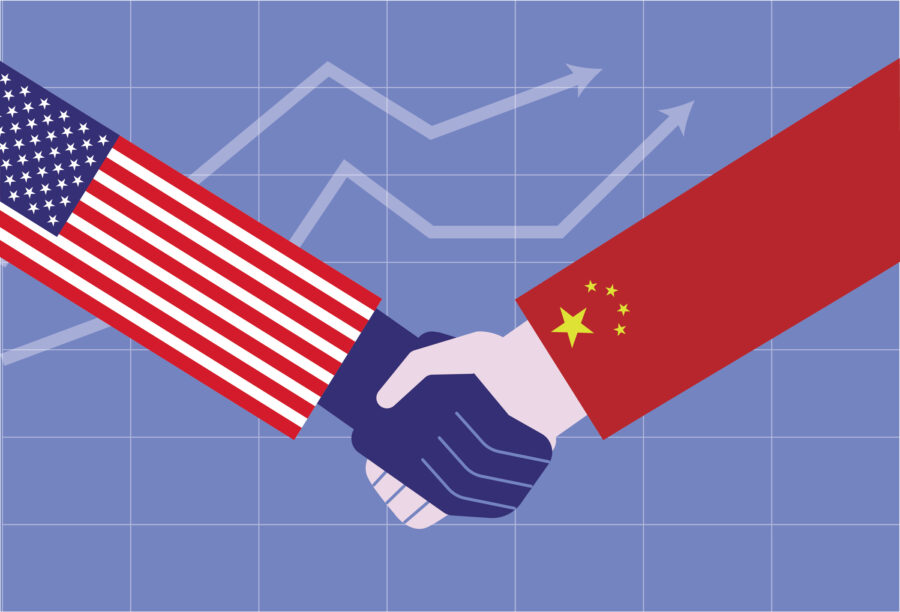
The U.S.-China tariff truce has emerged as a pivotal moment in global trade relations. Yesterday, the U.S. and China agreed to a 90-day suspension of most tariffs, with the U.S. reducing its tariffs from a staggering 145% to 30% and China lowering its rates from 125% to 10%. This reciprocal move, Treasury Secretary Scott Bessent said, marks a significant de-escalation in the ongoing trade war between the world’s two largest economies.
BREAKING: United States cuts tariffs on Chinese goods from 145% to 30% for 90 days.
China lowers tariffs on the U.S. from 125% to 10% for 90 days. pic.twitter.com/kSjVaMQfw2
— KanekoaTheGreat (@KanekoaTheGreat) May 12, 2025
The immediate impact on global markets has been profound. Treasury yields soared, with the 10-year yield jumping 6.6 basis points to 4.441% and the two-year yield rising over 10 basis points to 3.985%. This surge reflects investor confidence in the temporary stabilization of trade tensions, which had previously threatened to push the U.S. and global economies into recession. As Bessent noted in a news conference, “We had very productive talks, and I believe that the venue, here in Lake Geneva, added great equanimity to what was a very positive process.”
The U.S. and China have agreed to a 90-day trade truce. The U.S. will reduce tariffs on Chinese goods to 30% (from 145%), and China will lower its tariffs to 10% (from 125%) for the same period, as stated by U.S. Treasury Secretary Bessent. pic.twitter.com/ci6H1oBUY1
— Ian Miles Cheong (@stillgray) May 12, 2025
For businesses and consumers, this truce offers breathing room to reassess supply chains and pricing strategies to lower costs for imported goods, potentially easing inflation pressures. However, it is temporary, and the looming threat of reimposed tariffs keeps the pressure on China to address structural trade abuses.
CNBC reports:
The agreement between the two sides is essentially a 90-day pause that will see reciprocal duties halted though the 10% tariff as well as a 20% charge related to fentanyl remain in place.
Bessent expressed encouragement on the fentanyl issue in which Chinese officials “are now serious about assisting the U.S. in stopping the flow of precursor drugs.” Bessent did not indicate a specific date when the next round of talks will be held but indicated it should be in the next several weeks.
This strategic pause in the trade war is a testament to the power of economic leverage, but it also underscores the fragility of global trade relations. Businesses must prepare for potential volatility as the 90-day window closes, with the possibility of tariffs snapping back into place. If that happens, prices will rise again.
Slashing Drug Prices to Put Americans First
Simultaneously, the Trump administration is revolutionizing healthcare costs with an executive order aimed at slashing prescription drug prices by up to 80%. Trump announced the plan on his Truth Social account Sunday evening, and signed the executive order during a press conference yesterday morning.
His order seeks to align U.S. drug prices with international rates, ensuring that Americans no longer pay exorbitant amounts compared to other countries. As Trump declared, “We’re no longer paying 10 times more than another country.”
The policy, dubbed the “most favored nation” plan in the order, targets high-cost drugs, particularly those for seniors relying on Medicare. According to the U.S. Department of Health:
Over the period from January 2022 to January 2023, more than 4,200 drug products had price increases, of which 46 percent were larger than the rate of inflation. The average drug price increase over the course of the period was 15.2 percent, which translates to $590 per drug product.
This move is a direct challenge to pharmaceutical companies, forcing them to match the lowest global prices and ending what Trump describes as “systematic overcharging” — meaning substantial savings for consumers on prescription drugs. For pharmaceutical companies, it represents a seismic shift, potentially threatening profit margins for both them and the members of Congress who receive kickbacks on the deals, as Health and Human Services Secretary Robert F. Kennedy Jr. pointed out:
RFK Jr. just exposed why everyone in DC is panicking about President Trump’s executive order lowering drug prices.
“There’s at least one pharmaceutical lobbyist for every congressman, every senator on Capitol Hill, and every member of the Supreme Court… The industry itself… pic.twitter.com/lywGOCSZ1z
— George (@BehizyTweets) May 12, 2025
This executive order is a bold step toward much-needed healthcare reform, but it also highlights the tension between cost reduction, innovation, and drug accessibility.
Treasury Yields Soar Amid Policy Shifts
The economic empowerment from these policy shifts is already evident in soaring Treasury yields. The U.S.-China tariff truce, combined with domestic policy changes like drug price cuts, has injected a dose of optimism into financial markets. As Treasury yields rise, investors are betting that trade tensions will stabilize, boosting economic growth.
Dow Jones Futures are booming thanks to President Trump’s trade deal progress with China.
Remember when Democrats said tariffs don’t work and look at the stock market?
Those Democrats are awfully quiet right now. pic.twitter.com/RCjZtLL7lx
— Paul A. Szypula (@Bubblebathgirl) May 12, 2025
This rise is partly due to the relief that a recession might be avoided, as economists had feared the high tariffs could derail global growth. The connection between these yields and Trump’s policies is clear: The tariff truce reduces uncertainty, while the drug price cuts promise to free up consumer spending, potentially stimulating the economy.
For investors, borrowers, and businesses, these developments are a double-edged sword. While the short-term gains are promising, their long-term sustainability remains uncertain. The 90-day tariff truce is only a temporary fix, and the drug-price cuts face could face legal challenges. Yet the immediate market response suggests a cautiously favorable outlook.
Edan Alexander’s Release Signals Diplomatic Victory for Trump
Trump scored a significant diplomatic win yesterday when Hamas released 21-year-old Edan Alexander, the last living American-Israeli hostage the terrorists have been holding since attacking Israelis and others at a music festival on October 7, 2023.
— Donald J. Trump (@realDonaldTrump) May 11, 2025
Yesterday marked Alexander’s 580th day of captivity. His release, negotiated through a deal with the U.S., marks a critical moment in U.S.-Israel relations and Middle East policy after Trump’s administration brokered a monumental peace deal between India and Pakistan a few days ago.
The diplomatic significance of this event cannot be overstated. It demonstrates Trump’s ability to leverage international pressure and negotiate directly with adversarial groups, as he did with the Abraham Accords. It also reinforces his image as a decisive leader. Alexander’s release also strengthens the U.S.-Israel alliance as the Jewish state continues to negotiate the release of 59 remaining hostages held by Hamas, of which only 24 are still alive.
Along The Stream…
Later this morning, discover why the Western order established after World War II is crumbling — and how that is now sparking a populist uprising that’s reshaping Europe and beyond in Michael Geire’s “Killing Democracy to Save It.”
And if you want to feel hopeful for the next generation’s passion for the Lord, be sure to check out the five-minute video of 14-year-old Caleb Svangren preaching a “Fire Message“!
Gayle McQueary is The Stream’s social media coordinator. She has a background in production and is a scary judge of overpriced goods that could be less expensive if they were made in America.