


The Brew: China’s Tariff Tantrum, Hollywood’s Cut, Coal’s Comeback, Steel’s Standoff, and Paxton’s Power Play
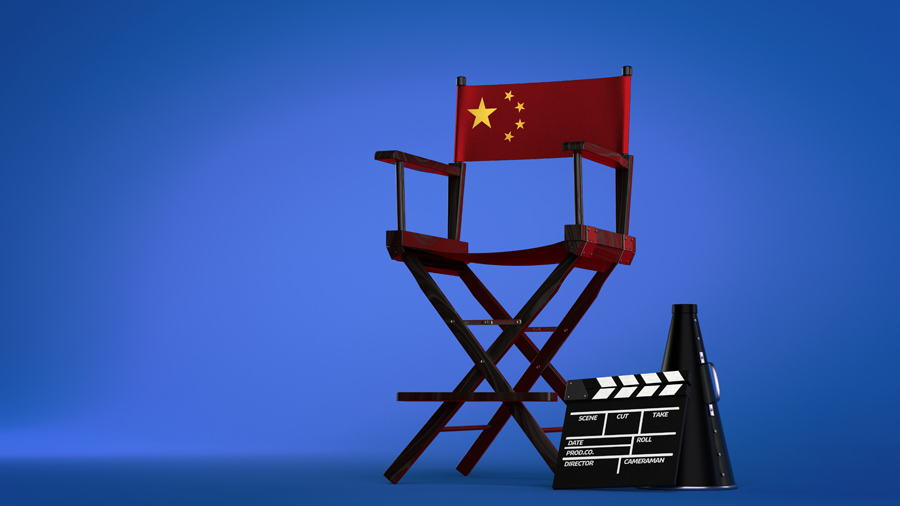
Picture this: Hollywood’s latest blockbusters get the boot from China, U.S. coal miners dust off their helmets, British steelworkers sweat over a Chinese-owned plant, and Texas Attorney General Ken Paxton saddles up for a Senate showdown — all while Ukrainian troops nab Chinese fighters siding with Russia. That’s the summer blockbuster currently taking shape, and both President Donald Trump and China are vying to be the director calling the shots in how it plays out.
Hollywood’s China Conundrum: Less Cash, Fewer Commies
This past weekend, A Minecraft Movie by Warner Bros. and Legendary outperformed China’s local blockbuster “Ne Zha 2,” which has earned nearly $2 billion worldwide over its 10 weeks in theaters. However, this success might be temporary due to escalating U.S.-China trade tensions.
On April 2, President Trump imposed 54% tariffs on China, which prompted the CCP to enact a 34% counter tariff on U.S.-made goods. Bad move “red sun,” because now China is looking at a total tariff rate of 125%.
But rather than backing off, now China might be doubling down on bad decisions: Bloomberg reports that influential Chinese bloggers Liu Hong and “Chairman Rabbit” have shared their strategy for new retaliatory measures China might want to take, including reducing or banning American film imports.
On one hand, this could severely impact Hollywood’s access to China’s lucrative box office, which is its second largest revenue stream. On the other hand, this could mean Hollywood no longer takes its creative orders from China. Think about it: When is the last time China was the villain in a movie or TV show?
Back in 2011, the Red Dawn remake made news when MGM pushed its release date out so the filmmakers would have time to change the storyline from China invading the U.S. to North Korea invading the U.S. (In the original, released in 1984, the invading army was the Soviet Union. That plot line still works; Russians are still considered to be “bad” by most Americans. Why do they always have to go and change everything??) Nonetheless, the studio still felt the need to spend $1 million to construct a new opening sequence, re-edit several scenes, and digitally change Chinese symbols to Korean ones in order to avoid irking the ire of the Great Dragon.
In case you need another reason to like Trump’s tariffs: China is reportedly targeting U.S. films in a new retaliatory measure. Not entirely positive, but would a hit to Hollywood be a bad thing ? ♀️@JackoWilliams64 @JasonJonesVPP @theprofsrecord pic.twitter.com/vXkRnuG8WB
— The Stream (@Streamdotorg) April 8, 2025
China tightly controls foreign film distribution within its borders, allowing only 34 “revenue-share” films annually or licensing others for a flat fee. As an example, after a lackluster 2024 with $5.8 billion in box office revenue, China anticipates a 30% increase to $7.6 billion in 2025, driven partly by Hollywood releases like Mission: Impossible – The Final Reckoning and yet another remake of Superman. A ban could jeopardize this growth, especially given China’s role in the success of films like Avengers: Endgame (2019) and Avatar: The Way of Water (2022) which grossed over $800 million collectively in China alone.
However, some industry insiders question how seriously to take the threats, noting that Marvel’s Thunderbolts recently secured a China release date of April 30, and no official policy shift has yet been confirmed. A ban could also conflict with China’s economic interests, given the government’s ties to the exhibition sector.
Forgive us if we’re not sorry to see the chance for smaller studios that don’t have to bow to China’s influence at the box office to compete with major studios who salivate over the millions their Chinese friends pay in exchange for having their country portrayed in a good light. As of yesterday, China was still going for an 84% tariff on all American goods, and has vowed to “fight to the end.”
Unrestricted warfare, indeed.
Chinese Soldiers Caught Red-Handed in Ukraine
Speaking of red flags, Ukraine President Volodymyr Zelenskyy dropped a bombshell on X Tuesday: Ukrainian forces captured two Chinese nationals fighting with Russia in Donetsk, where Russian President Vladimir Putin has controlled 20% of Ukraine’s turf since the invasion in 2022. Six Chinese soldiers were in the mix — two carrying identification documents, bank cards, and personal data, and one even chatting in Mandarin on video about a recent firefight.
Our military has captured two Chinese citizens who were fighting as part of the Russian army. This happened on Ukrainian territory—in the Donetsk region. Identification documents, bank cards, and personal data were found in their possession.
We have information suggesting that… pic.twitter.com/ekBr6hCkQL
— Volodymyr Zelenskyy / Володимир Зеленський (@ZelenskyyUa) April 8, 2025
Zelenskyy says Russia’s use of Chinese fighters — alongside others like North Koreans, who also have been captured — is a sign that Putin aims to escalate rather than end the war. Ukraine’s response included summoning China’s chargé d’affaires in Kyiv for an explanation, with Foreign Affairs Minister Andril Sybiha arguing that this undermines Beijing’s credibility as a UN Security Council member advocating peace.
U.S. State Department spokesperson Tammy Bruce labeled the reports “disturbing” during a press briefing Tuesday, pointing to China’s role as a “major enabler” of Russia via dual-use goods like computer chips and jet parts. As of yesterday, Russia had declined to comment on Zelenskyy’s claims, and China’s foreign ministry called the accusations “groundless,” stating it was verifying the situation with Ukraine, but emphasizing its policy against citizens joining armed conflicts.
An investigation is underway, and the captives are currently cooling their heels with Ukraine’s security service. Maybe they thought “Donetsk” was a new Call of Duty map?
British Steel’s Chinese Puzzle
Across the Pond, the UK’s last raw-steel plant in Scunthorpe — which has been owned by China’s Jingye Group since 2020 — teeters on the brink of collapse. Its blast furnaces are bleeding cash, hit by tariffs, market woes, and the costs of green energy plans. Jingye has canceled raw material orders, risking 2,700 jobs and a shutdown by late May unless iron pellets arrive pronto.
The British government offered £500 million ($640 million) to help modernize the plant, but Jingye rejected the offer. Maybe $1.5 billion was all its leaders were willing to invest on the plant’s unstable production? Meanwhile, Prime Minister Keir Starmer vows to preserve UK steel production, keeping all options, including nationalization, open to save Britain’s 130-year steel legacy.
UK steel output has fallen 80% since the 1960s due to Chinese competition and a shift to recycling. During the 1970s Britain was the fifth largest steelmaker but only produced 0.3% (5.6 million tons) of the global output in 2023. By comparison, China produced 1.02 billion tons of steel that year, accounting for 54% of worldwide production.
Lawmakers stress steel’s role in British economic independence, with Reform UK’s Nigel Farage, advocating temporary nationalization.
Reform UK will nationalise British Steel and protect British workers. #SaveOurSteel pic.twitter.com/fAbmCmdwIv
— Nigel Farage MP (@Nigel_Farage) April 8, 2025
Industry Minister Sarah Jones prefers private cash but isn’t ruling out a rescue. Imagine a U.S. investor swooping in: “Let’s team up, beat China, and forge some steel!” Stranger things have happened.
Trump’s Coal-Back
Back stateside, Trump signed an executive order on Tuesday to resurrect the U.S. coal industry, aiming for “American energy dominance.” The order designates coal as a “mineral” for federal benefits, lifts barriers to coal mining on federal lands, ends the Jewell Moratorium which paused coal leasing on Federal lands, and rescinds anti-coal federal policies.
.@POTUS: “Today, we’re taking historic action to help American workers, miners, families and consumers. We’re ending Joe Biden’s war on beautiful, clean coal once and for all… we’re going to put the miners back to work.” pic.twitter.com/XSpoHkT11X
— Rapid Response 47 (@RapidResponse47) April 8, 2025
Former presidents Obama and Biden aggressively targeted the U.S. coal industry, with the 2015 Clean Power Plan triggering a 40% reduction in coal plants by 2024 and dropping coal’s share of U.S. power from 50% in 2000 to 15% last year. While environmentalists praised this globalist climate scheme, the rest of us felt the brunt of it right in our wallets, primarily through higher electric bills.
Trump’s plan is to promote coal leasing, exports, and technologies, explore coal’s role in steel production and AI data centers, and seek to classify it as a “critical mineral.” Coal’s economic value is currently estimated to be in the trillions and has a strong record of creating jobs.
The administration argues that coal will help ensure American energy independence, jobs, and competitiveness through its “clean” label and help in meeting rising electricity demands from manufacturing and AI. With more companies coming to America to make products (thanks to those pesky tariffs!), this action is just the right fire manufacturers need to run production.
Let’s turn the lights back on, America. Maybe we’ll even see incandescent bulbs make a return under this administration!
Paxton’s Texas-Sized Senate Play
Finally, Texas Attorney General Ken Paxton has officially announced he’ll be running for a seat in the U.S. Senate, challenging incumbent Senator John Cornyn in the 2026 Republican primary. Paxton, a vocal Trump supporter, emphasizes his record of suing the Biden administration more than 100 times on issues like border security and Second Amendment rights.
It’s official. I’m running for U.S. Senate to fight for President Trump’s agenda and take a sledgehammer to the D.C. establishment.
Together, let’s send John Cornyn packing: https://t.co/rQl0P2UnWU pic.twitter.com/1KIajC0JhN
— Attorney General Ken Paxton (@KenPaxtonTX) April 8, 2025
Cornyn, also a former Texas attorney general (1999-2002), has served the Lone Star State (and also himself) ever since winning his initial election in 2002 when decided run for U.S. Senate in 2002. Cornyn and Paxton have clashed on social media, most recently when Paxton took a jab at Cornyn’s run at becoming Senate Majority Leader.
Trump almost tapped Paxton to be U.S. Attorney General (probably not because of their similar impeachment records) before choosing Florida Attorney General Pam Bondi. We know Paxton is up for the fight against Cornyn, and this showdown is sure to be bigger than a longhorn stampede.
Along The Stream…
Want to know the secret to 50 years of marriage from a guy who’s done it? Hear Rick Malm’s golden advice — including his wife’s gem: ‘Learn to cry out to God’ — in “How to Stay Married for 50 Years.”
Later today, don’t miss Dr. Jennifer Roback Morse’s article, “Supreme Court to Decide Case Concerning Christian Counseling, Part 1” to read about the issues involved in state bans on so-called “conversion therapy” for people struggling with unwanted same-sex attractions.
Gayle McQueary is The Stream’s social media coordinator. She has a background in production and is a scary judge of China stealing the script.