


Slain Israeli Embassy Couple Kindles Debate on Messianic Judaism and Christian Origins
Yaron and Sarah were like the first Jewish apostles in a Jewish assembly serving a Jewish Messiah
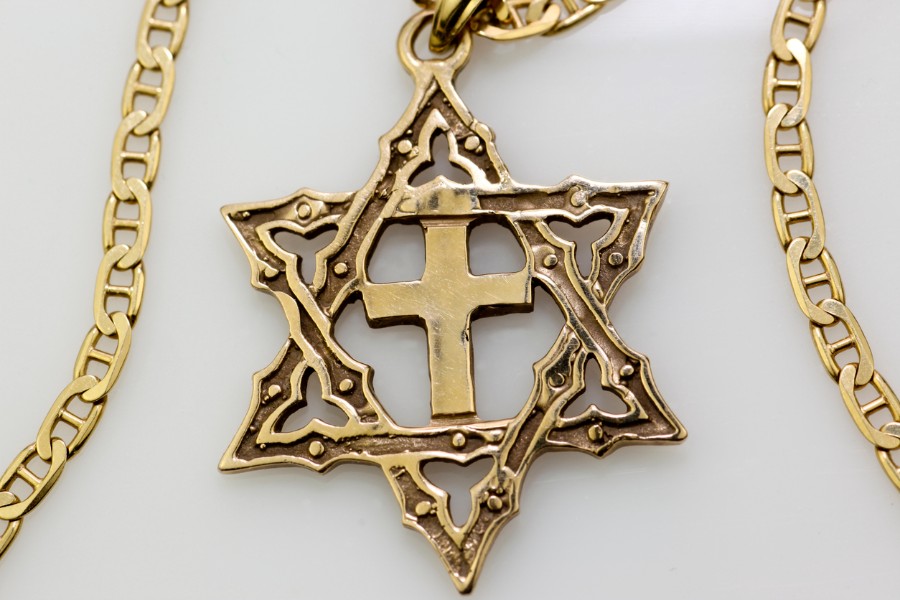
The grotesque slaughter of Yaron Lischinsky and Sarah Milgrim, the young Israeli Embassy staffers who were gunned down on May 21 in Washington, D.C., has sparked a spirited discussion concerning their faith: Were they Jews, Christians, or Messianic Jews?
In particular, the debate is raising questions about Messianic Judaism. What is this movement? Is it legit? Are Messianic Jews traitors to Judaism? And if they believe in Jesus, why don’t they identify as Christians and join a Catholic, Protestant, or Orthodox church?
Yaron and Sarah were killed because a pro-Palestinian activist, Elias Rodriguez, identified them as Jews. “Free, free Palestine!” Rodriguez shouted after he was arrested. Footage of the shooting shows that he continued firing even after the couple had fallen. As a wounded Sarah tried to crawl away, Rodriguez continued shooting, stopping only to reload. When she sat up, he fired again, repeatedly.
What Is Messianic Judaism?
The media first reported that the couple were Israelis. Most people assumed they were Jews. The New York Times later revealed that Yaron had a Jewish father and a Christian mother; he himself was a Christian.
Sarah’s family belongs to the Reform congregation B’nai Jehudah. Her parents “beamed with joy and pride about Sarah’s work and her steadfast devotion to Judaism and to Israel,” Rabbi Kramer told the Jewish media outlet Forward.
A day later, Forward reported that Yaron had “found a spiritual home in Melech Ha’Mlachim — ‘King of Kings’ in English — a Messianic congregation near Jerusalem’s bustling Mahane Yehuda market.”
The Jewish media correctly described Messianic Judaism as “a religious movement made up of people who identify ethnically and culturally as Jewish and believe that Jesus — whom they call Yeshua — is the promised Messiah.”
“Our congregation is all Jewish Israelis for the most part,” David Boskey, a biblical scholar and a member of Melech Ha’Mlachim, told Forward. “We read from the Torah scroll. Everything is done in Hebrew.” He confirmed that Yaron’s family also belong to the Messianic assembly.
“Still, Lischinsky’s religious identity has stirred confusion in the wake of his death,” Forward noted. Boskey said that Yaron, “like others in their congregation, saw himself as a Jew who believed Jesus was the Messiah — and that this belief did not negate his Jewish identity.”
Anglicans Who Show “Utmost Respect for the Chosen People”
I learned that Yaron and Sarah had been regularly attending the Church of the Ascension and St. Agnes, an Episcopal church in Washington, D.C., over the last seven or eight months. I spoke to the rector of the Anglican parish, Fr. Dominique Peridan, who heaped the most wonderful praises on the young couple.
“I’d like to think that they felt comfortable here because we are a parish that hopes reverently to honor and engage our Risen Lord,” Peridan told me, “and for whom there is the utmost respect for the Chosen People, our elders, with whom there is deep spiritual continuity.”
When I asked him about Messianic Judaism, he replied: “I hear Jesus saying, ‘I have come not to abolish the law but to fulfill it,’ and I extend it to faith: ‘I have come not to abolish the faith [of Judaism] but to fulfill it.’”
Sarah was “drawn to Christ” and accompanied Yaron on most Sundays to worship. “I do not know what was happening in her heart in terms of faith. We had yet to have that conversation,” Peridan said. “She seemed to be seeking and exploring, and she seemed very comfortable.”
The couple were “quietly magnetic” with a “beautiful radiance and humility,” and “this was becoming their spiritual home,” he said. “I can’t imagine she came only to please (Lischinksy).”
I’ve faced off frequently with Christians who have no love for Jews, so I already knew that some — especially certain traditionalist Catholics — would spew venom at the idea of the couple identifying as disciples of the Jewish Messiah while at the same time refusing to “convert” to Catholicism.
Pious Fiction That Has No Historical Basis
“Jesus founded the Roman Catholic Church, did He not?” they would yell on social media. “And Paul and Jesus’s other apostles rejected Judaism and ‘converted’ to Christianity! They became Catholics! Peter was the first Roman pontiff, for goodness sake! So how can Yaron identify as a Messianic Jew!? There is no salvation outside the Catholic Church!”
Such affirmations serve a purpose as expressions of faith — yet, as most Catholic scholars honestly admit, they are historically regarded as little more than pious fiction. My Messianic Jewish friends and fellow academics cringe every time we hear Catholic apologists spout such narratives.
After all, the first people to believer in Yeshua, the Jewish Messiah, were Jews. They did not “convert” to a religion called “Christianity” or “Catholicism.” They did not join the Catholic Church, the Orthodox Church, or the First Baptist Church of Jerusalem.
The apostles, Jews, and other God-fearers who believed that Yeshua was the promised Messiah of the Hebrew Bible, did not identify as Christians, let alone Catholics. The term Christianos is found just three times in the New Testament. It originates as “outsider-coined” and “outsider-used language,” writes Paul Treblico in his book Self-Designations and Group Identity in the New Testament.
Meanwhile, the Apostle Paul never referred to himself or anyone else as “Christian.” The Jesus-believers were not founding a new religion; they were one of many Jewish sects. They did not believe that Judaism was fundamentally flawed. Paul attacked the Judaizers in Galatia only because they are imposing the Mosaic Law on Gentile believers.
The Torah had always taught that Jews are justified by faith, as was their father Abraham, writes Paul (Galatians 3:6). The Jewish apostles who constitute the Jerusalem council (Acts 15) decide not to impose the law on Gentiles who believe in the Messiah and who would be justified by faith in Yeshua — just like the Jews who believed in Him.
The New Testament Is a Jewish Book
The Jesus-followers “were not finally distinct from Jewry until after the Bar-Cochba Revolt in AD 135,” writes Michael Green in his book Evangelism in the Early Church. They had “no thought of separating themselves from the rest of Israel” but “hoped that Israel would come to share their convictions about Jesus, and thus hasten his triumphant return to set up his Kingdom.”
In fact, they were so Jewish that they used the two key methods of Jewish exegesis — pesher and midrash — to interpret the Hebrew Bible and argue for its fulfilment in Yeshua. “Simply put, we can now read the New Testament as a Jewish book,” writes Jewish scholar Mark Nanos in The Mystery of Romans: The Jewish Context of Paul’s Letters.
Even in Rome, there is a strong “Jewish emphasis” within the assemblies of Messianic believers, despite Gentiles increasing in number, writes Fr. Raymond Brown in his book Biblical Exegesis and Church Doctrine.
The eminent Catholic New Testament scholar elaborates:
In Romans, Paul takes extraordinary care to make clear that his gospel is not different from the early Jewish formulation of the gospel known to Rome, that he has never denied the special privileges of the Jews (9:4-5), and that the preaching to the Gentiles did not displace the Jews in God’s plan of salvation.
Nanos agrees with Brown. “Jews often perceive him [Paul] as a traitor, or worse,” he notes. But he discovers a “thoroughly Jewish Paul, functioning entirely within the context of Judaism, giving priority to Israel, even willing to give his life in the place of the Jewish people” to “ensure their irrevocable stature as God’s beloved for whom restoration is certain.”
Messianic Jews don’t need to join the “church,” because the term is itself an anachronistic rendering of ekklēsia, which is more accurately translated as “assembly” or “congregation.” Ekklēsia is the Greek equivalent of the Hebrew qahal (the assembly of Hebrews in the Old Testament) or edah (synagogue).
Messianic Jews meet in their ecclesiae. Currently, at least 30,000 Jews are disciples of Yeshua who are meeting regularly in assemblies all over Israel.
The statement of faith on the King of Kings assembly Yaron attended in Jerusalem sums it up: “We believe in the Covenantal promises — from the Abrahamic to the New Covenant — that our covenant-keeping God has fulfilled, is fulfilling, and will completely fulfill.”
And for those still confused about Messianic Judaism, Green has choice words: “The Christian gospel is good news about a Jew. It was preached by Jews to Jews, in the first instance.”
Yaron and Sarah were simply following in the footsteps of their first-century Jewish ancestors. And that should settle every online debate about the matter.
Dr. Jules Gomes (BA, BD, MTh, PhD) has a doctorate in biblical studies from the University of Cambridge. Currently a Vatican-accredited journalist based in Rome, he is the author of five books and several academic articles. Gomes lectured at Catholic and Protestant seminaries and universities and was canon theologian and artistic director at Liverpool Cathedral.