


September 10, 2025 and September 11, 2001
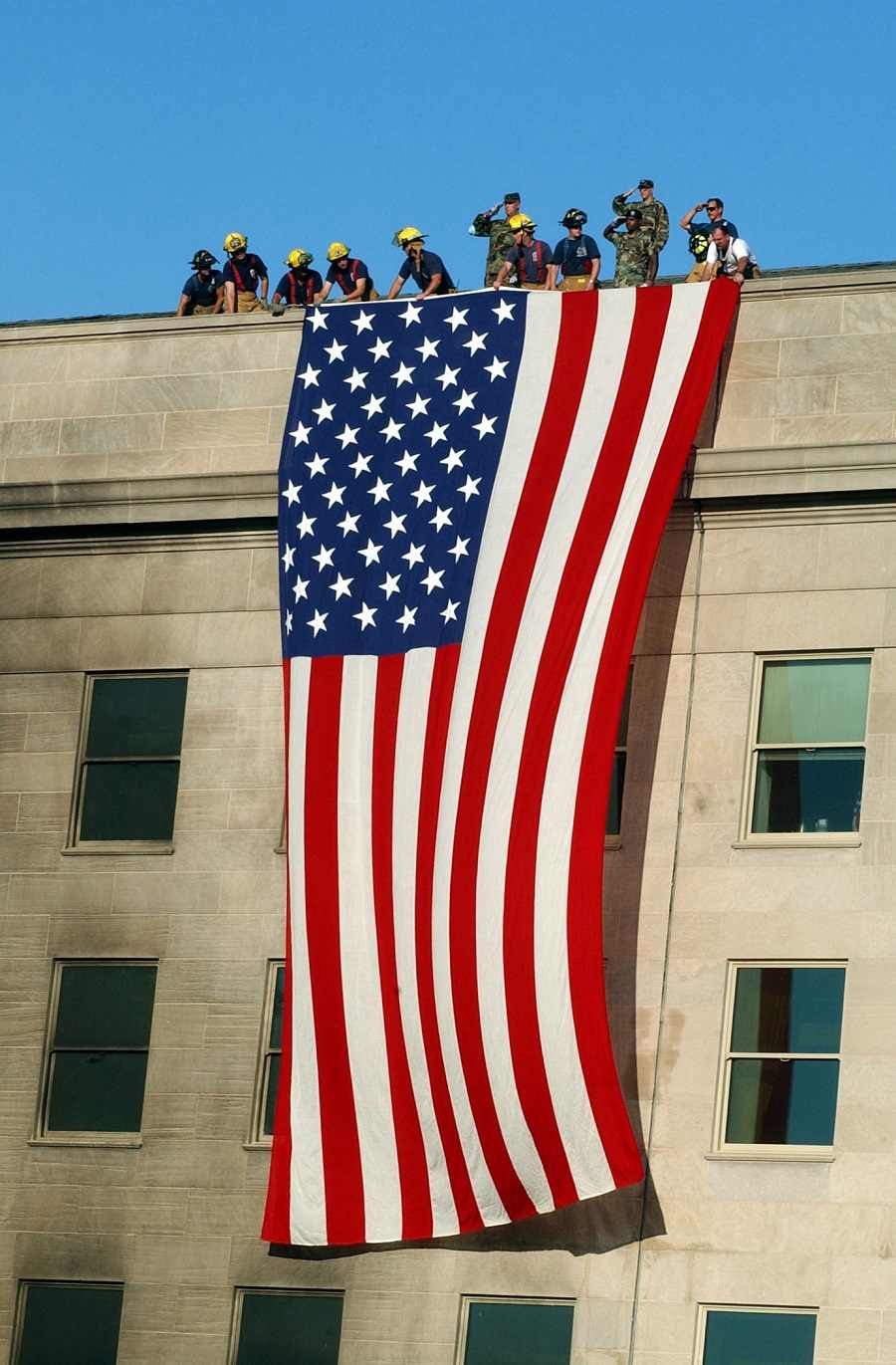
As many of us were reeling from the news of the murder of Charlie Kirk on September 10, the anniversary of another atrocity slipped by: the twenty-fourth anniversary of September 11, 2001.
On that day — a day that will also “live in infamy” — Islamic extremists hijacked four commercial airliners all filled with passengers. Two planes were piloted to Manhattan where they were crashed into the two World Trade Center towers. I watched the second crash and the subsequent collapse of the 110-story towers into rubble live on TV. Another plane was flown into the Pentagon while passengers on the fourth plane, realizing what was happening, charged the cockpit, resulting in a crash into an empty field in Pennsylvania far from the hijacker’s intended target, either the White House or the Capitol Building. That day the terrorists killed 2,976 people.
Rather than fragmenting over the event, our country pulled together. We demonstrated what Senator Arthur Vandenberg, a Republican, said in 1947 about cooperating with President Harry Truman, a Democrat, in pursuing the Cold War: “Politics stops at the water’s edge.” That is, there should be no partisanship when we face foreign enemies. They are our enemies regardless of our political affiliations.
That day, surrounded by members of both chambers, House Speaker Denny Hastert and Senate Minority Leader Tom Daschle offered from their respective sides of the aisle similar words of unity against a common enemy. After a moment of silence for the slain and their families, the event broke up. We’re not sure who began singing “God Bless America,” but all the members — Democrats and Republicans — joined in.
Given our political climate twenty-four years later, it’s hard to believe that happened or that someone wasn’t sued or shamed for singing the word “God.”
National Suicide
The political assassination of Charlie Kirk produced no such outpouring of bipartisan unity in the face of a common enemy. In fact, a recent poll found that 24% of self-identified Democrats responded “yes” when asked, “While it is always difficult to wish ill of another human being, is America better off now that Charlie Kirk has been killed?” One college student commented, “I think he deserved it. …Punching fascists is not a right, but a duty, and I think shooting them is too.”
A “duty”?
In his 1838 Lyceum Address, Abraham Lincoln said the danger to the American Republic is not a foreign invasion, but, “If destruction be our lot, we must ourselves be its author and finisher. As a nation of freemen, we must live through all time, or die by suicide.”
In his 2012 book, A Free People’s Suicide: Sustainable Freedom and the American Future, Os Guinness argues that we are well on our way. “The problem,” he writes, “is not wolves at the door but termites in the floor. Powerful free people die only by their own hand, and free people have no one to blame but themselves.”
Guinness’s solution focuses on the wisdom of the founders of the American Republic. We need to redevelop the personal and civic virtues they simply assumed. Without people who are at least somewhat acquainted with prudence, temperance, courage, and justice, we won’t get anywhere. Similarly, he says, we need to recover a high view of citizenship. The United States is more than a landmass, and citizenship is about more than simply living here or being born here. And we must learn how to be civil and to apply checks and balances against the spheres of life all vying for maximum power.
Collective Effort
It’s a tall order — much bigger than you or me. But that doesn’t mean you and I are helpless. What we can’t do for the whole country, we can do for ourselves and those around us. We can grow in virtues — both the classical virtues noted above and the theological virtues of faith, hope, and love. And we can encourage virtues as well as a love of country in our children and our neighbors.
Above all, we can learn to be civil even— or possibly especially — when it means “turning the other cheek.” We live in an era of incivility and thus of possible national suicide. “An eye for an eye” is making a spectacular and frightening comeback. In light of that, Christians need to take Jesus’s words seriously, handing out blessings rather than tit-for-tat curses and name-calling (Matthew 5:38-40).
Political violence is like cancer. If we do nothing, it will spread. Not only Christians, but all men and women of good will from across the political spectrum need to ask, “Is this the kind of country we want to live in and pass on to our children?” The answer, I hope, is a resounding “No!”
Our leaders — elected leaders, media leaders, and activist leaders — have a special responsibility to bring about changes in our political culture, to tone down the vitriol and name-calling, to pull “bipartisanship” out of dumpster, and to work together to do what is right. There is more to life than the accumulation of power over others.
As on September 11, 2001, there is something evil at the door, and it’s time to unite against it.
At the end of A Free People’s Suicide, Guinness writes, you are Americans:
So the choice is yours — and so too will be the consequences. Let your choice be known, and let it be followed through with courage and resolve. Your hour has struck. Your challenge lies before you, and God and the world and history await your answer.
James Tonkowich, D.Min., is a freelance writer, speaker and commentator on spirituality, religion and public life who has contributed to a wide variety of opinion websites and publications.