


Saudi Arabia’s ‘Modernization’ Is a Lie
The Christian case against MBS’s reforms
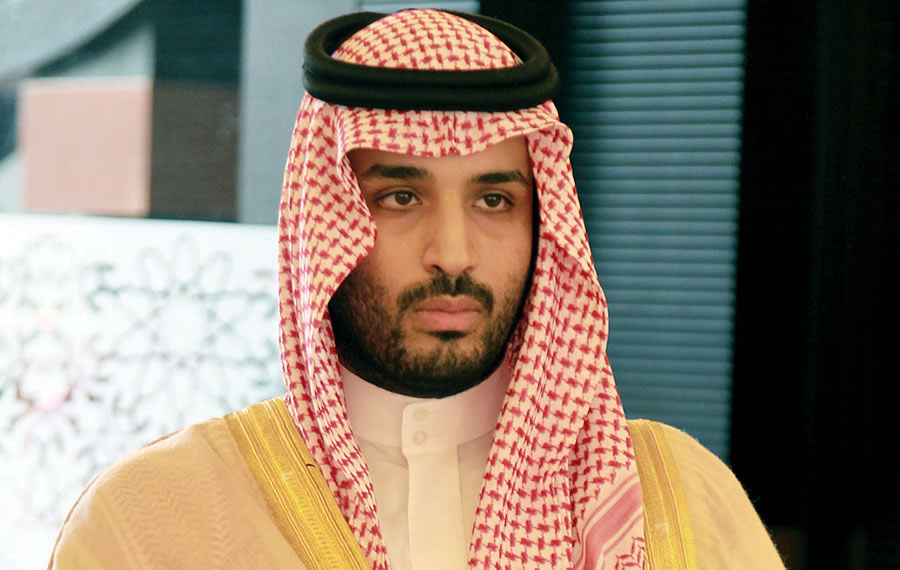
They say Saudi Arabia is changing. Under Crown Prince Mohammed bin Salman (MBS), the kingdom has supposedly entered a new era — one of progress, innovation, and tolerance. Women are now allowed to drive. Pop stars perform in Riyadh. Glitzy mega-projects like NEOM promise a utopian future. To many in the West, this is what reform looks like.
But behind the shiny facade lies a darker, far more sinister truth: Saudi Arabia remains one of the most repressive regimes on Earth — especially for Christians. And while politicians, business elites, and journalists line up to praise MBS for dragging his country into modernity, millions of believers continue to suffer in silence under his rule. The truth is clear: Saudi Arabia’s “modernization” is a lie, and Christians must be among the first to call it out.
It’s not just that churches are discouraged — they’re banned. Public Christian worship is illegal. The construction of churches is forbidden. There are no crosses, no chapels, no sanctuaries — not one single church in the entire country. Saudi Arabia is the only G20 nation where this is the case. And that’s not an accident. It’s the result of deliberate, state-enforced religious apartheid — all under the man the West hails as a reformer.
Living in Fear
Millions of Christians live and work in Saudi Arabia, particularly migrant workers from the Philippines, India, and Africa. These are the people who clean the homes, raise the children, and power the kingdom’s service economy. Yet they are forced to hide their faith — worshipping in secret, fearful of discovery. If caught, they face arrest, interrogation, deportation, or worse. Their lives are shaped by fear — and that fear is government policy.
And what of those few Saudi nationals who dare to convert to Christianity? They face even harsher consequences. Apostasy — the act of leaving Islam — remains punishable by death. There is no religious freedom, no protection, no due process. Those who come to Christ risk losing their families, their jobs, and their lives. That’s the real Saudi Arabia.
So why is the world so eager to applaud MBS?
Because he’s mastered the art of distraction. He’s not reforming his country — he’s rebranding it. He’s investing billions into global sports, Hollywood, and Silicon Valley, laundering his regime’s image through soft power. Formula 1 races, LIV Golf, and soccer club takeovers have become tools of perception management. Western influencers are flown in, then wined and dined. Articles are published praising Saudi’s “evolution.” But it’s all a façade — and Christians should see through it immediately.
Imagine the Outrage
Imagine, for just a moment, if a European country banned mosques and imprisoned Muslims for praying. Imagine the outrage. The protests. The global media storm. Now ask yourself: Why is Saudi Arabia’s treatment of Christians met with silence?
The answer is ugly but simple: money. Oil wealth buys silence. Strategic alliances buy complicity. And the West, always eager to “stabilize the region,” is more than willing to trade moral clarity for financial and geopolitical gain. But Christians — especially those in the West who still believe in truth, liberty, and the Gospel — cannot afford to stay silent.
Because the cost of that silence is real. In 2011, a group of Ethiopian Christians was arrested in Riyadh for holding a private prayer gathering in their home. They were detained, denied legal representation, and held in unsanitary conditions. Their only crime? Following Christ. In another case, a Christian convert from Islam was reportedly detained by authorities and disappeared for months, her whereabouts unknown. These aren’t anomalies. They’re symptoms of systemic persecution — and they’re still happening right now.
And still, Christian leaders say nothing.
Silence Is Violence
Where are the major churches? The global denominations? The Christian media? Too many are either unaware, uninterested, or unwilling to confront a regime that holds so much economic power. Some even praise Saudi Arabia’s “interfaith efforts,” pointing to photo ops with religious figures as signs of change. But a photo with a priest does not erase a ban on churches. A dialogue about tolerance means nothing when Bibles are contraband and believers are criminalized.
True reform is not cosmetic. It doesn’t mean concerts for the elite while poor Christian workers hide in fear. It doesn’t mean flashy expos while converts are imprisoned. It doesn’t mean inviting celebrities while denying religious freedom to millions. Until the first church opens its doors in Riyadh, until Christians can worship publicly and freely, until the Saudi government no longer treats Christianity as a crime — there is no reform. Just theater.
And the stakes are higher than most realize. By legitimizing MBS’s narrative, the West is setting a dangerous precedent — that human rights, religious freedom, and Christian lives are negotiable. That repression can be forgiven if you dress it up in Western branding. That you can ban the Bible but still be treated like a visionary.
This isn’t just a Christian issue — it’s a human rights issue, a truth issue, a moral issue. And anyone who believes in freedom, dignity, and justice should reject the moral relativism that allows Saudi Arabia to persecute believers while pretending to be a force for progress.
We must raise our voices. Share the stories of those suffering for their faith. Call out the hypocrisy. Pressure our governments to stop enabling this repression with silence and deals. Challenge the media outlets that parrot Saudi talking points without ever asking hard questions. And we must keep the spotlight on the persecuted — the underground churches, the secret worshippers, the quiet resistance to religious tyranny.
Amine Ayoub, a Middle East Forum fellow, is a policy analyst and writer based in Morocco.