


Review: Bonhoeffer: Pastor. Spy. Assassin
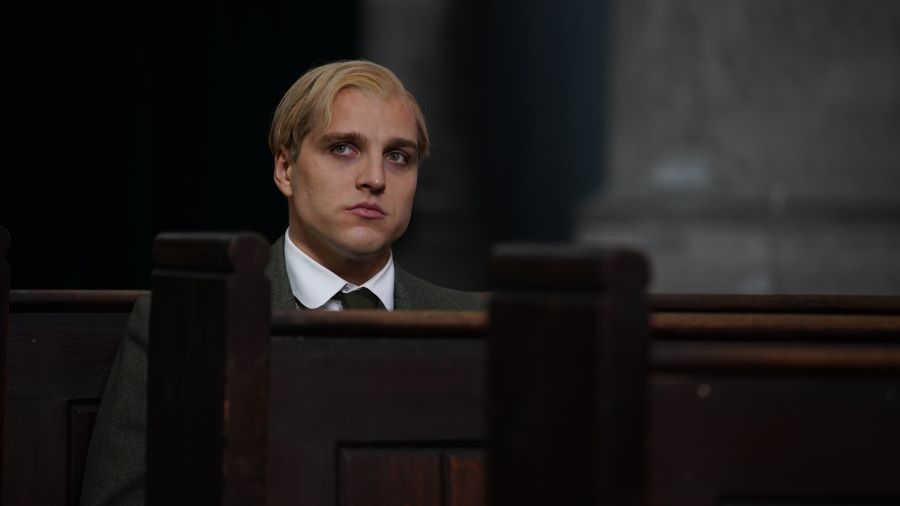
This Thanksgiving, Angel Studios is set to release a feature film on Dietrich Bonhoeffer, the German pastor whose opposition to Adolf Hitler cost him his life. Dying at just 39 years of age, single and childless, Bonhoeffer’s influence in the modern church is incalculable. His books The Cost of Discipleship and Life Together remain in print and have sold countless millions of copies.
The important events in Bonhoeffer’s life have been well marked by biographers, but the movie, which releases in theaters on Nov. 22, spends less time developing them in detail. It opens with a touching scene from Bonhoeffer’s idyllic childhood in a large Christian family living on a country estate. That serenity is shattered when his older brother Walter goes off to fight in World War I.
Part of the reason we don’t see a chronological development of Bonhoeffer’s life is that the movie jumps from that initial scene to one in which he and his fellow prisoners are being carted away to SS barracks in the Buchenwald concentration camp. He’s nearing the end of his life. The rest of the movie is retrospective, with Bonhoeffer (wonderfully portrayed by Jonas Dassler) recalling key seasons in his life, like his time at Union University in New York City, where a black friend (Frank Fisher, played by Davis Jonsson) introduces him to jazz music and the vibrant black church scene. As Bonhoeffer, a piano player, quickly takes a liking to black cultural expressions, his new friends also tell him of lynchings and their struggle for civil rights. Frank takes Bonhoeffer as far south as Washington, DC, and exposes him to the horrors of Jim Crow brutality.
Encountering Racism
There’s a great scene where Frank and Bonhoeffer are sitting on the steps of the Lincoln Memorial, shortly after Bonhoeffer has been beaten by a racist for associating with black men. Bonhoeffer says something like, “I’m glad we don’t have this problem in Germany.” Forebodingly, Frank replies, “Hatred comes in all colors.”
Soon after, we see Bonhoeffer back in Germany, sitting with his family in the living room while talking about the rise of the Nazis. It’s the early 1930s, but the family already has a keen sense of where things are headed. Having been abroad the past few years, Dietrich himself is incredulous — until he sees Nazi ideology being pushed from the pulpit in the German state church.
Bonhoeffer became a leader in what would later become known as the Confessional Church — essentially a resistance movement against the pro-Nazi leanings of the German state churches. We see his star rise when higher-level leaders in the German church repent of their cowardice, realizing how naïve they were to blend pro-Nazi rhetoric into their sermons. Bonhoeffer is selected to lead an underground seminary (Finkenwalde) dedicated to training pastors who will teach pure Christianity, unadulterated by racism and German nationalism.
We see Bonhoeffer sent to Great Britain as a spy for the resistance movement. They’re seeking help to assassinate Hitler. The British government is skittish about getting involved: War with their country had not yet been declared, and the antisemitism in Germany was not yet believed to be overt, systemic, or widespread. In one scene, Bonhoeffer’s high-level British contact is explaining that Great Britain can’t help those affected by the Third Reich because it “might spark an invasion.” Bonhoeffer fires back, “My country was invaded from within!”
Fodder for Discussion
We also see Bonhoeffer pledging allegiance to the Führer and the Abwehr, a German intelligence organization. He does so as a double agent, figuring it will increase his knowledge of Nazi atrocities, which will in turn allow him to warn others while also better developing a plan to kill Hitler. The movie shows the failed assassination attempt by a friend of Bonhoeffer who had also joined the Abwehr. In this manner, the film is a good entry point to the age-old debate about whether deception is ever permissible for Christians. (You may recall this debate was recently sparked in the release of Matt Walsh’s investigative documentary on diversity, equity, and inclusion, Am I a Racist?, which grossed more than $12 million in theaters after its Sept. 13 release. The film will launch on streaming platforms on Oct. 28.)
In prison, Bonhoeffer’s cellmate is Hitler’s former championed scientist, Dr. Sigmund Rascher (James Flynn), who says he “made the mistake of not pretending Hitler was smarter than me.” Interestingly, this man remains committed to the “master race” ideology, saying, “I should be fitted for a crown, one day”— presumably for implementing the “Final Solution” of Jewish extermination. Though aware that the war will be lost, Rascher speaks of a “future season” when Germanic superiority will again triumph.
Bonhoeffer responds, “Your season ended long ago … a light came into the world, and the darkness did not overcome it.”
Rascher lightly chuckles, “Look around you, my friend. How much light do you see?”
We’re given the sense that Bonhoeffer, with eyes of faith, sees the light of Christ’s future triumph over his enemies. Indeed, the movie ends with him in a noose, but staring into light from heaven, eager to receive his eternal reward. Germany would surrender to the Allies just a few weeks later.
Bonhoeffer is a well-choreographed film. The scene transitions are riveting, tying together different seasons in Bonhoeffer’s life and showing how they are woven together in his theological development and final memories.
But sometimes this back-and-forth with the timeline comes at the expense of character and/or plot development. For example, there’s a scene in which Bonhoeffer leads his fellow prisoners in communion. A guard joins them. Bonhoeffer explains that it’s the Lord’s table, and He invites them all, so they cannot refuse one of their captors. It’s beautiful, but I was left wondering: Who are these prisoners? Are they ethnic Jews who had come to confess Christ?
All in all, Bonhoeffer: Pastor. Spy. Assassin is a well-made and entertaining movie. With just one vulgarity, little violence, and no sensuality, there’s little to which one might object. Parents might want to know there’s a grim view of skulls on the road and the final scene at the gallows is harrowing. But beyond these warnings, I’m happy to recommend the film. Dietrich Bonhoeffer’s is a life well worth celebrating and remembering.
Alex Chediak (Ph.D., U.C. Berkeley) is a professor and the author of Thriving at College (Tyndale House, 2011), a roadmap for how students can best navigate the challenges of their college years. His latest book is Beating the College Debt Trap. Learn more about him at www.alexchediak.com or follow him on Twitter (@chediak).