


Requiem for a Heavyweight Politician
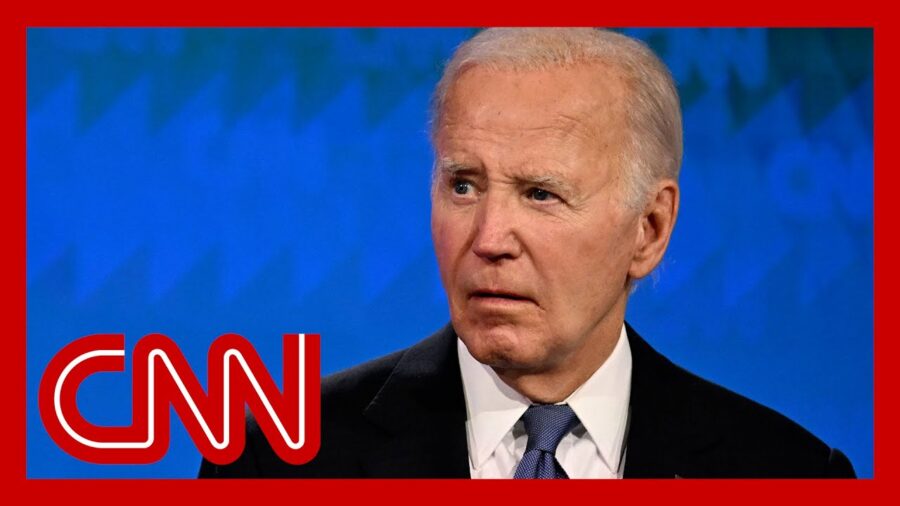
The pugilist and president stayed too long in their professional arenas. There are eerie similarities between the old, washed-up heavyweight boxer Louis “Mountain” Rivera, played by Anthony Quinn in the 1962 black-and-white movie Requiem for a Heavyweight, and outgoing President Joe Biden.
Medical issues stemming from to a lifetime of blows to the noggin force Mountain to retire from boxing. The ring doctor at his last fight is reporting him to the boxing commission.
Mountain longs for a new way of life as a camp counselor for kids. However, his double-crossing manager convinces him to build on his fame as a boxer and try professional wrestling. Discovering that his own manager of 17 years bet against him in his last boxing match only adds to Mountain’s humiliation. His manager (Jackie Gleason) is now in trouble with the mob.
The final humiliating carnival-like scene in the movie shows the now punch-drunk former heavyweight contender climbing into the wrestling ring dressed as an Indian chief. The jeering crowd laughs at him while he faces a 600-pound fat-boy wrestler named Haystack Calhoun from Arkansas. The former heavyweight, once ranked fifth -in the world, swallows his pride and does a war dance around the ring while holding high his tomahawk. His old cut man (Mickey Rooney) watches with tears streaming down his face.
Professional boxers staying past their prime can develop “dementia pugilistica” or “punch drunk syndrome.” Their condition brings on intellectual deterioration, a decline in language skills, stiffness, clumsiness, and confusion. Fighting fans pity the old boxers as stumblebums and has-beens.
Why do aging politicians with lucrative government pensions and fat bank accounts choose to stay in their seats of power so long?
Several Reasons
On the day of his inauguration in 2021, Joe Biden became the oldest person to hold the office of president. Before the 2024 election, many Americans knew that he had dementia-like symptoms. It was sad to seeing him falling while climbing up the stairs to Air Force One or showing moments of confusion and slurred speech during important public ceremonies. America knew something was wrong; The Stream has reported on those issues on a near-daily basis all year.
Should age limits be imposed on government elected officials? Why do some insist on staying in office long past the age at which most Americans retire?
Mary Kate Cary, a senior fellow with the Miller Center of Public Affairs and former speech writer for President George H.W. Bush, shares some interesting thoughts on this.
For some, it is denial. “No one likes to be reminded of their own mortality,” Cary writes. “I know people who equate retirement with death, often because of others they know who have passed away just after stepping down – which may explain why both Sen. Dianne Feinstein and Supreme Court Justice Ruth Bader Ginsburg stayed so long on the job, dying while still in office at age 90 and 87, respectively.”
For others, it is identity-driven. Many older leaders have worked so hard and so long that “their entire identity is tied to their jobs. Plus, years of challenging work means they don’t have hobbies to enjoy in their remaining years.”
Ego is the third reason. Some aging lawmakers “think they’re indispensable – that they’re the only ones who can possibly do the job. They’re not exactly humble.”
Ultimately, if the media, pollsters, medical doctors and social media deliver the relevant facts to voters, “we the people” will make the right call in every election!
Ron F. Hale is a retired Southern Baptist pastor and former missionary. He has authored articles for The Stream, The Christian Post, The Christian Index, American Thinker, and various Baptist State Convention newspapers.