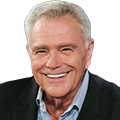


Pope Leo XIV Sweeps Aside Primacy of Rome in Call for Ecumenical Unity
Traditionalists blast pontiff for contradicting Vatican I and selling out to Eastern Orthodox

In one of the most surprising statements of his pontificate, Pope Leo XIV is setting aside the primacy of the Bishop of Rome to promote ecumenical unity between Roman Catholics and Eastern Orthodox Christians.
Leo’s address to Catholics and Eastern Orthodox pilgrims at Castel Gandolfo on July 17 has delighted Christians seeking full communion between Rome and the East, but upset traditionalist Catholics who argue that the Eastern churches should accept papal supremacy.
“Unity among those who believe in Christ is one of the signs of God’s gift of consolation; Scripture promises that ‘in Jerusalem you will be comforted,’” Leo told participants of the Orthodox-Catholic Ecumenical Pilgrimage, citing the prophet Isaiah (66:13).
Who Is the Greatest?
“Rome, Constantinople, and all the other Sees are not called to vie for primacy, lest we risk finding ourselves like the disciples who, along the way, even as Jesus was announcing his coming passion, argued about which of them was the greatest,” he added, alluding to Mark 9:33-37.
Leo delivered his address in English, his native tongue, leaving little room for Catholic apologists to argue that his words had been mistranslated from Italian. The remarks were scripted and not delivered extempore. The Holy See Press Office provided the media with the full text.
“Your pilgrimage is one of the abundant fruits of the ecumenical movement aimed at restoring full unity among all Christ’s disciples in accordance with the Lord’s prayer at the Last Supper, when Jesus said, ‘that they may all be one’ (John 17:21),” he observed.
The pope explained that ecumenical events like the current pilgrimage are possible only because in December 1965, Pope Paul VI and Patriarch Athenagoras had lifted the historic excommunications imposed by both Rome and the East following the historic schism of 1054.
Traditionalist Catholics React
Traditionalist Catholics, who view ecumenism as a deviation from authentic Catholic doctrine, blasted the pope for contradicting centuries of infallible magisterial teaching which asserts the primacy and supremacy of the bishop of Rome.
They reject recent Vatican documents, which were drafted during the pontificate of Pope Francis and which concede on the basis of historical research that the pope did not enjoy universal jurisdiction in the first thousand years of Christianity, a motif reflected in Leo’s address.
“This is a direct contradiction of dogmatic Catholic teaching,” Catholic blogger Chris Jackson wrote in a Substack essay. “The First Vatican Council defined that the Roman Pontiff possesses not merely a primacy of honor, but of jurisdiction over the entire Church, and that this primacy was given to Peter alone and passed to his successors in Rome. That’s de fide. It’s not optional.
“The Orthodox do reject papal primacy as defined by Vatican I. That’s what keeps them in schism. They tolerate a ‘primacy of honor’ as a courtesy,” he added. “In centuries past, the popes responded to such denials with apostolic firmness. They called the Eastern patriarchs back to unity under the true successor of Peter, not to ‘dialogue’ about which see gets which anniversary.”
Jackson excoriated Leo for preferring “diplomacy to doctrine” and “instead of reaffirming Rome’s primacy,” relativizing it and “flattening the hierarchy of Sees into a kind of apostolic roundtable.”
Leo’s Bombshell on Papal Primacy
In an essay, the Novus Ordo Watch website agreed that Leo had “dropped a bombshell regarding papal primacy.” The sedevacantist site explained how Catholic apologists could not spin the pope’s statements as a mere warning against “competing” for primacy.
“If it were indeed what he meant, he could simply have said so. He could have said that the other dioceses are not supposed to compete for primacy with Rome, since the primacy by divine right belongs to Rome alone, and this is a settled issue; but he chose not to,” it noted.
“Instead, Leo XIV gave every indication that none of the dioceses are supposed to claim primacy over any of the others,” the essayist observed, noting that Leo’s argument was “also the reasoning advanced by the Lutheran authors of the Magdeburg Centuries” during the Protestant Reformation.
However, Christian leaders of other denominations said they were rejoicing in Leo’s recognition of the historical facts and his desire for Christian unity.
Lutheran Scholar Commends Pontiff
“Pope Leo’s comments have much that is commendable,” Fr. Lorenzo Murrone, co-pastor of Christus Victor Lutheran Church in Rome, told The Stream.
Murrone, a university lecturer in Latin and Greek and a scholar of patristic literature, elaborated: “Church historians are nowadays fairly unanimous in observing that the ancient Church was not gathered under one head but divided into individual dioceses. At an even earlier stage, congregations were led by local chapters of presbyteries, as seems to have been the case in Rome until the second century. In short, Leo’s analysis is fairly faithful to the apostolic structure.”
Murrone wondered if Leo’s words were a rhetorical flourish rather than a call to action. “Even so, I read these words with puzzlement,” he said. “How far is Leo willing — or able — to go? Trent and Vatican I seem to stand in the way: papal supremacy and infallibility are as indispensable to Roman Catholicism as repugnant to both Eastern Orthodoxy and Protestantism. Even if modern theologians can find more agreeable formulations of the issue, as long as the old conciliar definitions are a feasible description of Roman doctrine, the problem remains.
“Nevertheless, I harbor a fervent hope that the Lord Jesus Christ will do what we cannot and bring Christians from all sides to deeper mutual understanding and love.”
Vatican Document Admits Historical Problems with Primacy
In June 2024, the Vatican’s Dicastery for Promoting Christian Unity released a 151-page document titled “The Bishop of Rome: Primacy and Synodality in Ecumenical Dialogues and Responses to the Encyclical Ut Unum Sint.”
“Catholics have also been challenged to recognize and avoid an anachronistic projection of all doctrinal and institutional developments concerning papal ministry into the ‘Petrine texts,’ and to rediscover a diversity of images, interpretations, and models in the New Testament,” it noted.
The authors lamented that “dogmatic definitions have proved to be a significant obstacle for other Christians with regard to the papacy.” It explained that Vatican 1 “had no intention of either denying or rejecting the tradition of the first millennium, to wit: the church as network of mutually communicating churches.”
The pope did not enjoy universal jurisdiction in the first thousand years of Christianity; it acknowledged, quoting Pope Benedict XVI: “As far as the doctrine of the primacy is concerned, Rome must not require more of the East than was formulated and lived during the first millennium.”
Pope Leo Builds on Trailblazing Inaugural Sermon
The document also favorably quotes two of the most important Lutheran doctrinal treatises on the Petrine office: Papacy: The Smalcald Articles and the Treatise on the Power and Primacy of the Pope. The authors cite Lutheran reformer Philip Melanchthon, stating that the pope’s “superiority over the bishops” could be granted iure humano (by human law) if the pope “would allow the Gospel.”
Leo’s speech to the ecumenical pilgrims follows his trailblazing inaugural papal address in which he pointed to Christ, rather than Peter, as the foundational “rock” of Christianity, using the term “sister Christian churches” to mark his desire for ecumenical unity, as The Stream reported earlier this year.
Dr. Jules Gomes (BA, BD, MTh, PhD) has a doctorate in biblical studies from the University of Cambridge. Currently a Vatican-accredited journalist based in Rome, he is the author of five books and several academic articles. Gomes lectured at Catholic and Protestant seminaries and universities and was canon theologian and artistic director at Liverpool Cathedral.