


Pope Leo XIV Picks Priest Who Supports Assisted Suicide to Head Papal Pro-Life Academy
Pro-lifers slam the incrementalism, consequentialism, and proportionalism taking over Vatican’s approach to life
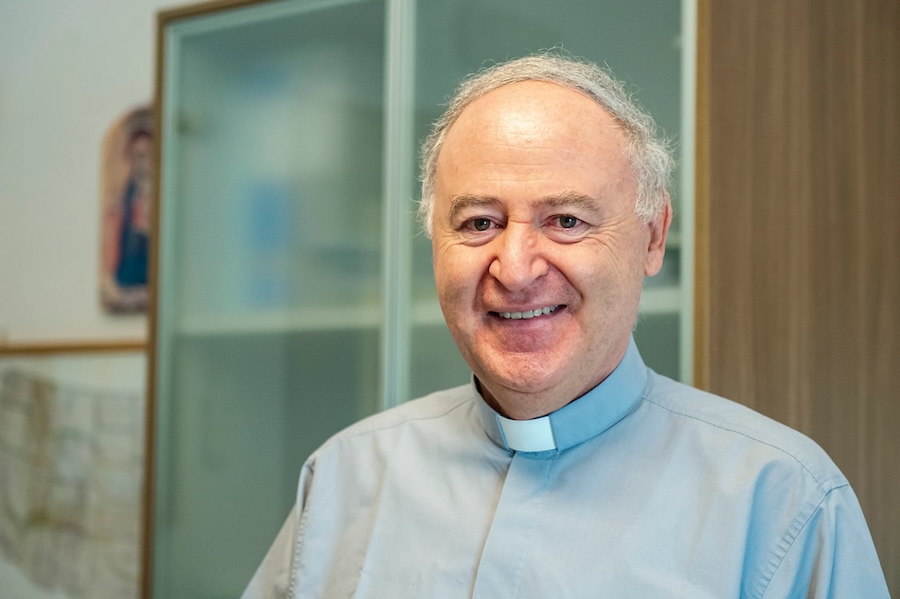
A senior priest who dissents from Catholic beliefs on assisted suicide and contraception has been named the new head of the distinguished Pontifical Academy for Life (PAV) by Pope Leo XIV.
Monsignor Renzo Pegoraro, a bioethicist who earned a medical degree before beginning his training for the priesthood, will succeed Monsignor Vincenzo Paglia, who submitted his resignation to the pontiff after he turned 80 on April 21.
The Holy See Press Office announced Pegoraro’s papal nomination on Tuesday, noting that the 65-year-old bioethicist is a long-serving senior official of the academy and has served as the PAV chancellor since 2011.
Ironically, Pegoraro has been appointed at a time when pro-life organizations in Europe and the United Kingdom are actively opposing their governments’ proposals to legalize assisted suicide.
Pro-life Catholics who expressed concerns over the ethical stances of several officials on the PAV during Francis’s pontificate expressed outrage that Leo has damaged his pro-life credentials by indirectly endorsing assisted suicide and contraception.
Support for Assisted Suicide
In 2022, Pegoraro drew flak for publicly justifying the “lesser evil” of assisted suicide as a strategy to block the legalization of euthanasia in Italy.
“We are in a specific context, with a choice to be made between two options, neither of which — assisted suicide or euthanasia — represents the Catholic position,” he told the French Catholic newspaper La Croix. “In any case, there will be a law.”
When asked if the Church is choosing the lesser evil, Pegoraro replied: “Rather, to make good of the better one,” since “it is a question of seeing which law can limit evil.”
In this “difficult, delicate terrain,” the bioethicist explained why he would support assisted suicide, saying: “Assisted suicide is the one that most restricts abuses because it would be accompanied by four strict conditions: the person asking for help must be conscious and able to express it freely, have an irreversible illness, experience unbearable suffering and depend on life-sustaining treatment such as a respirator.”
As La Croix noted, “This is in contradiction with the Church’s doctrine. This strategic shift is an acknowledgment of the fact that the Catholic Church can no longer impose its teachings or persuade public opinion through its traditional arguments.”
Pope John Paul’s 1995 encyclical Evangelium Vitae categorically rules out assisted suicide:
To concur with the intention of another person to commit suicide and to help in carrying it out through so-called “assisted suicide” means to cooperate in, and at times to be the actual perpetrator of, an injustice which can never be excused, even if it is requested.
The papal encyclical cites St. Augustine, the namesake of the Augustinian religious order to which Pope Leo belongs:
In a remarkably relevant passage St. Augustine writes that “it is never licit to kill another: even if he should wish it, indeed if he request it because, hanging between life and death, he begs for help in freeing the soul struggling against the bonds of the body and longing to be released; nor is it licit even when a sick person is no longer able to live.”
“The entire question is about knowing how the Church can participate in the discussion in a pluralist society,” Pegoraro argued. “Either we enter the debate to try to promote the best possible law, or we stay out of the discussion and limit ourselves to affirming principles. But in this case, we take the risk of allowing an even more serious law to pass.”
Backing for Artificial Contraception
In an interview with The Wall Street Journal in 2022, the bioethicist argued that artificial contraception can be permissible in certain circumstances despite the Catholic magisterium’s total ban on its use in all circumstances.
“The letter of the law can change, not to invalidate it but rather to deepen its meaning and promote the values at stake,” Pegoraro reasoned. For example, contraception might be permissible “in the case of a conflict between the need to avoid pregnancy for medical reasons and the preservation of a couple’s sex life.”
The rule against contraception “signals values that must be preserved in married life — in particular the sense of sexuality and the transmission of life — but it is also true that other values worth protecting may be present in the situation that the family is experiencing,” he added.
In the article, WSJ Vatican correspondent Francis Rocca observed that “the church at its highest levels is now debating the morality of contraception, more than half a century after another pope was supposed to have handed down a definitive statement on the matter.”
Controversial Intervention in the Case of Charlie Gard
While delivering an address at a 2017 bioethics symposium, Pegoraro upset pro-lifers who were fighting the British government’s decision to withdraw life support from nine-month-old Charlie Gard, who’d been born with mitochondrial DNA depletion syndrome. That June, the U.K. Supreme Court rejected a legal appeal in the child’s high-profile case. Gard’s parents had disagreed with medical professionals and were requesting treatment that the doctors claimed was futile.
At the symposium, Pegoraro argued that Gard was not killed but rather spared the agony of aggressive treatments, and his parents didn’t accept it because they felt guilty for transmitting to him a genetic disease.
Pegoraro also said that after the court’s final ruling, the Gards understood that the doctors and judges were right, even though multiple media outlets reported that they were forced to surrender to the decision and not even allowed to stay with Charlie in his final hours.
President Donald Trump tweeted his support for the baby, saying, “If we can help little #CharlieGard, as per our friends in the U.K. and the Pope, we would be delighted to do so.”
The Bambino Gesu Hospital, often referred to as the “Pope’s Hospital,” had offered to transfer Charlie from London to its facilities in Rome. But Gard’s parents lost their appeal to the European Court of Human Rights, the final stage in a long legal fight to take him to the U.S. for trial therapy; that removed the last blockage to the Great Ormond Street Hospital withdrawing his life support and allowing him to die.
Pro-Lifers Slam Pope’s Pick
In comments to The Stream, one of Britain’s leading pro-lifers, Dave Brennan, warned against Pegoraro’s approach to euthanasia.
Brennan, who leads the Brephos ministry under the auspices of the Centre for Bio-Ethical Reform UK and is a leading Christian in the fight against the government’s push for assisted suicide in Britain, explained that “it is a mistake to think that placing one foot on a slippery slope is the best strategy for not ending up at the bottom of it.”
“There are times to take incremental gains and to prefer less evil things over more evil things, but that should never override the principle and certainly cannot justify proactively supporting the introduction of legal assisted suicide, which will only make general euthanasia more, not less, plausible,” he noted.
“Incrementalism must always be in the right direction, not the wrong direction, and moral absolutes must never be forgotten. The problem with so many, including professing Christians, is that they have in this debate decidedly tried to put morality on the shelf as an embarrassment, and instead to argue in purely pragmatic terms. To abandon moral principles is to have lost already.”
Popular British author and Deacon Nick Donnelly commented on X:
It is apparent that the PAV has fallen to two moral approaches that Pope John Paul II identified as gravely erroneous and dangerous: Consequentialism judges the morality of an action based solely on its outcomes, where the best action produces the greatest overall good. Proportionalism holds that an action’s morality depends on whether the good effects proportionally outweigh the bad, often allowing for exceptions to moral rules if the overall benefit is greater.
Donnelly noted that Pope John Paul II condemned both approaches in his encyclical Veritatis Splendor.
During the COVID-19 pandemic, Pegoraro also angered pro-lifers by promoting a vaccine that used ethically tainted cell lines taken from an aborted baby. He insisted that taking the COVID vaccine was “a right and also a duty.”
Pegoraro’s “promotion is a coronation for bioethical subversion,” traditionalist Catholic writer Chris Jackson warned on Substack. “Pegoraro proposes a legal framework for institutionalizing a mortal sin and now leads the Vatican body once created to prevent exactly that.”
Dr. Jules Gomes (BA, BD, MTh, PhD) has a doctorate in biblical studies from the University of Cambridge. Currently a Vatican-accredited journalist based in Rome, he is the author of five books and several academic articles. Gomes lectured at Catholic and Protestant seminaries and universities and was canon theologian and artistic director at Liverpool Cathedral.