


Pope Francis Renews Secret Pact with China Despite Spike in Religious Persecution
Length of controversial concordat aims to bind pontiff’s successor to relations with Beijing

In this file photo from 2017, Chinese Catholic altar boys prepare for a Palm Sunday procession at an "underground" church near Shijiazhuang, Hebei Province. China, an officially atheist country, places many restrictions on Christians, allowing legal practice of the faith only at state-approved churches. The policy has driven an increasing number of Christians 'underground' to secret congregations in private homes and other venues. While the size of the religious community is difficult to measure, studies estimate there are more than 80 million Christians in China. Officially there have been no relations between China and the Vatican since the country's modern founding in 1949 -- until Pope Francis took office and signed the concordat detailed in this story in 2018. Approved Chinese Christians worship within a state-sanctioned Church known as the Patriotic Association which regards the Communist Party as its leader, not the Pope in Rome.
Pope Francis has renewed the Vatican’s enormously controversial agreement with China despite a sharp rise in the state-sponsored persecution of Christians and the continuing Sinicization of the Catholic Church by the Chinese Communist Party (CCP).
The Holy See Press Office announced Tuesday that the People’s Republic of China and the Vatican had agreed to extend the pact for four years, effectively binding the 87-year-old, ailing Francis’s successor to a relationship of ecclesiastical submission to Beijing.
The Sino-Vatican agreement, signed for the first time on Sept. 22, 2018, was extended in October 2020 and October 2022.
Bragging Vatican Now a ‘Party’
The Vatican trumpeted the extension as a step in “the further development of bilateral relations for the benefit of the Catholic Church in China and the Chinese people as a whole,” merely a week after a bombshell report exposed the CCP’s escalating persecution of Christians since the concordat was first signed in September 2018.
The Holy See Press Office stressed that the “Vatican Party remains dedicated to furthering the respectful and constructive dialogue with the Chinese Party.” The press statement was issued in Italian, English, and Chinese, with the unusual use of the word “Party” to describe the Vatican in all three languages.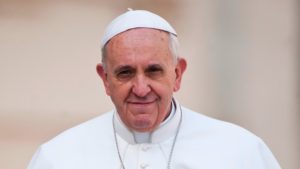
In reporting on the renewal of the concordat, Vatican News bragged that the “Provisional Agreement” had successfully “ended decades of episcopal ordinations without papal consent, leading to a radically changed scenario in the last six years.”
“Since then, about ten bishops have been appointed and consecrated, and Beijing officially recognized the public role of several previously unrecognized bishops,” it added.
The Italian bishops’ newspaper, Avvenire, also hailed the success of the agreement, claiming that “no more illegitimate episcopal ordinations have occurred in China, those ordained without papal consent, which since the end of the 1950s had wounded ecclesial communion and caused lacerations among Chinese Catholics.”
Reversing Benedict XVI’s Policy
On Oct. 17, Nina Shea, director of the Hudson Institute’s Center for Religious Freedom, published a 60-page investigative report titled “Ten Persecuted Bishops in China,” noting that the secret agreement (which reportedly deals with the appointment of bishops) “does not address China’s persistent persecution of Vatican-approved bishops who resist joining the Chinese Patriotic Catholic Association” (CPCA).
The CPCA’s principles and policies, which requires its members to pledge independence from the Holy See and is controlled by the atheist CCP, was denounced by Pope Benedict XVI in a 2017 letter as “incompatible with Catholic doctrine.”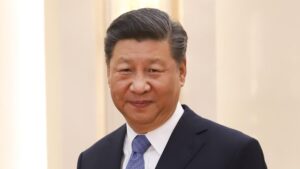
Benedict XVI excoriated Beijing for appointing “persons who are not ‘ordained,’ and sometimes not even baptized,” to “control and take decisions concerning important ecclesial questions, including the appointment of Bishops, in the name of various State agencies.”
Shea explains that Pope Francis’s concordat with the CCP has fundamentally reversed Benedict XVI’s policy of no compromise with the CCP and reverted to the Holy See’s earlier “no-criticism policy of Ostpolitik toward Eastern European Communism.”
Papal Appeasement
According to the report, as a result of the Vatican’s policy of appeasement, the CCP has subjected 10 bishops to “indefinite detention without due process, disappearances, open-ended security police investigations, banishments from their dioceses, or other impediments to their episcopal ministries including threats, surveillance, interrogation, and so-called reeducation.”.
“Seven of these bishops have been detained without due process, with some of them having been under continuous detention for years or decades, while others have been detained repeatedly, up to six times since the agreement’s signing,” Shea writes, noting the persecution and deaths of other bishops, priests, and laity, over the last six years.
“The China-Vatican agreement makes no accommodation for the conscientious objectors to the CPCA, who are often called the underground church.”
The 10 bishops were targeted after they opposed the CPCA, which ensures compliance with China’s draconian Sinicization of religion rules, such as banning children from churches, outlawing sermons on Xi Jinping’s philosophy, and reinterpreting the Bible according to CCP values.
While Hong Kong Cardinal Joseph Zen, a fierce critic of the CPCA and Pope Francis’s policy of appeasement, is the best-known name on the list of the persecuted bishops, the other nine are from mainland China and hence directly subject to the CPCA’s authority.
While the 10 persecuted bishops were all approved by the Vatican, the new bishops under the Sino-Vatican agreement have been appointed almost entirely as a result of a unilateral decision by the CCP, with the Vatican having little or no say in the matter.
Beijing’s Snubs
In fact, two years after the pact was originally signed, China published new regulations on appointing bishops that omitted any papal role and — in several of the 10 or so episcopal appointments since the signing — denied the pope even a veto, Shea notes.
In April 2023, the CCP unilaterally appointed Bishop Joseph Shen Bin to the See of Shanghai. In his installation ceremony, Shen Bin did not mention Pope Francis. Instead, he promised to press ahead with the Sinicization of Catholicism and continue the tradition of “patriotism and love” for the church in Shanghai.
The sudden move to unilaterally install Shen Bin, who is currently bishop of Haimen, shocked the Vatican, which admitted on its official news website that it had learned of the appointment from media reports.
“For the sake of Chinese Catholic Church ‘unity,’ Pope Francis approved these appointments after the fact,” Shea says. “But Beijing’s persecution of the 10 bishops in this report is the real threat to the Catholic Church’s unity.”
Ironically, in 2019, Pope Francis issued “Pastoral guidelines of the Holy See concerning the civil registration of clergy in China,” approving conscientious objection to the CPCA and noting that “the Holy See understands and respects the choice of those [clergy] who, in conscience, decide that they are unable to register under the current conditions.”
Papal Collaboration
However, Francis’s guidelines specifically permit bishops to join the CPCA, and the pope has directly collaborated with the CCP’s persecution of faithful bishops, the report notes.
In 2018, the pontiff demoted Bishop Vincent Guo Xijin of Mindong Diocese in Fujian Province from serving as the bishop of Mindong, a position he had held for two years, and replaced him with the CCP-appointed Bishop Zhan Silu, directly as a result of China’s precondition for the concordat.
Guo Xijin was forced to serve as Zhan’s auxiliary bishop, but even after submitting to the pope’s diktat found himself thwarted from carrying out his ministry. CCP authorities cut off his water, heat, and electricity and eventually served him an eviction notice from his dwelling. The bishop was forced to sleep on the street in winter.
In 2020, left with no autonomy after two years of nonstop government pressure on him and his priests, he resigned. According to Shea’s report, his current whereabouts and well-being are unknown.
In addition to Guo Xijin, the other bishops named in the report are Augustine Cui Tai, Bishop Julius Jia Zhiguo, Thaddeus Ma Daqin, Peter Shao Zhumin, Melchior Shi Hongzhen, James Su Zhimin, Joseph Xing Wenzhi, Joseph Zen Ze-kiun, and Joseph Zhang Weizhu.
Dignitaries and human rights campaigners who are generally support Pope Francis’s policies, have severely criticized his pact with China.
Lord Alton of Liverpool, a member of Britain’s House of Lords, blasted the Sino-Vatican deal on X, posting: “The Vatican wants us to forget 10 inconvenient bishops who reject the right of the CCP to tell them what to believe, think, or say. The CCP wants us to forget the persecuted Uyghur Muslims, Tibetan Buddhists, Falun Gong and Chinese Christians. Don’t.”
Catholic human rights campaigner Benedict Rogers also slammed the Vatican’s decision, noting that the agreement had “[y]et again [been] renewed with no review, no transparency, no scrutiny, no explanation.”
Rogers, who is a cofounder of Hong Kong Watch, wrote on X: “It’s a dodgy, dangerous deal and it should at least be opened up for debate and review.”
Dr. Jules Gomes, (BA, BD, MTh, PhD), has a doctorate in biblical studies from the University of Cambridge. Currently a Vatican-accredited journalist based in Rome, he is the author of five books and several academic articles. Gomes lectured at Catholic and Protestant seminaries and universities and was canon theologian and artistic director at Liverpool Cathedral.