


Operation Gideon’s Chariots: A Biblical Echo in Modern Warfare
In the blazing heat of the Middle East, a name has surged into today’s headlines from the depths of ancient scripture: Operation Gideon’s Chariots. Israel’s latest military campaign is more than just a conventional war maneuver — it is a declaration, a message to both enemies and allies, that biblical resolve and modern strategy are converging. In invoking Gideon, a figure synonymous with divine favor, strategic brilliance, and moral clarity, Israel is asserting that its mission is not just military — it is prophetic.
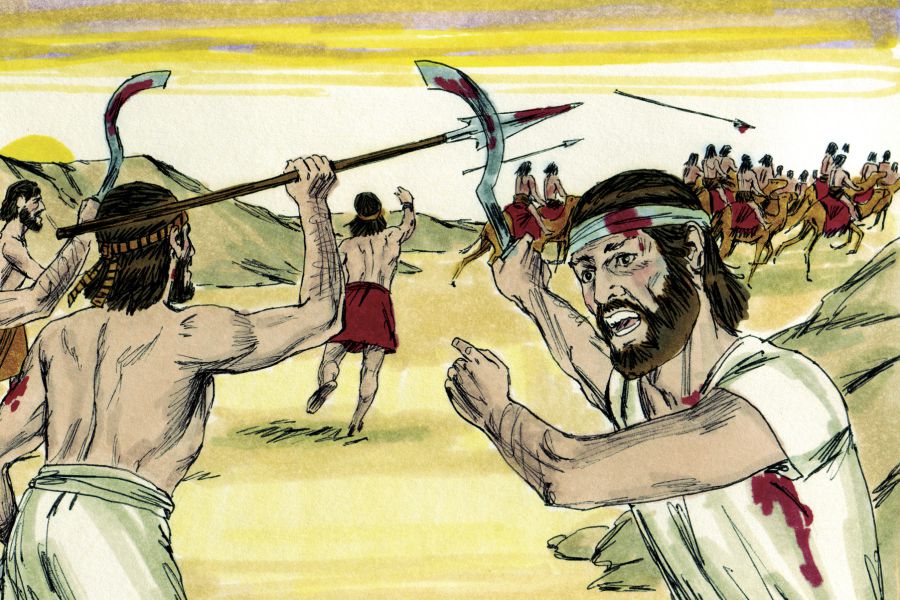
Gideon’s story, told in the Book of Judges, is one of divine improbability. A man of humble origins, Gideon led a force of merely 300 Israelites to victory over tens of thousands of Midianites not through brute force, but through faith, courage, and shrewd tactics. His triumph wasn’t just military; it was moral and symbolic. His victory told the world that when survival is on the line and truth is obscured by noise, the righteous will rise — often outnumbered, but always resolute.
Fast forward thousands of years, and Israel, a nation of just nine million surrounded by hostility, has launched a campaign against Hamas — an entrenched and well-funded terror organization whose tactics thrive on cowardice like embedding themselves in hospitals, schools, and refugee zones. Israel’s mission, like Gideon’s, is not just about defeating an enemy; it’s about reclaiming moral clarity in a world grown increasingly blind to it.
Strategy and Shrewdness
Operation Gideon’s Chariots, launched earlier this month, follows an unrelenting wave of rocket attacks on Israel from Hamas and the horrifying hostage crisis that began in October 2023. More than 50,000 people have died in the war thus far — most of them civilians caught in a deadly crossfire engineered by Hamas’s strategy of using them as human shields. With a clear objective of breaking Hamas’s back, rescuing Israeli hostages, and restoring deterrence, Israel’s operation is as much about restoring moral order as it is about restoring security.
But why the name “Gideon”?
It’s not just poetic. It’s a signal. In an era when world leaders waver and institutions equivocate, Israel is planting its flag on moral high ground. Gideon didn’t win through numbers — he won through purpose. Similarly, Israel doesn’t wage war out of ambition but out of necessity.
The IDF’s push through Gaza, particularly capturing key ground like the strategic Morag Corridor, isn’t just about land — it’s about cutting the arteries that feed Hamas’s terror machine. Just as Gideon’s army disrupted the Midianite forces’s cohesiveness with torches and trumpets, Israel is breaking Hamas’s infrastructure with precise airstrikes, intelligence operations, and boots on the ground. This isn’t carpet bombing. This is a scalpel at work.
False Narrative
Yet, the world has turned the narrative on its head. Global media focuses on the suffering in Gaza — and there is real suffering — but fails to ask why the suffering exists in the first place. Hamas is the group that turned Gaza into a prison, not Israel. Every hospital they use as a weapons depot, every school turned into a tunnel shaft, is another crime against their own people. When Israel retaliates, it does so because it must. What sovereign nation on Earth would tolerate thousands of rockets raining down on its children?
This is where Gideon’s story turns from historical allegory to modern blueprint. Gideon was called a “mighty man of valor” not because he sought violence, but because he stood firm when firmness was required. He acted when others trembled. Israel, too, has learned that appeasement buys time, but courage buys peace. Every ceasefire that allows Hamas to rearm itself is a betrayal of the next generation — both Israeli and Palestinian.
Still, critics abound. Countries that remained silent when Hamas paraded Israeli hostages through the streets – maimed, raped, and sometimes dead — now scream about “disproportionate responses.” Western universities erupt in anti-Israel protests, demanding moral equivalence where there is none. But the truth remains. Israel doesn’t target civilians — Hamas hides behind them. That distinction matters, morally and legally. The IDF calls, texts, and drops leaflets before strikes. No army on Earth does more to avoid civilian casualties than they do. And still, the world blames the one army trying to save lives for the carnage caused by the one group determined to take them.
Ripple Effects
Those accusing Israel of genocide or war crimes insult the very concept of international law. Genocide is what Hamas promises when it chants, “From the river to the sea.” Genocide is what Iran funds when it arms proxies to destroy the Jewish state. What Israel is doing is defending its people, protecting its future, and upholding a moral code that too many have forgotten.
For policymakers watching from afar, this isn’t just about the Middle East. It’s about the future of democratic self-defense. If Israel, a democratic ally, is punished for defending itself, what message does that send to Taiwan, to Ukraine, to any small nation standing against tyranny? The West must recognize that Israel’s struggle is not a distraction from global stability. It is central to it.
When the dust settles and the world counts the cost, Israel will be judged solely by the facts of history. Just as Gideon was remembered not for the size of his army, but for the strength of his cause, so will Israel. Operation Gideon’s Chariots may be a war of necessity, but it is also a fight for something higher: the belief that evil must be confronted, even when the world looks away.
And that, perhaps, is the truest echo of Gideon in our time.
Amine Ayoub, a fellow at the Middle East Forum, is a policy analyst and writer based in Morocco. Follow him on X: @amineayoubx