


New Pro-Gay Cardinal Blames ‘Foreign Cash’ for African Bishops’ Biblical Stance on Homosexuality
Conservative Catholic priest and author excoriates Fr. Timothy Radcliffe for “racist” and “elitist garbage.”
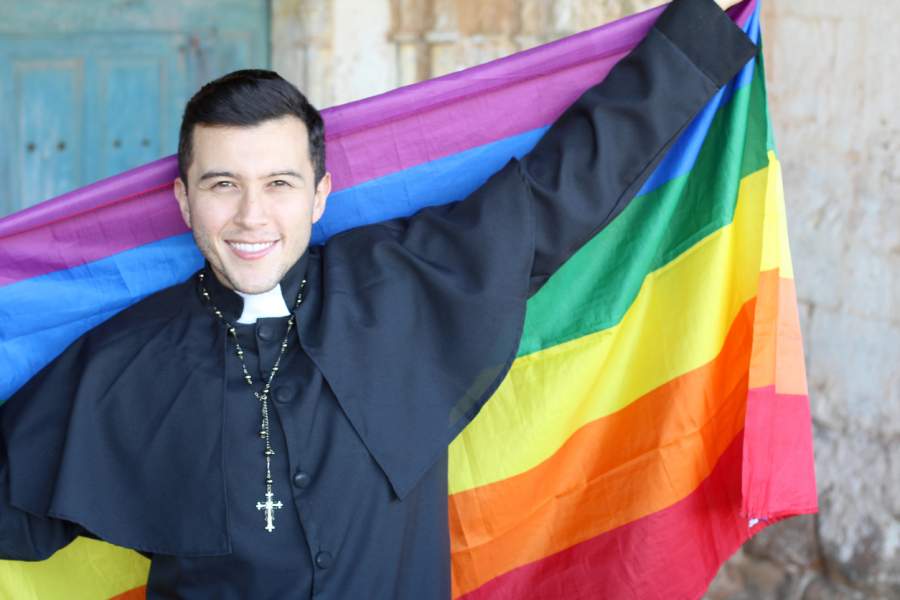
An influential delegate at Pope Francis’s global summit has directly linked African Catholic bishops’ stand for traditional biblical values with financial coercion from American evangelicals, Russian Orthodox, and Gulf-linked Muslims.
Cardinal-designate Timothy Radcliffe, who has been the retreat-preacher to the Synod on Synodality both in 2023 and 2024, took a potshot at the conservative African bishops in a column published in the Vatican’s official newspaper on October 12.
“African bishops are under intense pressure from Evangelicals, with American money; from Russian Orthodox, with Russian money; and from Muslims, with money from the rich Gulf countries,” Radcliffe wrote in L’Osservatore Romano, explaining the almost unanimous rejection of Pope Francis’s declaration, Fiducia supplicans, by African prelates.
The magisterial declaration published in December 2023 permits Catholic priests to bless same-sex couples and heterosexual couples living in “irregular situations” without using a formal liturgy.
“Is the refusal to bless gays in Africa an example of inculturation or a refusal to be a nonconformist?” Radcliffe asked. “Inculturation for one person is another person’s rejection of the nonconformist Gospel.”
Rebuffing Rome
Radcliffe, former Master of the Dominican order, noted that the impasse over the African prelates’ rejection of Fiducia supplicans could have been avoided if they had consultated with bishops or other Vatican offices.
“The Pope had approved the declaration,” Radcliffe stated. Nevertheless, Cardinal Fridolin Ambongo, president of the Symposium of Episcopal Conferences of Africa and Madagascar (the organization that represents all the Catholic bishops of Africa), “went to Rome to present the African bishops’ firm rejection of the proposal.
“Never before had all the bishops of a continent repudiated a Vatican document. Every attempt was made to calm the crisis,” Radcliffe observed.
“There should have been a discussion with them before, not after, the statement was released. Whatever we think about the declaration, when we face tensions, and to overcome them, we all need to think and engage with each other on a deep level.
“Cardinal Ambongo confirmed that African exceptionalism is an example of synodality. And he pointed out that unity does not mean uniformity. The Gospel is inculturated differently in different parts of the world,” Radcliffe added.
Seismic Shift
The Dominican friar, who was nominated to the College of Cardinals by Pope Francis on October 6, agreed that “in some parts of the world, welcoming gays is seen as scandalous.”
“Many Catholic bishops in Africa see it as an attempt to impose a decadent Western ideology on the rest of the world,” he wrote, with Cardinal Ambongo viewing it “as a symptom of a decadent Western culture.”
Radcliffe quoted Ambongo’s recent words: “Little by little, they [Westerners] will disappear. We wish them a good disappearance.”
Noting the alarm many conservative Catholics have raised over the changes proposed by the Synod on Synodality, Radcliffe emphasized that the Synod is continuing the “seismic movement” of “dying and rising again” that “began with the Second Vatican Council.”
“Some of my friends say they became Catholic because they wanted certainty, clarity,” he said. “The certainty remains: God became man, died and rose again, and gave himself to us in the Eucharist. All the doctrines expressed in the Creed remain unshakeable.
“But our search to understand more deeply what those doctrines mean sometimes leads us to perplexity,” Radcliffe elaborated. “We must die to our old ways of thinking to go deeper into the mystery. And that can be hard.”
The friar also lamented the exclusion of the “LGBT” word in the Synthesis Report, which is the final document the synod delegates are studying, noting that it “also seemed to backtrack on the preparatory document on openness to LGBT people.”
Catholic Backlash
Several Catholic clergy and laity hit back on social media, accusing Radcliffe of “paternalism” and being “condescending.”
“Kinda racist doncha think?” wrote Fr. Dwight Longenecker on X. “‘The dumb corrupt Africans are susceptible to graft and influence from other sources, but we Western educated white people … we’re never influenced by money or powerful interests … .’
“I hate this English elitist garbage with a holy hatred,” added Longenecker, a Catholic priest and author who converted from Anglicanism to Catholicism.
“Or, alternatively, the African bishops are trying to protect their flock from confusion. Does he think African bishops lack the capacity to think for themselves?” Oratorian priest Fr. Derlis Garcia asked in a rejoinder.
However, other commentators, including conservatives, supported Radcliffe, pointing out that his observations on the African bishops being subjected to foreign pressure are right.
“I think he seems to be seeing that African Catholics faced a major threat from well-funded religious competitors in the wake of FS [Fiducia supplicans], which is … true. A reason Africa moved so quickly/decisively on FS was because it created an evangelical crisis. This is fact,” noted Jonathan Liedl, a reporter for the conservative National Catholic Register.
LGBT Cheerleader
Radcliffe has publicly dissented from the Church’s teaching on homosexuality for over two decades, The Stream earlier reported. In a 2005 article, “Can Gays Be Priests?” published in the liberal British Catholic journal The Tablet, Radcliffe challenged a papal document instructing seminaries to bar candidates with deep-seated homosexual tendencies.
“I have no doubt that God does call homosexuals to the priesthood, and they are among the most dedicated and impressive priests I have met,” Radcliffe countered. “And we may presume that God will continue to call both homosexuals and heterosexuals to the priesthood because the Church needs the gifts of both.”
In 2006, Radcliffe called on Catholics to “stand with” gay people by “letting our images be stretched,” which means, “watching Brokeback Mountain, reading gay novels, living with our gay friends, and listening with them as they listen to the Lord.”
In the Church of England’s House of Bishops Working Group on Human Sexuality report (2013), Radcliffe has also suggested same-sex relationships could be regarded as “eucharistic,” noting: “Certainly it can be generous, vulnerable, tender, mutual, and nonviolent. So in many ways, I think it can be expressive of Christ’s self-gift.”
African-Western Division
Radcliffe’s controversial remarks against the African bishops echo a similar intervention from Cardinal Walter Kasper, president emeritus of the Pontifical Council for Promoting Christian, who was accused of patronizing Africans during the Synod of Bishops on the Family in 2014.
“Africa is totally different from the West. Also Asian and Muslim countries, they’re very different, especially about gays,” Kasper told Vatican correspondent Edward Pentin. “You can’t speak about this with Africans and people of Muslim countries. It’s not possible. It’s a taboo. For us, we say we ought not to discriminate, we don’t want to discriminate in certain respects.”
The controversial intervention against the African bishop by a high-profile European also mirrors the split between the African bishops and bishops from the Western world in the Anglican Communion on the issue of homosexuality.
Bishops from several African countries boycotted the Lambeth Conference in June 2022, arguing that the Archbishop of Canterbury Justin Welby, who is a close friend and associate of Pope Francis, has married the spirit of the age over sexual issues.
Ironically, the Roman Catholic Church under Pope Francis published its authorization for same-sex blessings in December 2023, seven months before the Church of England approved of clergy administering blessings to same-sex couples in July 2024.
The Church of England’s General Synod agreed to services of blessing for gay couples, as well as concessions for parishes that do not wish to use them, on the basis of a three-year trial.
Dr. Jules Gomes, (BA, BD, MTh, PhD), has a doctorate in biblical studies from the University of Cambridge. Currently a Vatican-accredited journalist based in Rome, he is the author of five books and several academic articles. Gomes lectured at Catholic and Protestant seminaries and universities and was canon theologian and artistic director at Liverpool Cathedral.