


Must-See Film: Bonhoeffer: Pastor, Spy, Assassin
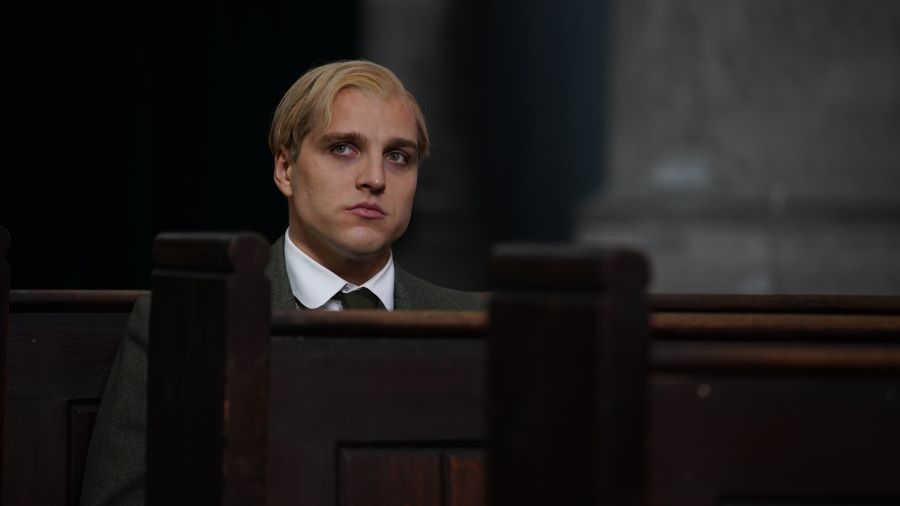
Inspired by Eric Metaxas’s New York Times-bestselling biography, the film Bonhoeffer: Pastor, Spy, Assassin will be released on November 22 in more than 1,000 theaters nationwide. Angel Studios, already well known for The Chosen TV series and Cabrini biopic, has produced an exceptional film based on the extraordinary life of Dietrich Bonhoeffer, the twentieth-century martyr. The film is directed by Todd Komarnicki, well known for his work on the blockbuster hits Elf and Sulley.
The viewer is immediately ensconced in the storm clouds of early twentieth-century Germany. The desaturated color palette paints murky gray visual tones reminiscent of David Fincher’s motif, subliminally capturing this dark chapter in German history.
In one of the opening scenes, young Dietrich is playing piano in his home at the funeral of his beloved older brother, Klaus, who has just been killed while fighting in World War I. He angrily darts from the piano to his room, lamenting to his mother, “No one was listening. No one cared.” To which his mourning mother says, “Everyone cares, they were just swept up in their thoughts.”
This became the prophetic symphony of Bonhoeffer’s life — releasing the notes of Heaven in perilous days when few listened, and fewer cared.
Filled with the Spirit
The all-German cast is superb, but Jonas Dassler’s performance as Bonhoeffer towers in strength and subtleties and is award-worthy. His boyish smile beguiles his dark, sunken eyes, which simultaneously project the joy and torment of Bonhoeffer’s life’s calling.
As the Western world teeters on the brink of annihilation at the hands of the Nazis, Bonhoeffer — a pastor and theologian — vehemently warns the Church of the encroaching evil. He masterfully charges believers to rise in the power they possess and stand against the occult-fueled blitzkrieg of hell that was intent on exterminating both the Jewish race and every recognition of the God of the Bible. But he is not merely a pulpiteer content with preaching the truth; he puts his faith into action and lives it out.
The overused theatre slogan “Must see!” is rarely warranted. But in this case, everyone must see Bonhoeffer — particularly those attending churches that are eerily quiet about the battalions of evil marching across our land today.
The film stirringly captures Bonhoeffer’s transformation from devout believer to Spirit-filled warrior during his months at the Abyssinian Baptist Church in New York City. As he trudges through the dusty books and endless boredom of Union Seminary, it is in the black Church that Bonhoeffer experiences the vibrant power and intimate presence of the Lord in His people and within himself.
As Reverend Powell unveils the glories of God for Bonhoeffer, his theology is set ablaze by the newly burning fires in his heart. In one moment, he nearly comes out of his seat and emphatically says, “I want that!”
Awakening
It is also during his time in New York that Bonhoeffer experiences the hateful racism waged against his black brothers and sisters. He can’t reconcile how faith-filled white people can harbor such hatred. His friend Frank explains, “Hate comes in many colors, Dietrich. Your eyes have just not been opened yet.”
Shortly after, when Bonhoeffer returns to his homeland, his eyes are opened so thoroughly they would never be closed again.
Upon his return, Nazis are sweeping through the nation, taking one local election after another while Hitler hypnotizes the masses. In an endearingly somber moment Bonhoeffer’s twin sister, Sabine, says, “Something is coming. Something unstoppable.” Bonhoeffer avows assuringly, “Nothing is unstoppable.” And he knew it was true.
In another memorable scene, Bonhoeffer is boldly preaching the truth of the Gospel at a Sunday morning service, openly rejecting the deceptive and dangerous tenets of Nazism that are infecting churches like a replicating virus. Many parishioners walk out in the middle of his sermon, including some of his fellow clergymen. Pretending to be offended, they are, in fact, cowards who hold fast to self-preservation and reputation.
But as Bonhoeffer shakes hands at the door with the remaining congregants as they exit, it is soul-lifting to see a few people quietly lean in close to say, “Thank you. It’s been a long time since I’ve heard the truth.” Young Bonhoeffer’s heart cry is being answered: Some were listening, and they care.
Taking Action
Bonhoeffer not only proclaims the truth, but puts it into practice. When his friend, Hans, approaches him about participating in a plot to assassinate Hitler, he confidently says, “Here I am, Hans. Send me.” Some of his fellow clergy forbid him from getting involved, urging him instead to love his enemy, saying, “Is Hitler the first evil ruler since Scripture was written?” Bonhoeffer replies, “No. But he’s the first one I can stop.”
Nothing is unstoppable. And he believed it was true.
As we already know, the plot to kill Hitler failed, and Bonhoeffer was arrested. In the arrest scene, a German officer mocks him, saying, “What has become of the church when the pastor becomes an assassin?” Bonhoeffer famously replies, “If a driver were running over children, wouldn’t it be everyone’s responsibility to stop it?”
Bonhoeffer is held in several prisons before ending up at Buchenwald, one of the gruesome concentration camps. Throughout his imprisonment, we see him writing his famous letters, encouraging inmates and guards alike, and wringing his heart out before God, asking Him to take him home to glory. In his final sermon before martyrdom, Bonhoeffer says, “This is for me the end, the beginning of life.”
A Martyr’s Life
Dietrich Bonhoeffer was hanged on April 9, 1945. On the morning of his execution, he leads his fellow prisoners and one guard in holy communion. The scene at the gallows landed heavily at the private screening to which I was invited, with salted tears on many cheeks. Among others, I was asking, Am I doing everything the Lord has put before me? And, at the end of my life, will I know that I have done all things well? Such is the power of this film.
Just three weeks after Bonhoeffer’s death and new life began, Hitler committed suicide, marking the turning point of the war in Europe.
The overused theatre slogan “Must see!” is rarely warranted. But in this case, everyone must see Bonhoeffer — particularly those attending churches that are eerily quiet about the battalions of evil marching across our land today.
Most of this glorious movie unfurls as flashbacks from Bonhoeffer’s time in prison, which serves to highlight his resolve, determination, and unwavering faith as he awaits execution. The agonizing scenes in his cell are reminiscent of Jesus’s prayers of anguish in Gethsemane before His death.
“When Christ calls a man, he bids him to come and die.”
We are listening, Dietrich. And we care. The notes of your life resound as a symphonic invitation we all must heed for as long as breath fills our lungs.
Tickets are available for preorder through several sites; group discounts also are available at Angel Partner theaters. To find one near you, search the Angel Studios website using your ZIP code.
Keith Guinta is, in reverse order of importance, a mountaineer, standup comic, Ironman marathoner, coach, church planter, small business owner, coffee roaster, rookie blogger, worship leader, father, husband, and younger brother of Christ. Read his thoughts on his blog, The Wine Patch.