


Let There Be Light!: Seasonal Affective Disorder and the Many Benefits of Light
Winter has a way of creeping in, stretching shadows longer, pulling the sun lower, and drawing the world into an early dusk. For many, it’s not just the cold air that bites — it’s the weight of darkness that delivers suffering to our mind and heart. We may no longer experience the glass as half full, but rather the glass becomes half empty of the impenetrable gray.
Seasonal Affective Disorder (SAD) isn’t just the winter blues. It’s a clinical diagnosis characterized by depression that cycles with winter’s shorter days and reduced sunshine. It is characterized by fatigue, altered sleep patterns, diminished enjoyment of activities previously enjoyed (anhedonia) and a relentless sense of heaviness. The world dims, and for some, so does our spirit.
I recognize this in myself and my children to some degree. I became particularly concerned when my eldest daughter moved to Finland for work. Finland frequently leads charts as the “world’s happiest country.” But what about those long winter nights when Northern Finlanders experience sunlessness for up to 50 days at a time?
Fortunately, my daughter is full of grit and has the gift of wonder for every new experience. She survived and thrived during her three years in Finland, and came to understand why happiness exists despite the extremes of nights and days as seasons reach their zenith. But the period prior to her leaving led me to seek answers for this phenomenon that exists in many areas of the world.
The Science of SAD
With shorter days and longer nights, the body naturally produces more melatonin, the hormone that regulates sleep. More melatonin means feeling sluggish, unmotivated, and constantly tired. At the same time, there’s a noticeable drop in serotonin — the neurotransmitter that lifts mood and energy — since its production is triggered by sunlight.
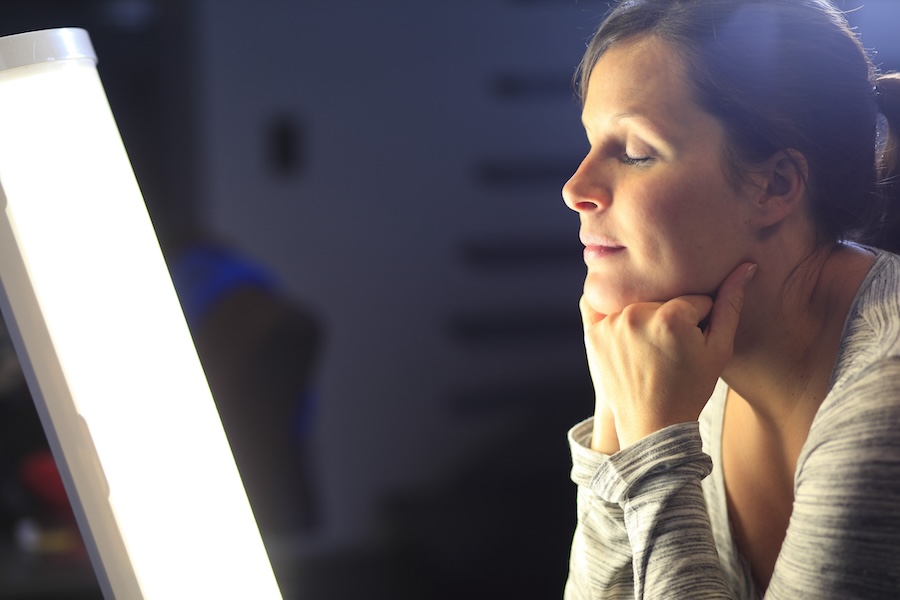
Treatment for SAD often involves a combination of cognitive behavioral therapy, medication, and lifestyle adjustments, but the most effective intervention is bright light therapy (BLT). But not any light will do, and as with all treatments, we must understand the potential side effects; more is not necessarily better. (The table found on this link gives specific parameters of effective light therapy. These can be resourced online through many retailers.)
My daughter used a lightbox during her Finland years, and it undoubtedly contributed to her happiness. But even if we don’t live in Finland, we can benefit from light boxes. Light therapy, specifically exposure to a 10,000-lux light box for about 30 minutes a day, significantly improves symptoms of SAD by resetting the body’s circadian rhythm and boosting serotonin levels. It’s a profound reminder of how we were designed: Our bodies function in light, and when that light is taken away, dysfunction sets in.
The Light That Penetrates the Darkness
When we consider the word “light,” our minds are drawn to the light that is visible, whether from the sun, a lamp, or now a light box. But long before doctors prescribed lamps as a remedy for depression, Scripture had already prescribed light as the ultimate answer to darkness. Our bodies need light, and so do our souls. And just as physical light therapy restores balance to the body, the presence of Christ — and the light we bring to one another — restores balance in our hearts and souls.
Scripture declares a truth that defines the Creator of light, seen and unseen.
God is light, and in him is no darkness at all. (1 John 1:5 ESV)
This isn’t just a poetic metaphor — it’s a reality woven into creation. Where there is light, there is life. Where there is darkness, there is suffering. God’s light penetrates the darkest dark that exists in the soul of a human. When we suffer and darkness surrounds, we are drawn to the source of all light, seen and unseen.
The reality is that despite the suffering in the world, we are still experiencing a world with God. And God is light. We cannot comprehend, even in the worst of atrocities, a world where God’s light does not exist at all. Jesus embodies this truth:
“I am the light of the world. Whoever follows me will not walk in darkness, but will have the light of life.” (John 8:12 ESV)
I personally remember my life before Christ, and the day when I came to the end of myself and He saved me. It is imprinted on my mind as my before and my after. While I may experience SAD or even greater suffering, nothing compares to the darkness I experienced before I met the light of the world.
The presence of Christ pushes back against the heavy darkness of depression. For those struggling with SAD, spiritual light therapy is just as necessary as physical light therapy. Just as we must intentionally seek sunlight in the winter, we must also intentionally seek the light of God in our spiritual winters — through Scripture, prayer, worship, and community.
The answer is clear: Even in the bleakest season or the longest nights, we are not left alone in the dark.
The Lord is my light and my salvation—whom shall I fear? (Psalm 27:1)
Bringing Light into Every Season
Winter is here but the promise of Spring begins with the tender green leaf that prepares to open. The nights stretch long, and the air is cold. But the truth remains: Light — whether physical or spiritual — will always push back the darkness.
If you or someone you love struggles with seasonal depression, don’t ignore it. Use the tools available: embrace light therapy, seek connection, nourish your body, and stay anchored in the truth of God’s Word. Surround yourself with people who will be light for you, and when you can, be a light for others.
Because even in the longest winter, even in the darkest night, the promise stands:
“The light shines in the darkness, and the darkness has not overcome it.” (John 1:5 ESV)
And it never will.
Dr. Pamela Prince Pyle is a board-certified doctor of internal medicine, chair of the board of Africa New Life Ministries in Rwanda, Museum of the Bible Woman of Legacy, speaker, and author of the book Anticipating Heaven: Spiritual Comfort and Practical Wisdom for Life’s Final Chapters, which released on January 7, 2025 (Thomas Nelson).