


Kash Patel Has Proven He Can Lead the FBI
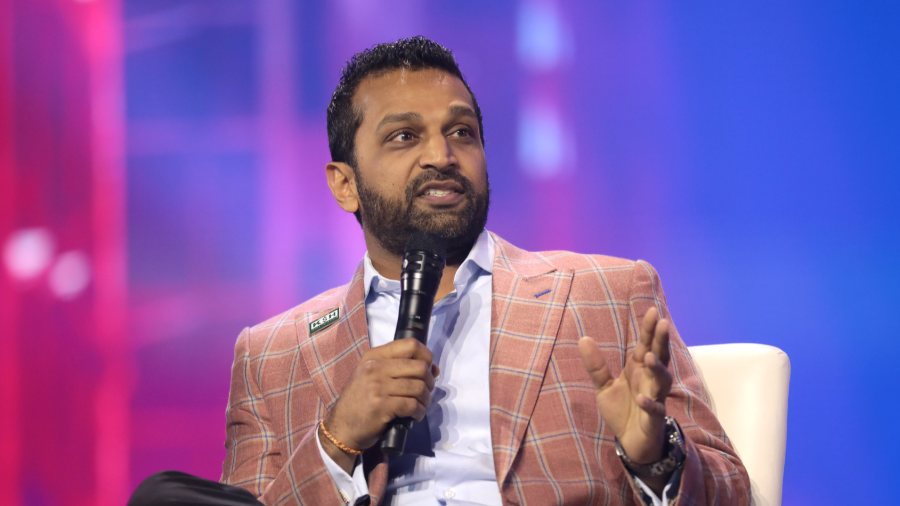
On November 30, President-elect Donald Trump tapped Kash Patel for the role of FBI director. As a result, Patel has become a favored target of the Left. Despite many publications aiming to downplay Patel’s character and achievements, he has the qualifications and virtues that make him the ideal person to lead the nation’s top federal law enforcement agency.
The mainstream media and many Democrats in Congress, including Sen. Dick Durbin (D-IL), claim that Patel is unfit to lead the FBI. On Wednesday, Durbin told reporters that he does not support Patel, claiming that he 1) will weaponize the FBI, and 2) lacks the experience to lead the Bureau.
It has unfortunately become the norm for members of opposing political parties in Congressional committees to unleash rhetorical barrages against an incoming president’s nominees instead of having substantive dialogue on issues that really matter to the American people. This was evident in Pam Bondi’s recent confirmation hearing for the role of U.S. Attorney General, in which Patel somehow became the focus of attention for many senators.
In his opening remarks, Durbin claimed that Patel’s “main qualification to be FBI director seems to be his loyalty to Donald Trump.” He and others pointed out that Patel has assembled “an enemies list of government gangsters” he plans to target.
One has to wonder if these Democrats on the Senate Judiciary Committee had these concerns about the people presidents Obama or Biden nominated to run the FBI — because it certainly sounds like they don’t want Patel to emulate former top FBI officials. After all, one cannot forget that it was former officials at the DOJ and FBI who signed the warrants to investigate Trump for allegedly colluding with Russia despite knowing full well that important key facts had been left out. The Russiagate investigation was nothing less than a flex from the entrenched leftists in the federal government to take out their enemy, Donald Trump.
Patel’s Achievements Speak Louder Than His Critics’ Rhetoric
Patel has all the true facts of Russiagate at his command because he is an expert in national security, with many years of legal expertise acquired at the state and federal level.
He spent almost a decade as a federal public defender, amassing over 50 jury trials. He spent three years at the U.S. Department of Justice as prosecutor, where he investigated the Benghazi attack of 2012, ISIS, and other terrorist groups. He then spearheaded the Russia investigation while serving on the House Permanent Select Committee on Intelligence (HPSCI). It was Patel’s dedication to justice and exemplary work ethic that exposed numerous failures within the DOJ and FBI.
He then moved on the National Security Council, where he served as deputy assistant to the president and senior director for counterterrorism, playing crucial roles in hostage negotiations and helping eliminate high-profile terrorists. From there, he took on the role of chief of staff to the Defense Secretary, where he was tasked with a variety of critical operations and defense initiatives.
Putting Justice and Country First
In his book Government Gangsters (2023), Patel takes the reader through his journey in public office and the numerous roadblocks he faced from officials at the most powerful agencies and departments while he conducted his investigations. He makes it clear that the main reason he embarked on a legal career was because he “wanted those who did good to be rewarded and wrongdoers to be punished.”
This is the very foundation of justice. Anyone who interprets it as an attestation that Patel will weaponize the FBI on Trump’s behalf is creating a narrative that does not exist.
Contrary to what Durbin says, Patel makes it clear that his goal is not to use the FBI to prosecute political opponents; rather, his goal is to “stop federal law enforcement powers from being abused for corrupt ends.” He makes it abundantly clear that he wants to improve the FBI by implementing stern congressional oversight to improve transparency at the Bureau.
In order to rebuild trust in the FBI, Patel will make it his priority to ensure that the rule of law is applied to everyone equally, meaning that no one will be investigated purely on the basis of their political affiliations. He will also not tolerate abuses in the Bureau like he uncovered while conducting the Russia investigation: Specifically, the vast majority of documents and text messages between FBI agents remained classified despite having been sent using government cellphones — until he worked with the first Trump administration to declassify them.
A suggestion from Patel which has garnered a lot of criticism is moving the FBI headquarters away from Capitol Hill, as far as possible from the center of government. He also wants to reduce the number of people working at the FBI’s General Counsel Office because the real mission of the Bureau is to investigate crimes — not prosecute them or wield prosecutorial decision-making powers. (That role belongs to the DOJ.) He also believes that agents should be promoted based on their field experience, not how long they’ve worked in the District of Columbia.
Patel’s track record shows that he will ensure the Bureau continues living up to its mission: to protect the American people and uphold the Constitution.
The list of the “government gangsters” that Durbin keeps mentioning, which will undoubtedly be brought up again in the Patel’s confirmation hearing that will likely take place next week, is a list that Patel put together of individuals who in some way or another leaked sensitive information, were part of the Russia collusion hoax, and/or were instrumental in the numerous attempts to undermine Trump’s administration or campaign, or use their position and power for their own advantage rather than the nation’s.
The truth is, Patel’s achievements speak louder than the rhetorical barrage from the people on the left — and they know it. That’s why they keep trying to undermine his achievements and experience.
James Lopez has a masters degree in history from the University of Cambridge, as well as and a masters degree in government from Johns Hopkins University.