


Is God on Israel’s Side Against Iran?
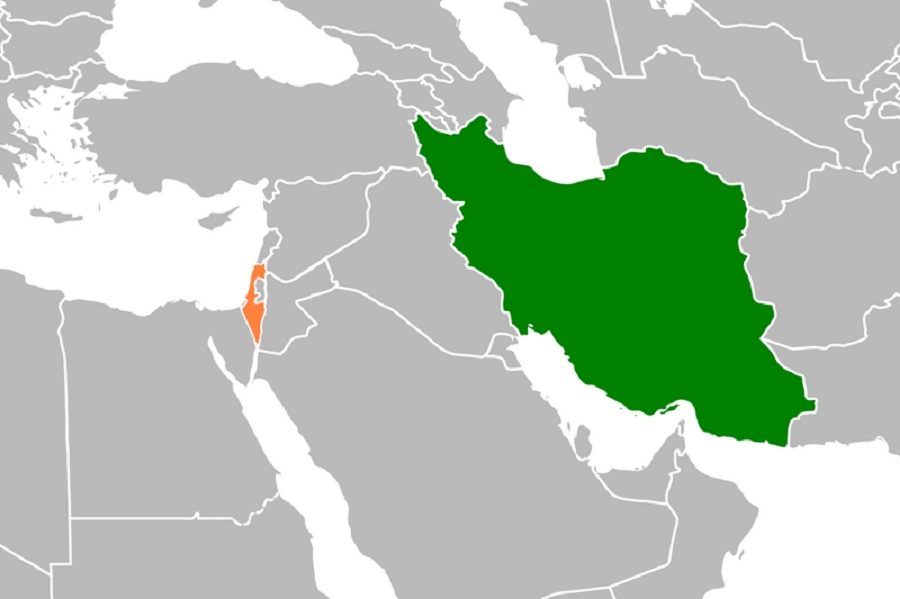
The war between Israel and of Iran, simmering since the latter’s proxy Hamas massively attacked the Jewish state 19 months ago, boiled over yet again on June 13. That day, several hundred Israeli planes hit multiple targets in Iran, including nuclear facilities, because Israeli intelligence believed the ayatollahs are close to constructing a nuclear weapon.
Since then the conflict has escalated into a series of attacks and counterattacks, with Tehran launching drones and missiles into Haifa and Tel Aviv while Israel continues bombing even more targets. As of June 18, several dozen Israelis and several hundred Iranians had been killed.
US Prepping to Get Involved?
The US has also started moving more forces to the Middle East, including a second aircraft carrier and additional Air Force fighter planes. President Donald Trump left the G7 Summit early to monitor the situation and advised Iranian citizens in Tehran to evacuate. Trump appears to be considering American airstrikes on Iran’s surviving/hardened nuclear weapons production sites, despite some Republican opposition. He has declared, “Iran cannot have a nuclear weapon,” openly disagreeing with Director of National Intelligence Tulsi Gabbard, who said Tehran is not actively pursuing one.
This is a complex situation on several interrelated geopolitical, military, and religious levels. I will try to shed some light on it by examining each of those three aspects.
Why Iran Detests Israel
Since 1979, Iran has taken the Islamic texts (Quran and Hadiths, Muhammad’s alleged sayings) as the starting point for condemning the Jews. The Iranian anti-Jewish mindset is further inflamed by Twelver Shi`i traditions stating that the Dajjal (the Muslim Deceiver/”antichrist” figure) and his followers will be Jewish. Finally, the ayatollahs add a profound paranoia about Israel using the surviving Baha’is in the Islamic Republic as a fifth column for Mossad, because that religion’s world headquarters is now in Haifa.
The instigator of the Islamic Revolution and first Supeme Leader, Ayatollah Ruhollah Khomeini (d. 1989), believed all those things, and his ideas were passed on as immutable truths. This ideological agenda was then weaponized as an anti-Jewish and anti-Zionism club with which to beat not just Israel, but Sunni Arab countries for not doing enough to help the Palestinians, thus allowing the IRI to try to put itself forward as the true leader of the entire Islamic world. Iran is thus in a three-way battle for the regional (and, arguably, global) Islamic ring of power with Turkey and Saudi Arabia.
Military Comparison
Who wins in open military conflict between Israel and Iran? In air warfare the Israeli Air Force is clearly dominating. No big surprise, as its F-35s are light-years ahead of Iran’s old Soviet-era MiGs, as well as Tehran’s even older US F-14s and even some vintage, Vietnam-era F-4s; thye’ve been able to take out Iran’s Soviet/Russian air defense systems.
But data from the authoritative Global Firepower Index paints a less rosy long-term picture for Israel. That site ranks the two countries almost equal in conventional military power, with Israel at #15 and Iran #16. And in fact, the Jewish state leads only in airpower. In every other conventional force metric, Iran is ahead. The IRI has almost twice as many military personnel, and with a population of almost 90 million — 10 times that of Israel — vastly more available manpower.
Iran has
- 1,700 tanks to Israel’s 1,300
- 30,ooo more armored vehicles
- five times as many artillery pieces
- 10 times more mobile rocket launchers.
Israel has technological superiority in most weapons systems, thanks in large part to US aid — over $300 billion since modern Israel’s founding — and outright transfer of advanced systems such as the F-35. Israel’s trump card, of course, is that it is a nuclear power, with probably at least 90 atomic bombs in its arsenal.
But as Joseph Stalin allegedly said, “Quantity has a quality all its own.” Should Iran decide to build up a massive infantry force and march it across Iraq as it did in 1982, Israel might be in trouble.
Iranian Islam and Israel
What about the religious dimensions? This is where matters get thornier, both in Iran and here in America. Yes, all Iranian Twelver Shi`is believe in the end time eschatological Mahdi, as do many Sunni Muslims. Twelver Shi`is, unlike other Muslims, think he will be the returned 12th descendent of Muhammad (who didn’t die but mystically disappeared twelve centuries ago). Some of the ayatollahs running Iran also think that it’s possible to do something so piously violent that it will cajole Allah into sending the 12th Imam back to deliver the Islamic world from its supine global position and create a planetary caliphate, such as nuking the Zionists.
Current Supreme Leader Ali Khameini probably doesn’t believe this, although other clerical politicians do. I think the IRI wants nuclear weapons for regime insurance rather than detonation (like North Korea). And perhaps to put at the Twelfth Imam’s disposal, were he to show up. If nothing else, the ayatollahs are well aware of Israel and America’s nuclear weapon superiority — and what would happen to their country 30 minutes after they used a nuke on Tel Aviv. But one can certainly see where the Israelis would rather err on the side of caution by taking out Tehran’s nuclear capabilities.
American Evangelical Protestantism and Israel
Here in America, we have our own religious beliefs about this conflict. Most Americans identify as Christians; most of those are Protestant; and an influential percentage of US Protestants are Evangelicals (here’s the data). The latter demographic slice most strongly supports Israel. That has caused some rifts in the Republican party, dominated as it is by Evangelicals. Ambassador Mike Huckabee, a former Baptist minister, recently extolled “Israel’s Biblical Right to the Land.” Last year House Speaker Mike Johnson (R-Louisiana), said that supporting Israel is “our biblical admonition. This is something that’s an article of faith for us. It also happens to be great foreign policy.”
But not all Christian-identifying Americans agree with that. Catholics comprise the largest single denomination in America, and its take is:
Catholics should respect and seek to understand Jewish attachment to the Land of Israel (Eretz Yisraell), but the existence of the modern State of Israel (Medinát Yisrael) should not be interpreted by Catholics primarily in religious or biblical categories, but according to international legal principles.
While America’s five million Lutherans disagree on much, most would hold to this Confessional Lutheran position:
Cyrus Scofield propagated Premillennial-Dispensationalism in his influential Scofield Reference Bible, first published in 1909. The Scofield Reference Bible is the single most important document espousing the teaching that God permanently gave the land of Palestine to the Jews. Prior to these teachings of Darby and Scofield, most Christians (including Lutherans) understood the ownership of Palestine to be a political issue, not a theological issue…. When the New Testament is allowed to interpret the Old Testament, it follows that the 1948 state of Israel is not a prophetic realization of the Messianic kingdom of Jesus Christ. His kingdom is not of this world (John 18:36).
Only 1% of American Christians are Eastern Orthodox, but they too question the axiomatic usage of Old Testament theological arguments in a modern geopolitical context:
[A] large segment of Evangelicals in America accept as Gospel that which is foreign to 1,800 years of all Christian teaching that preceded it.
Support Israel — But For the Right Reasons
I’m not saying the US should not support Israel. We should. My point is that we should do so based on hard, secular strategic grounds, not on contentious interpretations of biblical history upon which even Christians cannot agree. (And I say that as a conservative Christian.)
Is Israel perfect? No, and the folks on social media, especially X, who label anyone who criticizes modern Israel as an antisemite are quite tiresome. In particular, the impact Israel’s war is having on noncombatants in Gaza is distressing. Still, I’ll take Israel over Iran any day, and twice on the Sabbath.
Israel is a democracy, doesn’t throw gay people off of buildings, generally protects the rights of its citizens, Jewish and otherwise, and opposes Islamic fundamentalism. To paraphrase Abraham Lincoln, whether God is on modern Israel’s side is above my pay grade; but based on what we see politically, America and Israel are almost certainly on God’s.
Timothy Furnish has a PhD from Ohio State in Islamic, World & African history. He’s been an Arabic interrogator in the 101st Airborne, a US Special Operations Command analyst, an author and professor.