


Iran’s Invisible Jihad: How Proxy Wars Are Erasing Christianity
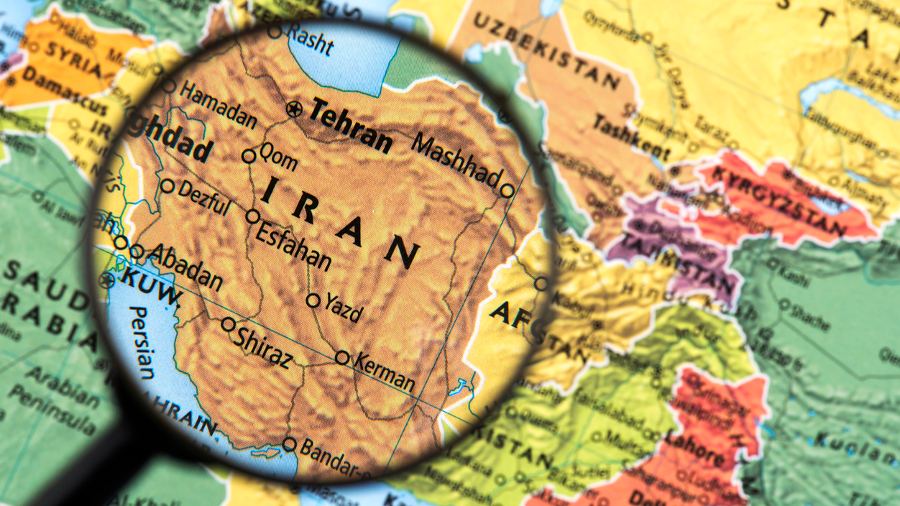
Christianity is vanishing from the lands where it was born.
In Iraq, Syria, Lebanon, and beyond, ancient Christian communities are being driven out, not only by the chaos of war but by a deliberate, strategic campaign backed by the Islamic Republic of Iran. While the world remains fixated on headlines about Sunni extremism, the real and enduring threat to Christianity in the Middle East comes from Iran’s vast network of proxy militias and ideological allies. Through subtle expansion and sustained terror, Iran is conducting a cold, methodical jihad — not with suicide bombers or viral brutality, but with slow demographic displacement, ideological suffocation, and religious erasure.
The evidence is everywhere, but the narrative remains buried.
Iran’s Strategy
Iraq once counted 1.5 million Christians within its borders. Today, fewer than 150,000 remain. After the fall of Saddam Hussein and the devastation wrought by Sunni groups like al-Qaeda and ISIS, the vacuum left behind was filled not by peace but by Iranian-backed Shiite militias. These groups now dominate entire regions, enforcing a sectarian vision in which Christianity has no place. Churches are looted or repurposed, Christian homes seized, and clergy harassed into silence. The pressure is constant, the intimidation relentless.
Many of the same Christians who survived ISIS are now fleeing again — this time from groups claiming to bring stability, but funded, trained, and ideologically aligned with Tehran.
Syria presents a different battlefield but the same outcome. The post-Assad regime may have marketed itself as a protector of minorities, but beneath that image lies the reality of Iranian infiltration and domination of Syria’s security forces, religious institutions, and political life. The Iranian strategy has been to embed itself so deeply within the structure of Syria that its ideological project becomes irreversible. In practice, this has translated into the marginalization of Syria’s historic Christian communities. The physical destruction of churches during the war is only part of the story. Entire Christian neighborhoods have emptied out. The religious balance that once defined cities like Homs and Aleppo has been broken.
In Lebanon, the process is even more advanced. Hezbollah — Tehran’s most successful proxy — has transformed Lebanon into a de facto client state. Once a beacon of Christian influence in the Arab world, Lebanon’s Christian institutions have crumbled under the weight of economic collapse, political paralysis, and Hezbollah’s grip on power. The once-vibrant Maronite and Orthodox communities that shaped Lebanon’s cultural life are hemorrhaging their youth, hollowed out by emigration and despair. Meanwhile, Hezbollah continues to entrench itself, armed with Iranian funds and theology, gradually silencing every non-aligned voice. Lebanon’s unique religious pluralism is now reduced to a façade. Its Christian character is fading into memory.
The Long Game
This pattern is not limited to one country or one moment in time. It is a regional doctrine.
Iran’s foreign policy is not pragmatic, nationalist, or even merely sectarian. It is expansionist and theocratic, rooted in a messianic vision that sees no room for Christianity in its future order. The regime’s allegiance to Twelver Shiism is not a private affair. It is a public agenda, driven by the belief that Islamic governance — defined strictly by Iran’s clerical model — must be exported, protected, and imposed. Christianity, in that equation, is not just a competitor. It is an obstacle. The Iranian state sees the cross not as a symbol of peace or faith but as a cultural threat to its dominance.
Outside the Middle East, Iran’s anti-Christian campaign continues through more covert means. In Latin America, it operates through Hezbollah’s financial networks, working hand-in-glove with drug cartels and corrupt regimes to launder money and spread its influence. In Africa, Iranian clerics fund madrassas and ideological outreach programs in regions where Christian communities are already under siege. In Europe, Iranian agents have been caught plotting attacks against dissidents and exiled opposition figures. In every theater, Iran follows the same logic: export its model, suppress alternative belief systems, and entrench itself as a moral authority through fear, manipulation, and violence.
Even inside Iran, the regime spares no effort in silencing Christians. Conversions are criminalized. House churches are raided. Pastors are arrested, interrogated, tortured. Persian-language Bibles are banned. The growth of underground Christianity in Iran is a miracle in defiance of the state’s machinery of repression. But that growth only sharpens the regime’s hostility toward the faith. The danger for Christians in Tehran, Isfahan, or Mashhad is not that they might be misunderstood — it’s that they are seen as traitors to the state, subversives whose mere existence undermines the regime’s claim to moral authority.
What makes Iran’s campaign so dangerous is that it rarely appears on the front pages. Its method is not spectacular violence but sustained pressure. It dismantles Christian life through bureaucratic harassment, ideological indoctrination, and demographic engineering. It uses proxies to do the work while denying responsibility. It speaks the language of resistance and justice while building a regional empire on the bones of ancient churches.
The world continues to treat Iran as if it were a rational actor, a government like any other, seeking influence in a competitive world. But the reality is that Iran is engaged in a long war, not only for territory or power, but for theological supremacy. Its proxies do not merely fight wars — they carry out a vision. And in that vision, Christianity has no place. Not in Baghdad. Not in Damascus. Not in Beirut. And not, ultimately, in the global order Iran seeks to shape.
Amine Ayoub, a Middle East Forum fellow, is a policy analyst and writer based in Morocco.