


Imagine Bethlehem Behind Barbed Wire: What Saudi Arabia’s Religious Monopolies Mean for Global Christianity
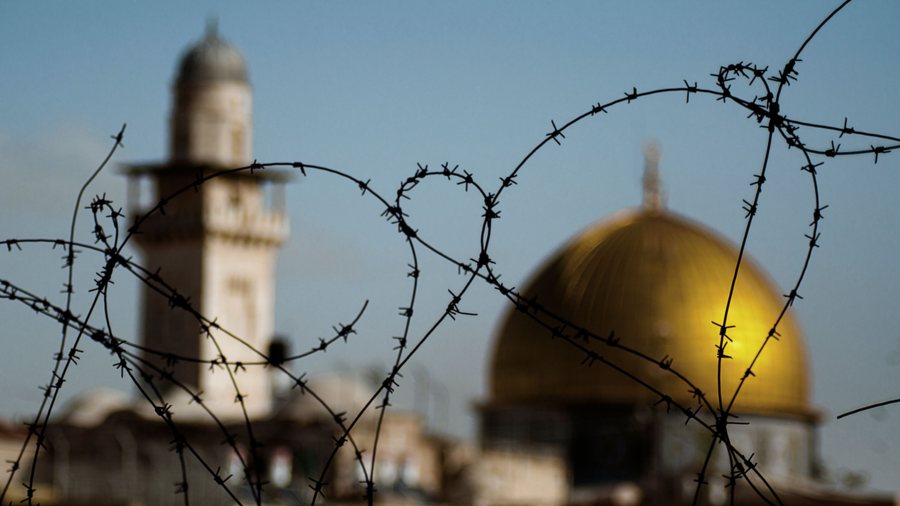
The image is stark, unsettling: Bethlehem, the very heart of Christian faith, confined behind symbolic barbed wire, its sacred sites not open sanctuaries but tightly managed zones.
This isn’t about existing security barriers, nor is it a direct territorial claim by Riyadh. Instead, it’s a chilling metaphor for a future that looms if Saudi Arabia’s expansive religious authority, particularly its deep control over the Muslim pilgrimage, inadvertently dictates a new, pervasive model for religious access that impacts Christians worldwide, especially amid the precarious governance of the Palestinian Authority.
For millennia, Bethlehem has drawn Christian pilgrims from across the globe to the origins of their faith. Yet as Saudi Arabia, a powerful actor on the global stage, consolidates its regional influence – an influence significantly rooted in its custodianship of Islam’s holiest sites – unforeseen consequences for universal religious freedom and broader stability are coming into sharper focus.
It’s Not About Travel
The House of Saud, the undisputed managers of the Hajj and Umrah in Mecca and Medina, exercises unparalleled control over the infrastructure and narrative of the Muslim pilgrimage. This isn’t just about facilitating travel; it’s about ideological messaging and the curation of religious experience for hundreds of millions. Saudi Arabia has, for decades, propagated a particular interpretation of Islam globally through its vast network of religious institutions, media, and educational endowments. While recent reforms under Crown Prince Mohammed bin Salman aim to modernize the Kingdom, the entrenched infrastructure of religious influence remains immense.
The subtle danger for global stability lies in this very model of centralized religious authority. When a single state wields such monolithic power over a global faith, there’s an inherent risk of its interpretations, however seemingly progressive at times, inadvertently stifling theological diversity and independent religious thought across the world. By managing (and sometimes homogenizing) religious discourse, Riyadh can make it more challenging for reformists within Islam to flourish authentically. This can inadvertently create an environment in which unaddressed grievances or suppressed alternative viewpoints fester, potentially leading to unpredictable outcomes on a wider scale that ultimately challenge global stability.
Stark Future
Consider the implications for Bethlehem and other Christian holy sites. Bethlehem, nominally under the control of the Palestinian Authority (PA) in Area A of Judea and Samaria, already faces unique challenges. The PA’s governance has been marked by corruption, inefficiency, and a struggle to maintain law and order, creating an environment where Christian communities have sometimes felt vulnerable, facing pressures that lead to their dwindling numbers. The “barbed wire” in this context isn’t just physical; it’s the insecurity, the administrative hurdles, and the very real dangers that exist within territories where effective, accountable governance is lacking.
If a new regional stability, heavily influenced by Saudi Arabia’s approach to religious management, prioritizes state control and managed access as a universal template for sacred sites – a template perfected by Saudi Arabia with the Hajj – then the pilgrimage experience for all Christians could fundamentally change. This risk isn’t about existing security arrangements by sovereign nations; it’s about the propagation of a philosophy of religious management that emphasizes rigid order and political expediency over organic spiritual freedom, potentially exacerbating the already difficult situation under the Palestinian Authority. The global Christian community might find their access to Bethlehem, even under nominal PA control, subjected to a broader, more restrictive paradigm of pilgrimage management.
This could mean Bethlehem and other Christian holy sites are reduced to sanitized tourist destinations – meticulously managed attractions rather than open, living testaments to faith. The authenticity of the pilgrimage, its connection to local traditions, and the spiritual spontaneity so vital to many believers could be diminished. Access might become less a universal right and more a privilege, tightly controlled and subject to the prevailing political currents that prioritize state interests over the individual pilgrim’s spiritual journey.
The vision of “Bethlehem behind barbed wire,” therefore, is a stark warning. For a world that values religious freedom and seeks genuine, enduring stability, understanding and mitigating this indirect danger posed by Saudi Arabia’s powerful religious grip and the volatile landscape of the Palestinian Authority in Judea and Samaria, is not merely an academic exercise, but a critical component of safeguarding long-term global well-being. It is about preventing a future where the sacred sites of the world become subject to state-centric management models, and where the universal right to pilgrimage is increasingly administered rather than freely embraced.
Amine Ayoub is a policy analyst and writer based in Morocco.