


Hope for What a New Administration Might Accomplish
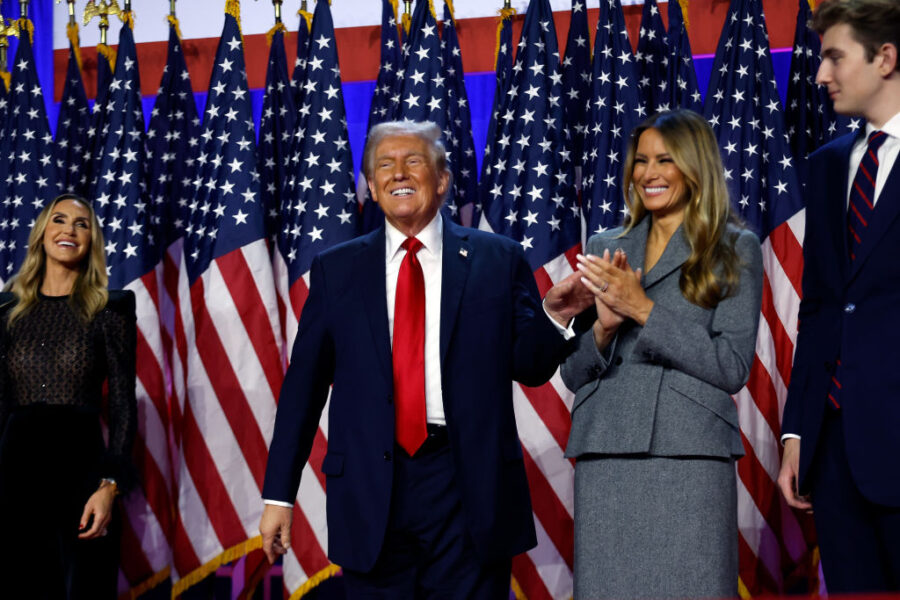
“Don’t call it a comeback,” wrote the legendary poet LL Cool J. For the first time since Grover Cleveland did it in the pre-1900’s, a former president will reoccupy the office for a second but nonconsecutive term.
As usual, some people are really hopeful about what Donald Trump’s second term portends, and others are predicting the end of all things. But what is realistic? How good or bad could the next new administration perform?
Worst-Case Possibilities
None of us can predict with prophetic certainty what the next few years will entail.
The first thing we should dispense with is the hysterics of the total doomsayers. Here I’m not just talking about the throng of howling banshees throwing TikTok tantrums. I’m talking about more public and prominent people whose apparent Trump Derangement Syndrome causes them to convulse with feverish dreams about a dystopian “Fourth Reich” of some kind, where women are forced into birthing camps in Handmaid’s Tale style, where the fascists come to arrest and kill our children. And on it goes.
Here in the real world, there are indeed several things that could go wrong. Christians should never put their eggs in the government basket. “Put not your trust in princes,” wrote the Psalmist (146). Our leaders are flawed instruments, and the world they are navigating is highly unpredictable.
We have serious enemies on this planet, and the worst-case scenarios involve them – or more specifically, their weapons. China is eyeballing Taiwan, which we’ve promised to defend. Russia is allied with North Korea, which is sending fighters to Ukraine. Iran is also part of that club, sending money to terrorists who kill, among others, American soldiers. The Middle East is, as always, a tinderbox.
Closer to home, terrorist threat assessors have warned us about the potential for an attack in the U.S. by any number of radicals who have traversed our wide-open border the last few years. Another worst-case possibility is that nutjobs trying to assassinate Trump (backed by Iran or otherwise) keep up the effort and, Heaven forbid, succeed. That would detonate a political nuke, the social chaos from which is hard to imagine.
As to “Threat Level Orange,” is there a chance that Trump, now having achieved political vindication and with both houses of Congress in his party, goes fully tyrannical and pursues to the ends of the earth everyone who previously tried to lock him up, bleed him financially, ban him from ballots, etc.? Will he round them up, throw them in gulags, maybe even begin the public executions?
My reason for not being terribly worried about this is that, first, our wisely crafted system of government puts a lot of checks on that kind of abuse of power. Secondly, Trump has already been president, and throughout his first term, political adversaries tenaciously pursued him like Inspector Javert — promoting lies about Russian conspiracies to delegitimize his election to the office, concocting flimsy impeachments, slandering him routinely as the evil, racist, Hitler-Satan, etc.
Did he, in the face of all of that, take over the government as a dictator, order the imprisonments or executions of all of those enemies, or anything remotely of that sort? No, he tweeted things late at night, gave them nicknames, sometimes insulted them in different ways. Not exactly a modern-day Vladimir Adolf Mussolini.
Best-Case Hopes
Just as it does at the beginning of your favorite team’s season, hope springs eternal and then reality settles in. But there are legitimate reasons for optimism in some important areas right now. No guarantees, but there are some opportunities for the government to accomplish a few things for the good of all people. For example, in no particular order:
Human Trafficking
According to the State Department, some 27 million people are trafficked annually across the globe. Untold numbers of them are moved across our borders and exploited on our soil. The Department of Homeland Security has said that more than 330,000 children who came across the border the last few years remain unaccounted for. The best case is that the new administration will prioritize the abolition of modern slavery and prevent and/or end the suffering of potentially millions of victims.
Fentanyl
Synthetically made and absolutely deadly, the opioid known as fentanyl has been smuggled into and spread across the U.S., killing thousands of people, mostly kids. Made largely in China and brought in via Mexican cartel networks, it is recognized as a serious crisis. The best case is that our government gets serious about stopping its manufacture and distribution.
Weaponized (In)justice
Our government has large, powerful agencies of justice. All the famous three-letter ones—the DOJ, FBI, CIA, IRS, etc. — are supposed to be apolitical in the pursuit of their tasks. But they have become weaponized by the Democrats, and that has to stop. No more trying every which way to throw political rivals in jail. We don’t want to see a 75-year-old woman imprisoned for praying outside an abortion clinic; nor do we need FEMA workers withholding hurricane relief from homes with the “wrong” political sign out front. We should hope and expect that a new administration cleans the partisan corruption out of those powerful agencies.
Threats of War
We can hold out hope for a far more effective approach to our nation’s enemies. The old school “peace through strength” policy should supplant the tepid, wishy-washy approach that has made all of the worst regimes feel extra-emboldened of late. Trump’s first go-round saw no wars break out and the advancement of promising peace deals in the volatile Middle East. Maybe we can get back to that now. The quicker we show some leadership in ending current wars — instead of slow-walking half-measures that grind them to bloody stalemates — the fewer the people who will die.
Terrorism
Ten years ago, ISIS was a growing scourge on the global map. In 2017, Trump vowed to extinguish it and unleashed the American military on it. A year later, its territory had shrunk to nearly nothing. Then in 2019 we chased down and killed its leader, Abu Bakr al-Baghdadi.
Now we’re being told that ISIS is making a comeback. It may even have operatives in the U.S. who are among the many “got-aways” who’ve crossed our porous southern border. It’s time to crack down hard on terrorist organizations before they’re able to plan and execute nightmarish extravaganzas in the near future.
Time and space don’t permit me to elaborate in other areas where there’s potential for the new administration to have positive outcomes. We could talk about relieving fearful urban citizens of potential victimhood in the face of rampant crime in some major cities. We could explore the ways to ease the economic distress caused by exorbitant prices for gas and food. We may even see caring people allowed, without harassment, to operate the many crisis pregnancy centers that help young women in distress so that their babies may be spared from slaughter.
There’s also hope for persecuted Christian minorities in countries where the U.S. may support their cause instead of continuing to ignore their suffering. Maybe we take back the border regions from the vicious criminal cartels that systematically rape women and butcher innocents. An end to people dying in the desert or being cooked to death in the backs of overheated trucks while being smuggled into our country only to face further exploitation would be a good thing.
Regarding all of these things, nobody knows what will happen. A new government involves a large team of new people heading departments and agencies. Some or even all of them could let us down. But at the outset, at least, the new regime that is taking shape shows some promise and gives us reason to be happy about a lot of potential progress that will benefit thousands, if not millions, of people.
Clint Roberts is an adjunct professor at the University of Oklahoma and Southern Nazarene University.