


Guardians of the Vulnerable: Israel’s Stand Against Islamist Chaos in Fractured Syria
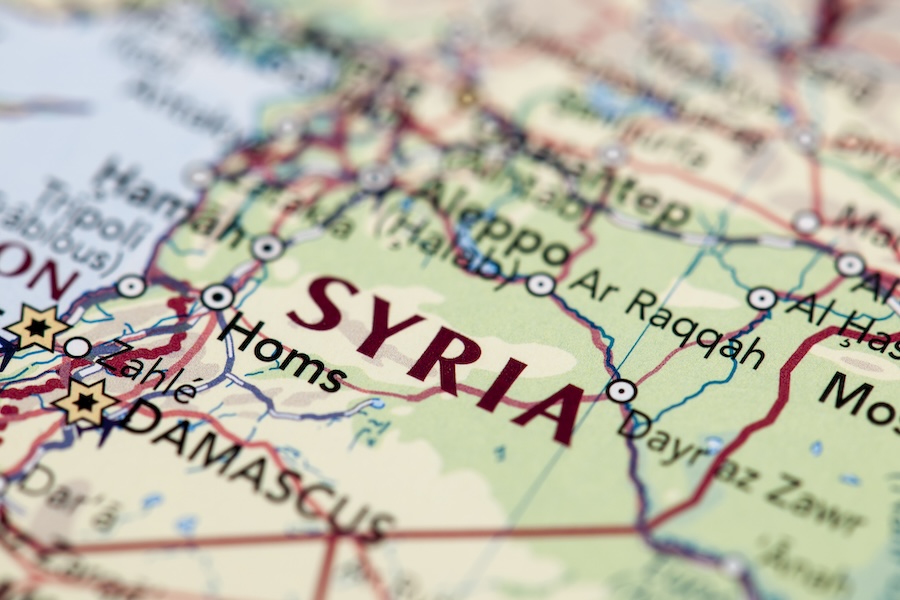
The recent horrific sectarian violence engulfing Syria’s Sweida province, where the courageous Druze community has faced unspeakable atrocities, exposes the true nature of the new regime under Ahmad al-Sharaa.
While al-Sharaa attempts to project an image of stability and national unity, his government, permeated by its Islamist roots and questionable allegiances, has proven utterly incapable — or unwilling — to protect all Syrian citizens. It is in this vacuum of responsible governance, and against the backdrop of an insidious Islamist threat, that Israel’s decisive actions emerge not as aggression, but as a vital bulwark for regional security and the preservation of a beleaguered minority.
The unfolding tragedy in Sweida paints a stark picture. Reports of “field executions,” the systematic looting of Druze homes, and the abuse of religious leaders by forces ostensibly tasked with maintaining order, reveal a chilling reality. This is not merely tribal skirmishing; it is sectarian violence with profound implications for the future of Syria and the broader region.
From Terrorist to Statesman?
While al-Sharaa, a former militant with documented ties to al-Qaeda and a history of advocating for an Islamist state, now attempts to distance himself from his past and posture as a statesman, his administration’s actions, or lack thereof, speak volumes. His hollow pronouncements about protecting the Druze ring particularly false when his own forces are implicated in the very abuses he condemns. The historical persecution of the Druze by various Islamist regimes further amplifies the community’s deep-seated fears under a government that, despite its claims, still carries the scent of its radical origins.
Israel’s response has been swift, unapologetic, and necessary. Prime Minister Benjamin Netanyahu and Defense Minister Israel Katz have made it unequivocally clear: Israel will not stand idly by while the Druze, a community with deep familial and religious ties to Israel’s own loyal Druze citizens, are massacred. Israel’s rare, deep strikes into Damascus, targeting Syrian Defense Ministry headquarters and sites near the presidential palace, were not random acts of aggression. They were calculated interventions designed to send an unmistakable message to al-Sharaa and his Islamist-aligned forces: Israel will enforce a red line against any regime that threatens the Druze or allows the southern Syrian border to become a haven for radical elements. This policy is a continuation of a long-standing commitment to both its security and its Druze brethren.
Real Threats, Real Prevention
Israel’s security concerns in Syria are not theoretical. The specter of a fractured Syria becoming a fertile ground for extremist groups, a new launch pad for terror, or a conduit for Iranian proxies is a clear and present danger. Al-Sharaa’s past affiliations and the presence of Islamist militias within his sphere of influence only amplify these legitimate fears. For Israel, preventing hostile forces from establishing a presence near its Golan Heights border is a nonnegotiable imperative. The current Syrian regime, even under its new leadership, has shown itself to be either complicit in or incapable of curbing the spread of such threats. This instability, coupled with the regime’s inability to fully integrate all armed groups under central command, threatens to unravel any semblance of order in the south and poses a direct threat to Israeli security.
Furthermore, the very ideology that shaped al-Sharaa’s rise — a brand of Islamism that, despite his recent attempts at rebranding, once expressed no room for religious minorities like the Druze — stands in stark contrast to Israel’s unwavering commitment to religious freedom and diversity. While al-Sharaa claims to embrace pluralism, the brutal sectarian violence in Sweida tells a different story. The fact that Druze elders in Syria have been forced to take responsibility for local security underscores the regime’s failure to provide basic protection to its own citizens. This de facto self-governance by the Druze, born out of necessity, is a direct indictment of al-Sharaa’s proclaimed commitment to national unity.
The international community must recognize the true nature of the threat emanating from a Syria under al-Sharaa’s dubious leadership. His attempts to deflect blame onto Israel for “sowing division” are cynical at best, disingenuous at worst. The division and chaos are inherent to a system that tolerates or enables sectarian violence and harbors Islamist ideologies. Israel’s intervention is not about meddling in Syrian sovereignty; it is about defending its own security and, crucially, offering a lifeline to a vulnerable community caught in the crossfire of a regime that has prioritized its own power above the lives of its people.
In a region fraught with instability, Israel stands as a guardian of stability, confronting the very forces of radicalism and sectarianism that al-Sharaa’s past represents. The commitment to protect the Druze is a testament to Israel’s values and a strategic necessity in a volatile neighborhood. As long as leaders with Islamist roots struggle to control, or actively contribute to, the persecution of minorities, Israel’s stand remains not just justified, but indispensable for the security and moral conscience of the Middle East.
Amine Ayoub is a Middle East policy analyst and writer based in Morocco.