


Everybody, Read This Book!
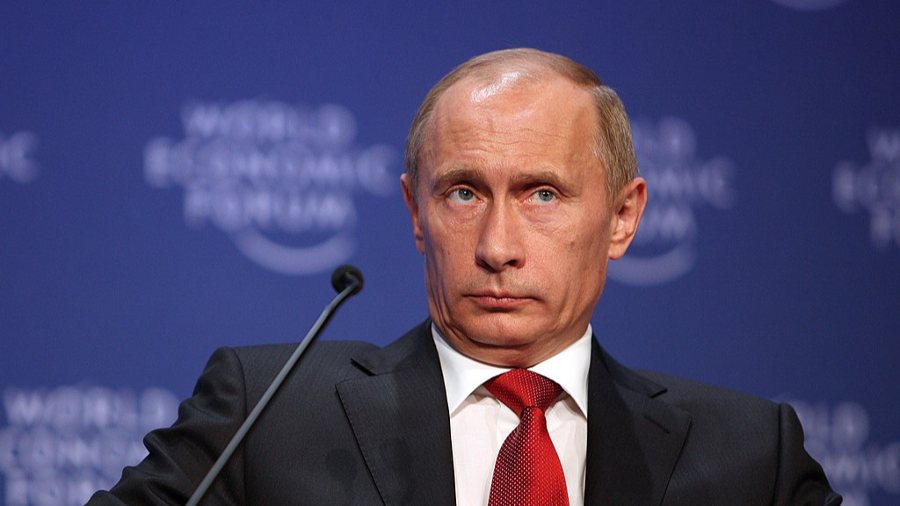
The original title of this column was “Mr. Putin, Read This Book!” After all, while you may not like him, Putin is a huge success in some ways.
After a humble childhood, he attended Leningrad State University and then joined the Soviet KGB, eventually rising to the rank of colonel. In 1991, as the Soviet Union fell, he jumped into politics, serving in Boris Yeltsin’s administration until it ended in 1999. In just eight short years, he was prime minister — soon be president. After maxing out his terms in office, he took a hiatus (as the power behind the presidency), and then became president again.
Along the way, he has amassed a personal fortune of somewhere between $70 and $200 billion. If the homes and yacht he is said to own really do belong to him, he’s living at a level of luxury most of us can’t even conceive. Along with all that, he controls Russia and its military — and he’s either using it to defend Russia or possibly to destabilize Europe, if not the whole world.
Nothing New Under the Sun
Success, fame, wealth, and enormous power — to many, that sounds like a dream job. But you know, of course, that there’s nothing special about it. Seriously, it’s all been done before.
What has been is what will be, and what has been done is what will be done;
and there is nothing new under the sun.
Is there a thing of which it is said, “See, this is new”?
It has been already, in the ages before us. (Ecclesiastes 1:9-10)
Looking only at Russian history, Putin stands in a long line of autocrats including Ivan the Terrible, Peter the Great, Catherine the Great, Vladimir Lenin, and Joseph Stalin.
The big difference between him and those others is that he’s still alive. But as Ukrainian President Volodymyr Zelenskyy recently remarked, “He will die soon, and that’s a fact, and [the Russia’s war with Ukraine] will come to an end.”
He’s right, of course: Putin (age 72) will die relatively soon — but so will Zelenskyy. Like Ivan, Peter, Catherine, Lenin, Stalin, and everyone else, we’re all destined for the grave.
Then what? Like them, we’re destined to be forgotten. “For of the wise man as of the fool there is no enduring remembrance, seeing that in the days to come all will have been long forgotten” (Ecclesiastes 2:16). And just as it’s true of the wise man and the fool, it’s true of the rich and the poor, the powerful and the weak.
Great Wisdom
Upon Putin’s death, the Russian people, the Ukrainian people, and countless others will breathe out a collective, “Thank God that’s over with,” and life will go on as if there had never been a Vladimir Putin.
Which is why he, along with the rest of us, would be a great deal happier and the world would be better off if we read the Book of Ecclesiastes with its simple wise message: Stop taking yourself so seriously.
The authorship of the book is connected with King Solomon. During his reign, Israel expanded to its greatest size and influence. There was peace on every border, which led to prosperity. Solomon “made silver as common in Jerusalem as stone” (1 Kings 10:27). Gold was everywhere, pouring in from trade and tribute. He and his people amassed riches and power.
And Solomon lived like a rich, powerful man. He indulged, he tells us, every desire (Ecclesiastes 2:10). If he wanted it, he bought it. He built the great Temple to the Lord as well as grand houses and cities. He had vast orchards and vineyards, numberless flocks and herds, thousands of slaves, and, as a friend put it, “more girlfriends than the Beatles and Elvis” — that is, 700 wives and 300 concubines (1Kings 11:3). He filled his houses with guests for fabulous feasts and entertainment.
Being uncommonly wise, after completing his great works, he reflected on his successes.
I considered all that my hands had done and the toil I had spent in doing it, and behold, all was vanity and a striving after wind, and there was nothing to be gained under the sun. (Ecclesiastes 2:11)
The word translated “vanity” means a breath or vapor, something utterly insubstantial. Solomon understood that all our successes go off into the void sooner or later as they — and we — are forgotten.
“There is nothing better for a man,” he concluded, “than that he should eat and drink and find enjoyment in his toil. This also, I saw, is from the hand of God; for apart from him who can eat or who can have enjoyment?” (Ecclesiastes 2:24)
That is, the simple life of faith, work, marriage, and family is the best life. These things last while everything else blows away into nothingness.
If Mr. Putin and our other world leaders understood this, we’d all be better off. Instead, they — and we — strive and strive and strive for more, trampling the simple life and … and then we die. Someone else takes over, “and who knows whether he will be a wise man or a fool? (Ecclesiastes 2:18). Solomon’s successor, as it turned out, was a consummate fool (see 1 Kings 12) – and eventually the entire kingdom was lost, its people exiled.
So dear everybody: For your own good, the good of your family, the good of the Church, and the good of the world, read this book. Then make your choice between God the vaporous pursuit of the wind.
James Tonkowich is a freelance writer, speaker, and commentator on spirituality, religion, and public life. He is the author of The Liberty Threat: The Attack on Religious Freedom in America Today and Pears, Grapes, and Dates: A Good Life After Mid-Life. He is Instructor Emeritus at Wyoming Catholic College.