


Does Science Deny a Historical Adam and Eve? Part 1
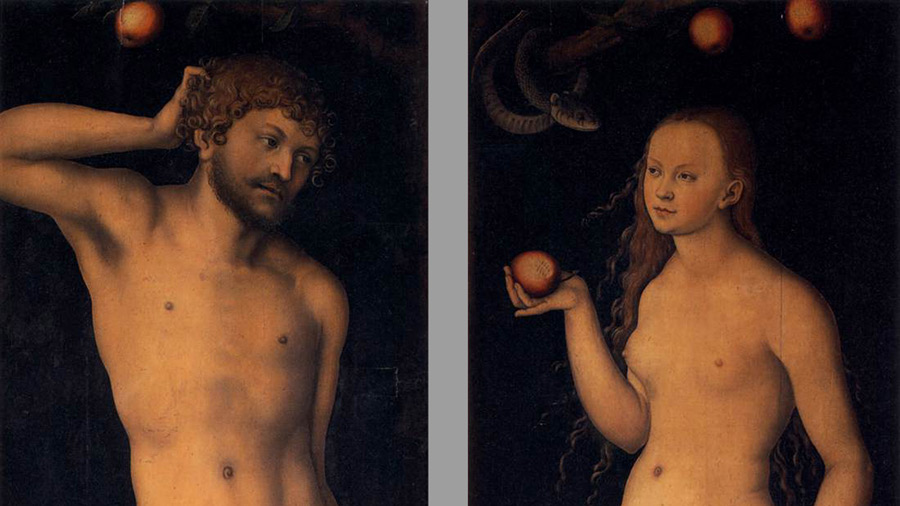
It all starts with Adam and Eve. The story of Christianity that has laid hold of the world for 2,000 years begins with a single couple who find themselves intimately connected to their Creator. Although their paradise habitation is sweet, the pair trades it away for a chance at taking God’s place as master of their own lives.
From that point on, Adam and Eve are spiritual nomads, loved by their Creator but hopelessly separated from His harmony and presence. Because of this, Jesus came to shed His blood, providing a way for Adam’s actions to be undone. Our first parents created a “sin-debt” that we inherited, but as the beautiful hymn puts it, “Jesus paid it, all to Him I owe.” This is the Gospel.
Unfortunately, it has become almost fashionable for many Evangelical scholars to try to snip the first half of the Gospel from our lives. People like William Lane Craig, Gavin Ortlund, Francis Collins, John Walton, and many others are intent on denying the historical nature of Adam and Eve. In almost Jordan Peterson-like fashion, they say the first 11 chapters of the Bible are allegorical — meant to convey symbols and archetypes but not real history. Although church leaders have, at times, had different opinions on the meaning of the days in Genesis, no one has ever questioned the historicity of Adam and Eve — until recently.
This is a red line that Christians from many different interpretive backgrounds know is dangerous to cross
The Root of the Issue
So why are more and more respected Christian leaders saying the history of Adam and Eve is, as Craig puts it, “at loggerheads with modern science”?
While Craig and other theologians aren’t scientists themselves, they seem to have sided with the narrative put forward by think tanks like BioLogos, whose main purpose is to teach that Christianity is compatible with evolution.
The allegedly scientific reasons for denying a historical Adam and Eve can be summarized into the following:
- “Evolution tells us that humans descended from a common ancestor with chimpanzees and that our DNA is 99% identical.”
- “Modern humans are hundreds of thousands of years old.”
- “Humans have too much genetic diversity to originate from a single pair.”
These ideas are what really lie behind the shift away from a literal Adam and Eve. Although many will say they’re simply reading the Bible in its original context, the truth is that they just assume Genesis needs to be reinterpreted to fit what “the science” tells us. But the science isn’t always as simple as people think.
I’m not a scientist; I study theology and its relationships with science and philosophy. But I’m familiar enough with the landscape to know that many well-respected scientists and philosophers believe there’s more than enough room for a literal Adam and Eve. Furthermore, some are confident that science actually points to the historical pair as well. In what follows today and in Part 2 tomorrow, I’ll try to lay out a little of that landscape.
Responding to Objections
Objection #1: “Evolution tells us that humans descended from a common ancestor with chimpanzees and that our DNA is 99% identical.”
Today it’s common to believe that humans and chimps are basically cousins separated by only a 1% difference in DNA. Whether it’s Bill Nye or the Smithsonian, the genetic similarity claim has been widely used to make us believe we’re related to chimps. But even though this idea has been entrenched in Western imagination, nothing could be further from the truth. Since at least 2007, even scientists from evolutionist backgrounds have been trying to debunk the “1% myth” but their studies were seen as heretical. They claimed that the difference was more like 4-6%. But for many scientists in the Creationist and Intelligent Design community, even that margin seemed too small. They believed that the studies were still too biased to reflect a full comparison. The comparisons were made using “human guided scaffolding” which assumed a common ancestor with chimpanzees even before the results were in. As of late it appears their claims are now fully justified.
In April 2025, a different kind of study was conducted that allowed for a far more accurate genetic comparison between humans and chimps. The study, conducted by Yoo et al. and published in the prestigious journal Nature, concluded that the real difference between human and chimpanzee DNA was more like 14-15%! Interestingly enough, the writers buried this statistic deep within the supplementary data and shrouded it in technical jargon.
As Casey Luskin, a scientist with the Discovery Institute says, “This data has huge implications for the long-quoted statistic that we are only 1% genetically different from chimps, and many people are interested in this question for its implications regarding evolution, origins, and the exceptional status of human beings. Yet the papers almost seemed like they want to obscure the numbers, making them hard to find for the reader, whether a scientist or layman.”
The now collapsed 1% myth has been used as a foundation stone for human evolution for decades, and scientists who disagreed were labeled heretics. Today we know better, and this should serve as a warning for those who blindly trust what secular scientists tell us about human origins.
Come back tomorrow for Part 2, in which I’ll lay out two more objections some people have to the idea of a literal Adam and Eve — and the answers theology holds for those.
Angelos Kyriakides is a husband, father, pastor, and apologist who lives in Southern Ontario, Canada. He holds a master’s degree in Theological Studies from Regent College and has a special focus on secularization, science, and faith. You can catch more of his content at www.therightstory.org.