

Cardinals Could Collude to Elect an Anti-Trump Successor to Pope Francis
Synodal star Mario Grech is the progressives’ favorite candidate for the next pontificate
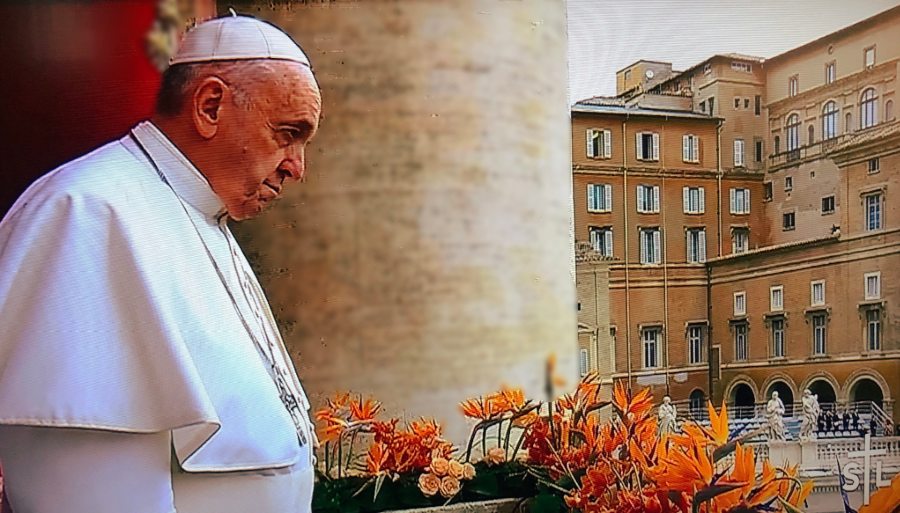
Cardinals voting at the conclave following Pope Francis’s quickly approaching demise could transcend theological disagreements and unite to elect a pope capable of providing an ideological and geopolitical counterweight to President Donald Trump, The Stream has learned.
Hot-button issues of migration, climate change, foreign aid, and international politics will play a crucial role in rallying cardinal-electors behind a candidate who is capable of challenging Trump’s policies, thus securing votes from social justice-minded cardinals across the theological spectrum.
A substantial majority of the voting cardinals — 84 out of 138 — are theologically liberal and would vote for a pontiff who would continue the reformist and synodal policies of Pope Francis, according to an in-depth analysis of the College of Cardinals conducted by The Stream.
Nevertheless, this number falls short of the two-thirds majority of 92 votes needed to secure the papacy, a rule reinstated by Pope Benedict XVI in his motu proprio Normas Nonnullas of 2013.
The progressive voices among the cardinal-electors would attempt to sway the votes of the 24 cardinals classified as “undecided” in our analysis by portraying the global situation under Trump as a threat to social justice and world peace in the speeches they deliver during the deliberations.
The significant minority of 29 conservatives among the cardinal-electors are unlikely to favor a candidate ideologically opposed to the policies of the Trump administration, with cardinals like Raymond Burke describing restrictions on Muslim immigration as prudent and patriotic.
Gospel of Social Justice
The Stream’s analysis draws extensively on The College of Cardinals Report — an interactive website launched in December 2024 by Vatican journalists Edward Pentin and Diane Montagna.
Pentin, author of the book The Next Pope: The Leading Cardinal Candidates agreed with The Stream’s conclusions that the focus of most of the cardinals, especially the 110 cardinal-electors Pope Francis created among the current number of 138, “tends to be on social justice issues, usually interreligious dialogue, helping the poor and peacemaking.”
“They value synodality, and almost all of them tend to be concerned about migration and combatting climate change,” Pentin explains in an article promoting his website. “Francis’s cardinal appointments are usually bishops from the global south or Ordinaries from unusual Western dioceses, deliberately chosen from the Church’s ‘periphery.’”
Pentin told The Stream:
In analyzing the cardinals for the site, it was clear that almost of all of the cardinals chosen by Pope Francis were, like Francis himself, keen promoters of social justice — especially issues such as migration, fighting climate change and supporting globalism. As a possible counterweight to President Trump, some may therefore be even more willing to vote for a candidate who will continue promoting these issues, but many other factors will naturally also inform their choice.
According to multiple Vatican insiders, Cardinal Mario Grech, the former bishop of Gozo, is said to be the leading liberal candidate, especially given the Maltese prelate’s high profile as secretary general of the Synod on Synodality — Francis’s pet project and vehicle for driving the Church in a more progressive direction.
“We are making history,” Grech reportedly said to the bishop next to him during a papal speech extolling synodality as a means of changing the Church’s trajectory.
Conservatives Alarmed
Conservatives are alarmed by the prospects of Grech becoming the next pope, suspecting that he might further Francis’s reforms — particularly in the area of ordaining women to the diaconate.
In a 2024 interview, Grech said that a female diaconate would not be a “revolution” but a “a natural deepening of the will of the Lord” which would “express and demonstrate the dynamism inherent in the history of the Church.”
On migration, the prelate echoed Francis; on the topic of migrants drowning in the Mediterranean because of closed-border policies, he said, “It is shameful that Europe and much of the political world close their eyes and hearts to this human drama. We too, as a Church, have to be ashamed, despite the beautiful pages of communities and parish priests who welcome migrants.”
Urging the Maltese to welcome Muslim immigrants, he wrote in a 2019 open letter:
As time goes by we are progressively seeing an ever increasing number of foreigners living and working among us. It would be silly of us to think of them as a threat or as a purely economic resource. It is a real pity that there are those among us who are tempted to regard them as some kind of inferior class of people and so they despise them even with violent acts or they take advantage of their vulnerability.
“Mary is the common heritage of Christians and Muslims and so devotion to her helps to foster a spiritual harmony between us,” he stressed. “Mary is the road which can lead us to open out to each other and understand each other much better.”
Grech’s U-Turn on Homosexuality
The Maltese cardinal, who has changed his position on homosexuality, also said that the Church should reflect a “unity of differences” rather than “uniformity of thought” — like a “rainbow,” with more flexibility in pastoral approaches and teaching in different places.
In 2014 as a member of the Synod on the Family, he gave a speech calling church leaders to be more sensitive in their language about lesbian and gay people.
In 2015, Grech said Catholics in same-sex civil unions should be welcomed in the church because “there can be different forms of relationship” beyond marriage. “The road is wide open to those truly seeking to follow God’s footsteps, regardless of their sexual orientation.”
The prelate is reported to be the principal author of Malta’s guidelines endorsing reception of communion by divorced and civilly remarried Catholics following Pope Francis’s controversial document, which opened the doors for couples in “irregular” unions to receive communion.
Another Candidate
A second candidate who is highly regarded by the progressive bloc in the College of Cardinals is Luxembourg’s archbishop, Jean-Claude Hollerich, who also played a prominent role in the Synod on Synodality.
Hollerich favors female deacons, blessing same-sex couples, making priestly celibacy optional, a pro-migrant and pro-climate change agenda, and dropping the Catholic ban on contraception.
“However, his chances of getting elected are less favorable than that of Grech because the cardinals would not want to choose another Jesuit after Francis, a Vatican insider told The Stream. “Besides, he is too progressive to win over some of the undecided voters,”
Slim Chances of a Conservative Pope
While The College of Cardinals Report 22 cardinals as papabile (potential candidates to be elected as pope) the papabili cited are mostly conservative and include cardinals like the traditionalist Raymond Burke, the Hungarian Péter Erdő, the Guinean Robert Sarah, and the Sri Lankan Malcolm Ranjith.
Three of the potential progressive candidates listed are the Vatican secretary of state Pietro Parolin, the Filipino Luis Tagle, and the archbishop of Bologna, Matteo Maria Zuppi.
Along with Grech and Hollerich, Zuppi is being talked about as a highly likely successor to Francis because of his progressive positions on migration, climate change, the LGBT agenda, and his diplomatic role in the Ukraine-Russia war. According to Vatican chatter, the Roman Curia would also like the papacy to return to an Italian.
Pentin conceded that it would be unlikely for a conservative to be elected given the composition of the voting cardinals. The highest percentage of conservative cardinals comes from Africa (eight out of 18), while most of the liberal cardinals comes from South America (15 out of 17).
North America also contributes a high percentage of liberal-leaning voters (12 out of 20) along with Asia (15 out of 23). All four cardinals from Oceania are likely to vote for a liberal, because even though a cardinal-elector like Mykola Bychok is theologically conservative, the Ukrainian’s position on Trump would tilt him in the direction of an anti-Trump candidate.
Among the European cardinals, 32 out of 55 are decidedly progressive and anti-Trump, with Spanish Cardinal Ángel Fernández Artime calling anti-migration policies “inhumane.” He has expressed his opposition to seeing immigration as a security threat and supports Francis’s line on the war in Ukraine.
Cardinals Filoni, Pizzaballa, and Woelki, who are all conservative, have all expressed pro-Palestinian positions and would have concerns about Trump’s pro-Israel’s policies. Cardinal Fernando Natalio Chomalí Garib of Chile, while favorable to the Latin Mass, is of Palestinian origin and believes that Israel has committed “genocide” in Gaza.
Schism on the Horizon
Meanwhile, traditionalist Catholics are threatening to reject the magisterial authority of the next pope if he is a progressive. On Monday, Bishop Joseph Strickland endorsed an op-ed by LifeSiteNews which counseled that “Catholics must refuse to accept a public heretic as pope.”
“Some will seek a ‘liberal’ pope who will continue the radical revolution advanced by Francis, while others will long for a ‘conservative’ pope who will turn the clock back to 2013, or some other period in the past,” the article stated. “The papacy is not a plaything that can be passed between ‘liberal’ and ‘conservative’ factions every time there is an election.”
“If a man is elected who holds more moderate or conservative views compared to Francis” and “indicated that he was not going to be radical like Francis,” he would be “far more dangerous” because he “would in fact stabilize and confirm departures from Catholic orthodoxy.”
The article stated that the test of a truly Catholic pope would be his condemnation of the “heresies and errors” which “have been apparently enshrined as ‘acts of the magisterium,’ such as Amoris Laetitia, Fiducia Supplicans, as well as the amendment of the catechism that directly contradicts Catholic teaching on capital punishment.”
Dr. Jules Gomes, (BA, BD, MTh, PhD), has a doctorate in biblical studies from the University of Cambridge. Currently a Vatican-accredited journalist based in Rome, he is the author of five books and several academic articles. Gomes lectured at Catholic and Protestant seminaries and universities and was canon theologian and artistic director at Liverpool Cathedral.
Updated at 10 a.m. on February 27, 2025, to correct the title of Cardinal Mario Grech.