


Arab Winter Descends on ‘Valley of the Christians’
Old, beautiful church spires nestled within small villages, olive groves, and pomegranate trees dot the rocky and densely vegetated valley and hillsides. The cluster of 32 villages in this mountainous area in Northwest Syria is known as Wadi al-Nasara – The Valley of the Christians (Nasara means “Nazarite” in Arabic, a reference to Christ).
The Christian inhabitants of these villages and in the larger Syrian cities have an extraordinary spiritual lineage. We in the West have long forgotten that Christians populated much of the Middle East and North Africa for about 600 years before the arrival of Islam.
In fact, the Church in Syria predated Paul the Apostle. It was Ananias, a Christian man already in Damascus, whom the Lord instructed to be Paul’s spiritual HR rep after the apostle had his hasty and unexpected job interview on the dusty road outside the city. (The Damascus road conversion likely took place in what we call modern-day Syria.) Indeed, this region was home to many of the Patristic Fathers of the faith who fought against heresies and wrote great works on Christian theology.
The lineage of these earliest of Christians has somehow persevered through nearly 1,400 years of Islamists bent on eradicating non-Muslims.
It appears that perseverance will once more be in high demand as the specter of mass persecution accompanies the descending Arab Winter that is now howling through the villages of this small enclave and the other small pockets of Christianity throughout Syria.
Arab Spring Portends Arab Winter
Starting around 2011, the West embraced, encouraged, and resourced uprisings in the Middle East collectively known as the “Arab Spring.” The abysmal failure of the attempted democracy-seeding illustrates the insular ideological constraints of secular geopolitics.
Western bureaucrats base their assessment of Islamic violence on the presupposition that economics can trump Islamic fundamental beliefs. To them, poverty foments anger, anger seeks an outlet — and just like that, a jihadi is born. This thin and erroneous conclusion is built without the necessity of understanding Islamic texts and the subsequent implications made manifest by the historical movements of Islam since the seventh century.
As Stream contributor Raymond Ibrahim, a nationally known expert on all things Islam, explains, “Muslims still venerate their heritage and religion – which commands jihad against infidels – whereas the West has learned to despise its heritage and religion, causing it to become an unwitting ally of the jihad.”
The power vacuums induced by the Arab Spring uprisings were filled by Islamic fundamentalists, resulting in nations like Iraq and Libya languishing in tattered and sectarian-led precincts wherein indigenous Christians are heavily persecuted.
“Ethnic cleansing” is the most appropriate description of what happened to Iraqi Christians during the Arab Spring, as illustrated by the desperate outflux of over a million Christians.
Once again, giddy Western secularists are glomming onto a so-called “moderate” Islamic group, as the dark, numinous specter of an Arab Winter has descended on the mountains and valleys of Syria.
Al-Jolani and Three Dangerous Ingredients: Wolf, Sheep, Clothing
In the last few weeks, Syria has gone the way of Iraq and Libya as Ha’yat Tahrir al-Sham (HTS) militants, led by Abu Mohammed al-Jolani, ousted the regime of despot Bashar al-Assad.
Reading most of the media coverage may lead one to question if Syrian Christians are really in any danger. After all, headlines across the web dignify HTS as “revolutionaries,” and many outlets are heeding the request to refer to the HTS leader by his birth name, Ahmed Al Sharaa, instead of his adopted jihadi name, Abu Mohammed al-Jolani.
CNN conducted an interview with al-Jolani that has been widely picked up, describing HTS as trying to distance itself from other anti-Western Islamic militias and equating al-Jolani’s externalities – that he is “soft-spoken” and not dressed in jihadi vestiture – as signs that the transformation is all but complete.
CNN also ran with al-Jolani’s newfound appreciation of democracy, quoting him saying, “People who fear Islamic governance either have seen incorrect implementations of it or do not understand it properly.”
Doesn’t he sound like a pleasant jihadi?
It seems that Western media is eager to paint a picture of Ahmed the Demure as a potential Syrian Robin Hood; ostensibly, wanting peace, access to Netflix, and some food for the poor. Who could fault him for that? After all, we in the West support revolutions against tyrants, don’t we?
Never mind that al-Jolani’s HTS and its predecessor, the Al-Nusra Front, are a card-carrying terrorist organization as designated by the U.S. State Department.
Overlook the fact that his Al-Nusra Front was especially known for abduction, torture, and summary executions of minorities, such as, you guessed it – Christians.
Ignore that HTS has re-instated Sharia Law (noting that “Sharia” means “the way”, meaning “the way of Islam”) in the Syrian provinces previously under its control.
Forget the part about al-Jolani himself being designated by the State Department as a “specially designated global terrorist,” the list reserved for the all-stars of terrorism, including the infamous Osama Bin-Laden.
Clearly, we should pump the breaks on coronating HTS and Ahmed the Demure as enablers of a sprouting democracy.
The fact is that HTS and al-Jolani are Salafi-jihadists, one of the Sunni flavors of Islam particularly focused on using violence to manifest a global Islamic caliphate. These objectives don’t exactly change overnight.
Living Out Our Faith
As al-Jolani plays the role of semi-secularist, a craft undoubtedly learned by observing his benefactor, Turkey’s Recep Tayyip Erdoğan, many Syrian Christians know what the immediate future holds and are fleeing major metropolitan centers like Aleppo.
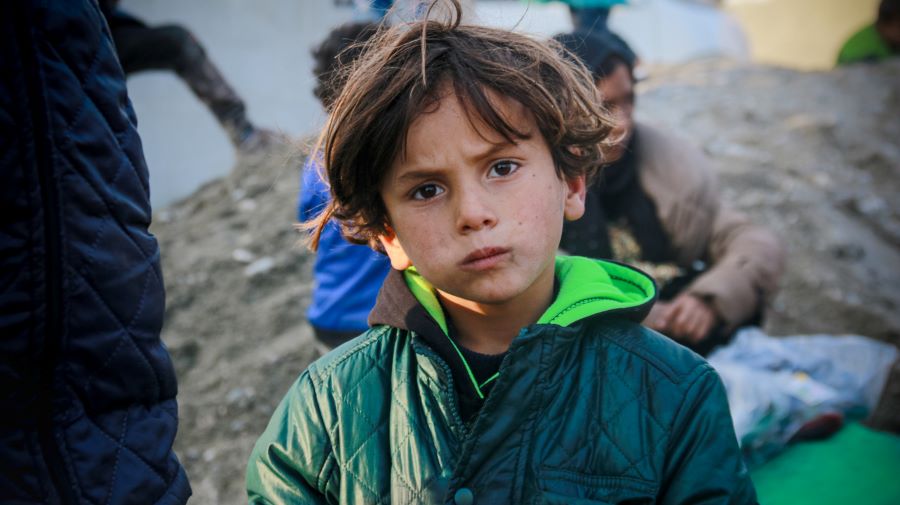
This Iraqi-like Christian exodus is creating an acute crisis of basic resources. “They are thirsty, hungry, cold, and have nothing left,” said Father Jacques Mourad, the Syrian Catholic Archbishop of Homs, describing the tremendous influx of Christians escaping Aleppo.
In the meantime, reports have already surfaced of the destruction of Christian crosses, desecration of Christian cemeteries, and a chilling account of a murdered Christian couple in which the husband was decapitated.
The naïvete of Western secularism is once more on full display. By viewing Islamic fundamentalism through a prism of Western pragmatism, they are once again enabling Islamic fundamentalists to instill Islamic, Sharia-bound values — and as this Arab Winter descends, the unrelenting drumbeat of Christian persecution grows louder by the day.
So what? you may be asking. Shouldn’t we focus on cleaning up our own mess and make America great again?
Yes. As citizens of our great nation, we most certainly should.
But Christian, the primacy of our being is who we are in Christ. As citizens of Heaven, the question is not necessarily what America should do for our Christian brothers and sister in Syria, but what I should do. What you should do.
The Pauline Epistles tell us the Church supersedes mere temporal borders. We are to follow God’s will like the Syrian Christian, Ananias, who said, “Here I am, Lord” (Acts 9:10). Therefore, please pray deeply for Syrian Christians, and give to relief efforts for them if you can.
Joachim Osther is a freelance writer focusing on the intersection of culture and Christianity. He holds a master’s degree in theological studies from Veritas College and Seminary, and two degrees in the life sciences, a field in which he works as a strategist, advisor, and published author. He is also an occasional contributor to RaymondIbrahim.com, chronicling the relevance of historical clashes between militant Islam and the West.