


A Safe Haven in a Combat Zone
It is said that there is no safe place in a combat zone. It is also said that there are no atheists in a foxhole. I believe there is at least a slight measure of truth to both in both these statements.
Our Stryker brigade had been deployed to Iraq for a year, and still had three or four months to go. As we approached our second Christmas in Iraq, improvised explosive devices, small-arms fire, rockets, and mortars still threatened our safety. We also dealt with the stress of deployment: longing for the ones we loved who were so far away, spouses at home trying to manage a household during our absence, children missing their mommy or daddy, , and trying to find workable solutions for strained relationships. Our brigade had experienced some incredibly difficult times, but amid the stress, our chapel was a safe haven.
Mary and Joseph experienced a combat zone of their own. Caesar Augustus had issued a decree, ordering a census for the purposes of taxation. The census required them to make a difficult journey to their hometown of Bethlehem just as Mary was about to give birth. Roman troops they encountered along the way were reminders of the occupying force. The miles traveled were not easy, especially as the pangs of birth increased. The crowds were large and the inns were full.
I can imagine the stress that Joseph experienced; it is harder to adequately imagine what Mary must have been experiencing. Finally, a stable and a manger provided a place sheltered enough to give birth.
The Manger
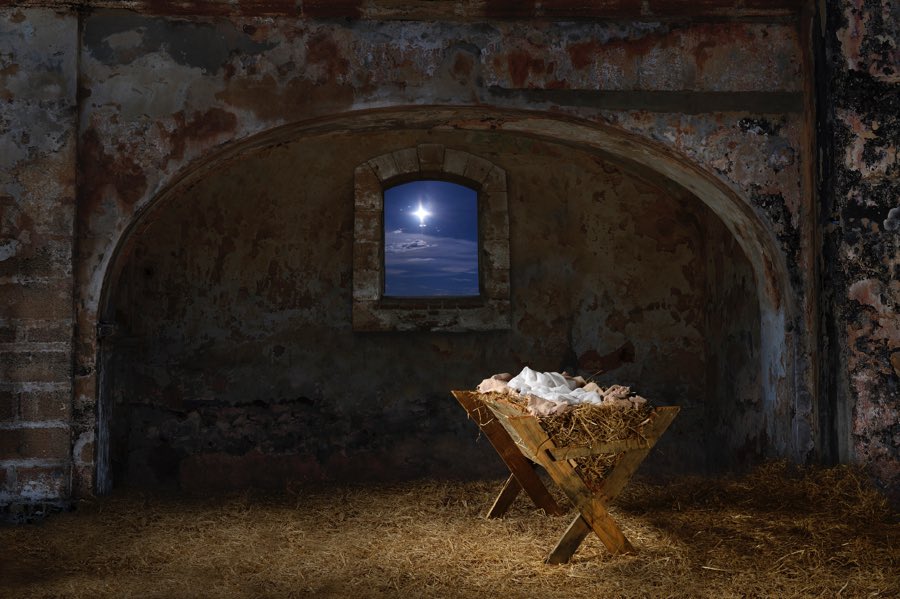
Our nativity sets portray a beautiful scene with a nice stable, a straw-filled wooden manger, a protective Joseph and a smiling Mary, and a collection of animals, shepherds and wise men gathered about.
But I am not sure it was so serene. The stable may have been a cave. The wise men likely did not come onto the scene until weeks after Jesus’s birth, and then they brought news of Herod’s quest to destroy the child. The shepherds were social outcasts, and the animals were … well, animals, complete with animal smells and noises.
Then there was the manger, which is simply a feeding trough for animals. In ancient Israel, they were often made of stone, which not only provided a container for feed, but also a measure of protection for newborn lambs, which were sometimes wrapped in cloth and placed in them so they wouldn’t get kicked or squashed by larger animals.
The Gospel of Luke tells us, “This will be a sign to you: You will find a baby wrapped in cloths and lying in a manger” (Luke 2:12, NIV). The manger was a safe haven in Mary and Joseph’s combat zone.
A Safe Haven in Every Zone
Our second Christmas in Iraq was much different than our first. That first Christmas, we were new to the region. We squeezed into tents as we tried to find our footing to replace the brigade that was returning home. Because we had newly arrived, there was no mail from home — no Christmas packages or cards, and very few opportunities to call the ones we loved.
By the second Christmas, our team of chaplains had worked hard to make the celebration of Christ’s birth a special experience for our battle-weary warriors. We had contacted churches and received hundreds of care packages and cards from faithful servants at home. We decorated our chapel and hosted a large Christmas party, complete with refreshments and gifts for all. The highlight of the season was our worship service the Sunday before Christmas. Our makeshift praise and worship band led us in a series of Christmas carols, culminating in a childhood favorite, “Away in a Manger.”
As we sang this simple song, the words took on new meaning. It was a reminder of a simpler and safer time — of Christmases past, of Christmas pageants and plays with children dressed as Mary and Joseph, of the precious little ones at home. Lips trembled and eyes filled with tears, but there was also a sense of love, peace, and joy. I believe that as we worshiped together, looked to God in faith, and sang that simple childhood song, the Spirit of God moved in our hearts and we experienced the peace that passes understanding — a safe haven in a combat zone.
I am no longer deployed. In fact, I no longer am in the military at all, having retired a few years ago. But I have found that in civilian life, there is a different kind of “combat zone,” with deadlines to meet, concerns about turmoil in the world, problems with health, problems with finances, and problems with people. However, there is still a manger, a safe haven — not because of what it is, but because of who it holds: the babe, the Christ-child, the Messiah, our savior and Lord. He is our safe haven in every combat zone.
Dr. Mark Knox is a a licensed therapist, EMDR consultant and assistant professor of counseling at Colorado Christian University. Previously, he served for 25 years as an Army chaplain, including 13 years with Special Operations and multiple deployments. Specializing in trauma and marital therapy, he directed a program training chaplains in marriage and family therapy and supervised thousands of hours of counseling annually. Now based in Montana, he provides counseling and is launching Safe Haven Ranch for military families.